


Manuka Honey Articles · 6 min read
How to Store Manuka Honey to Protect Potency
Manuka Honey is a rare and naturally potent honey, and how it's stored after purchase matters. Here's what actually protects its potency, and what quietly works against it.
 By Clare
Updated 17 Aug 2026
By Clare
Updated 17 Aug 2026

Manuka Honey Articles · 6 min read
How to Store Manuka Honey to Protect Potency
Manuka Honey is a rare and naturally potent honey, and how it's stored after purchase matters. Here's what actually protects its potency, and what quietly works against it.
By Clare
Updated 17 Aug 2026
Manuka Honey Articles · 6 min read
How to Store Manuka Honey to Protect Potency
Manuka Honey is a rare and naturally potent honey, and how it's stored after purchase matters. Here's what actually protects its potency, and what quietly works against it.
By Clare
Updated 17 Aug 2026
Most people assume honey looks after itself. It's honey, after all, one of nature's most naturally preserved foods. So the jar goes on the counter, gets left near the stove, or sits with a slightly loose lid for weeks. Nothing looks wrong. The honey still looks golden and smells the same. But potency doesn't announce its own decline. With Manuka Honey, especially UMF™ certified batches with a guaranteed MGO level, small everyday habits can slowly work against the very compounds that make it worth buying in the first place. This guide walks through exactly how to store it properly, and how long it genuinely lasts, so the investment in a rare superfood isn't undone by an open kitchen shelf.
Does Manuka Honey Actually Expire?
Unopened and properly stored, Manuka Honey has a long shelf life, typically two to three years, and many jars carry a best-before date well beyond that. Honey's low moisture content and natural acidity make it naturally resistant to spoiling. It won't 'go off' the way fresh produce does. What can happen instead is a slow decline in potency. The MGO (methylglyoxal) level and UMF™ rating on the label reflect the honey's condition at the time of testing. Poor storage after purchase, particularly heat exposure, can accelerate the breakdown of these active compounds over time. In short: the honey may still be safe to eat well past its prime, but it may no longer deliver the same MGO strength stated on the label.
I would review Manuka Honey from New Zealand Honey Co. 10/10. Package, description, made date new, long storage. Certified as well.
— Anonymous, Verified Customer, UMF™ 20+ MGO 829+
Storing the Jar Somewhere Warm 'Because It's Convenient'
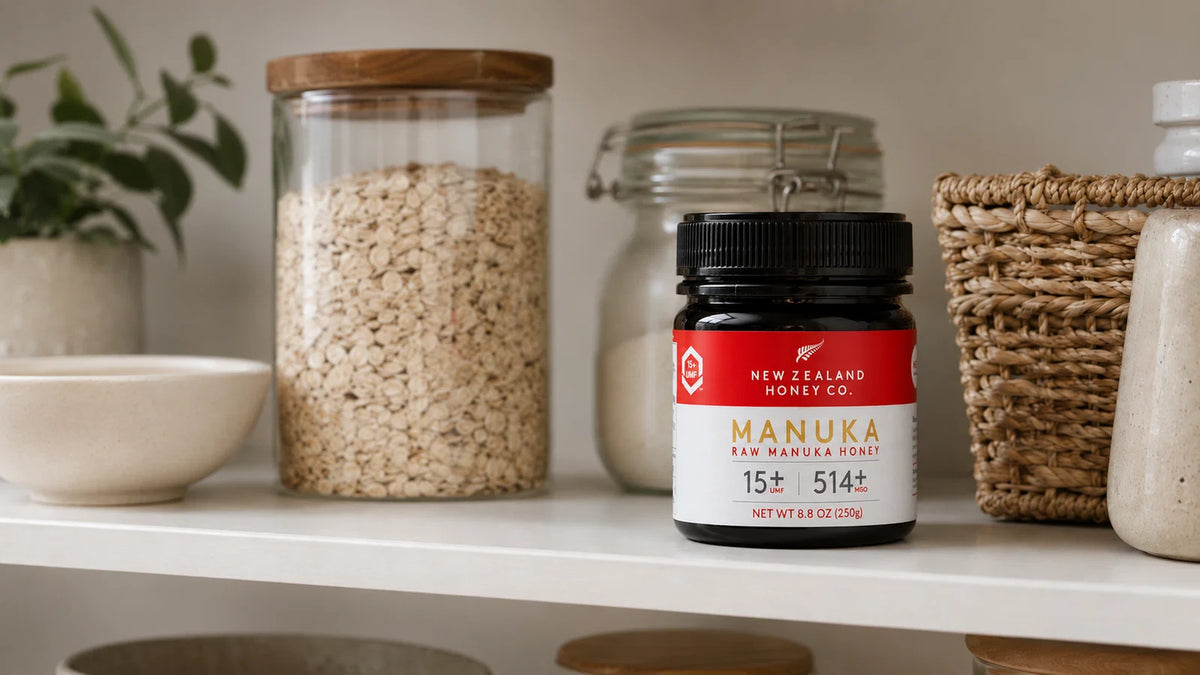
A jar kept beside the stove, on a sunny windowsill, or above the oven might seem harmless. But warmth is one of the biggest threats to Manuka Honey's active compounds. Consistent exposure to heat above room temperature can gradually degrade MGO levels, even if the honey never gets hot enough to visibly change [1]. The damage is invisible unless the honey is tested, which is exactly why so many people don't realise it's happening.
The Fix
- Store the jar in a cool, dry pantry or cupboard, ideally below 68°F (20°C)
- Keep it away from ovens, dishwashers, and direct heat vents
- A dark cupboard is better than an open shelf near a window
Refrigerating the Honey 'Just to Be Safe'
It seems logical: cold storage preserves food, so surely it preserves honey too. In reality, refrigeration can cause Manuka Honey to crystallise and become thick and difficult to scoop. This isn't dangerous, but it often leads people to microwave or heat the jar to soften it again, which is far more damaging to the honey's natural compounds than room temperature storage ever was.
The Fix
- Keep Manuka Honey at stable room temperature, not in the fridge
- If crystallisation does occur, sit the jar in warm (not hot) water rather than microwaving it
- Avoid repeated temperature swings between fridge and counter
Leaving the Lid Off or Loosely Closed
Honey is hygroscopic, meaning it naturally draws moisture from the air. An open or poorly sealed jar allows humidity in, which can dilute the honey and create conditions where fermentation becomes possible over time [2]. It also exposes the honey to airborne particles and odours from the kitchen, which can subtly affect its flavour and quality.
The Fix
- Twist the lid firmly shut immediately after each use
- Check the seal isn't cracked or warped from heat exposure
- Store the jar upright to reduce the chance of leakage around the lid
Using a Wet or Previously Used Spoon
It's a small habit, but dipping a wet spoon, or one that's already touched tea, toast, or yoghurt, into the jar introduces moisture and bacteria into the honey. Because honey is such a stable environment, contamination doesn't always cause obvious spoilage right away. But over weeks and months, repeated contamination can affect both texture and purity, undermining the very qualities that make raw, properly stored Manuka Honey worth its premium.
The Fix
- Always use a clean, dry spoon or a dedicated honey utensil
- Avoid double-dipping a spoon that has already touched other food
- Wipe the jar rim clean before resealing to prevent residue buildup
Decanting Into the Wrong Type of Container
Some people transfer honey into a prettier jar for the kitchen counter, or a metal tin for travel. Certain metals and reactive materials can interact with honey's natural acidity over time, subtly altering its composition. Glass or food-grade plastic designed for honey storage is a safer bet, and the original jar is usually the best option since it's designed specifically to protect the product inside.
The Fix
- Keep Manuka Honey in its original, purpose-designed jar
- If decanting, choose glass or food-grade containers, not reactive metals
- Always keep the original label and batch code visible for traceability
Each Jar Has a Traceable Batch for a Reason
Every jar of genuine, independently tested and certified New Zealand Honey Co. Manuka Honey carries a batch code and a QR code linking back to its origin and test results. This isn't just for reassurance at the point of purchase. It's a reference point. If honey has been stored for a long period, checking the batch details and best-before date helps set realistic expectations about how much of its original potency is likely still intact.

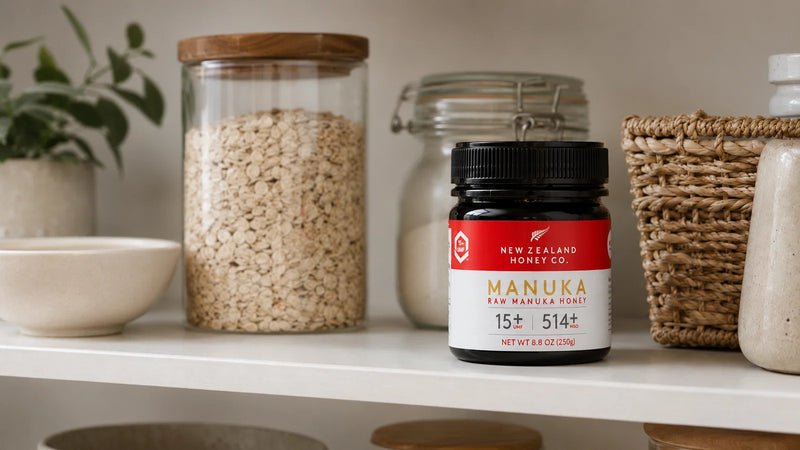
Manuka Honey UMF™ 15+ | MGO 514+
You’re living an active lifestyle and you care about what goes in (and on) your body. This UMF™ 15+ Manuka Honey is optimised for life, so you get the most out of your day.
Shop NowThe Right Approach to Storing Manuka Honey
Best Practice Summary
- Store in a cool, dark pantry at room temperature
- Avoid refrigeration; it can trigger crystallisation
- Keep the lid tightly sealed between every use
- Always use a clean, dry spoon to prevent contamination
- Leave Manuka Honey in its original jar rather than decanting
- Track the batch code and best-before date for peace of mind
This Manuka Honey UMF™ 24+ | MGO 1122+ blew me away. I've tried many kinds over the years but nothing comes close to this level of purity and potency. The taste is rich, earthy, and smooth..not overly sweet, just perfectly balanced. I use it for immune support, sore throats, and even mix a little into my yogurt or tea. It's also part of my skincare ritual as a soothing spot treatment. Truly feels like a healing superfood.
— Jessica W., Verified Customer, UMF™ 24+ | MGO 1122+
What is the best way to store Manuka Honey long-term?
The best way to store Manuka Honey is in a cool, dark cupboard at stable room temperature, with the lid tightly sealed and a clean, dry spoon used for every serving. Avoid the fridge, direct sunlight, and heat sources like ovens. For more on what makes a jar genuinely high quality to begin with, see how to choose a Manuka Honey brand.
Does Manuka Honey expire once opened?
Manuka Honey doesn't spoil the way perishable foods do, but its MGO potency can decline over time, especially with poor storage. Most opened jars are best used within 12 to 18 months to enjoy the full strength stated on the label.
Why has my Manuka Honey turned solid or grainy?
This is natural crystallisation, not spoilage. It happens faster in cold environments, like a fridge. Sit the jar in warm water to gently soften it again rather than microwaving, which can degrade the honey's active compounds.
Protect Every Spoonful
Genuine, UMF™ certified Manuka Honey deserves proper care from the moment it arrives. Explore New Zealand Honey Co.'s traceable, independently tested range and give your jar the storage it's earned.
Shop UMF™ Manuka HoneyReferences
- [1] Atrott J, Haberlau S, Henle T. "Studies on the formation of methylglyoxal from dihydroxyacetone in Manuka (Leptospermum scoparium) honey.". <a href="https://www.sciencedirect.com/science/article/abs/pii/S0008621512003175">Carbohydrate research. 2012. DOI: 10.1016/j.carres.2012.07.025</a>
- [2] Shirani K, Mottaghi A, Shabani M. "Honey as a Functional Food: Evaluating Its Antimicrobial Properties and Bacterial Safety Concerns.". <a href="https://pubmed.ncbi.nlm.nih.gov/41159286/">Foodborne pathogens and disease. 2026. DOI: 10.1177/15353141251392181</a>
Manuka Honey as a Gift: 7 Things to Look For
Gifting Manuka Honey can be a thoughtful way to show you care, but with different grades, labels and strengths to choose from, finding the...

Manuka Honey for a Sore Throat: Best MGO Level to Use
That scratchy, raw feeling at the back of the throat is hard to ignore. Here's why Manuka Honey helps, which MGO level to choose,...
Is Manuka Honey Worth the Price? What You're Actually Paying For
Manuka Honey costs more than regular honey for six very specific, very verifiable reasons. From a flowering window as short as two weeks to...
