


wellness · 9 min read
Measles Outbreak: Symptoms, Risks & Natural Support
Measles is back in the headlines, and parents have every reason to want clear answers. This guide covers measles rubeola symptoms, the groups most at risk, and how natural wellness tools like Manuka Honey can offer supportive comfort during recovery.
 By Clare
Updated 4 Jun 2026
By Clare
Updated 4 Jun 2026

wellness · 9 min read
Measles Outbreak: Symptoms, Risks & Natural Support
Measles is back in the headlines, and parents have every reason to want clear answers. This guide covers measles rubeola symptoms, the groups most at risk, and how natural wellness tools like Manuka Honey can offer supportive comfort during recovery.
By Clare
Updated 4 Jun 2026

wellness · 9 min read
Measles Outbreak: Symptoms, Risks & Natural Support
Measles is back in the headlines, and parents have every reason to want clear answers. This guide covers measles rubeola symptoms, the groups most at risk, and how natural wellness tools like Manuka Honey can offer supportive comfort during recovery.
By Clare
Updated 4 Jun 2026
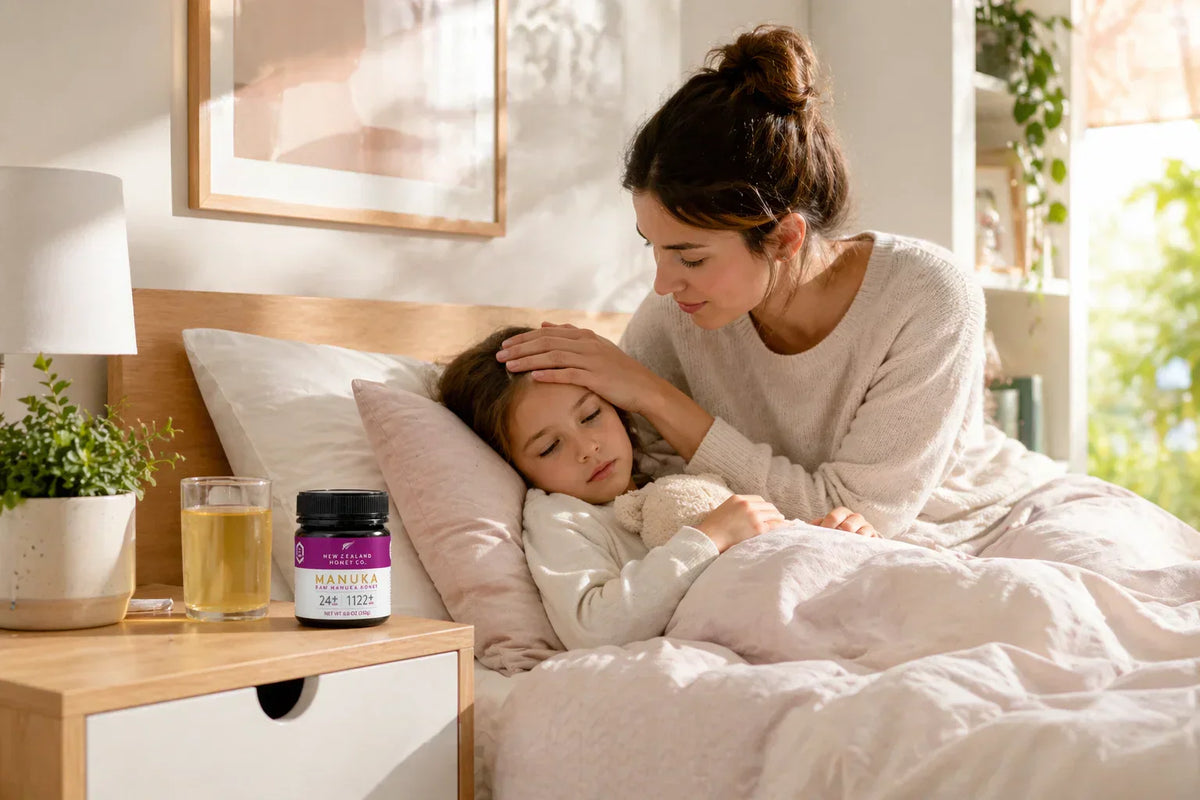
A child develops a fever on Monday. By Wednesday, a distinctive rash appears. By the weekend, the family is fielding calls from their health provider about possible exposure to a confirmed measles case at school. This scenario is playing out in communities across the world with increasing frequency, and it is prompting a wave of questions from parents and caregivers who thought measles was a distant memory.
Understanding what measles rubeola looks like, who faces the greatest risk, and what supportive measures are appropriate during illness is exactly the kind of grounded, practical knowledge every caregiver deserves. This post covers the public health picture, walks through measles symptoms in children and adults, identifies measles risk groups, and explores where science-backed natural support from Manuka Honey fits into the recovery conversation.
A Disease That Never Fully Disappeared
Measles rubeola is one of the most contagious viral illnesses known to medicine. Before widespread vaccination began in the 1960s, virtually every child contracted measles before the age of 15. Global vaccination campaigns dramatically reduced case numbers, and many countries declared measles eliminated within their borders. Yet elimination is not eradication. The virus persisted in under-vaccinated populations worldwide, and in recent years it has staged a significant comeback.
The World Health Organisation reported surges in measles cases across multiple continents throughout 2023 and 2024, driven by gaps in vaccination coverage that opened during the COVID-19 pandemic. Travel patterns accelerated the spread. Communities that had not seen a measles case in years found themselves managing outbreaks. Public health agencies moved quickly to remind families that the measles, mumps, and rubella (MMR) vaccine remains the most effective tool available, but in the meantime, understanding the disease itself became newly urgent.
Measles spreads through the air. An infected person can leave the virus suspended in a room for up to two hours after they have left. Someone without immunity who enters that space has roughly a 90 percent chance of becoming infected. These figures are not meant to cause alarm — they are meant to illustrate why knowing the symptoms, understanding the risk groups, and having a clear wellness plan matters right now.
Recognising Measles: What the Symptoms Actually Look Like
One of the challenges with measles symptoms in children and adults is that the early phase looks deceptively like a common cold or flu. The prodromal stage, which typically lasts two to four days, involves high fever (often 101°F or above), a persistent dry cough, a runny nose, and red, watery eyes. This is also the period when the person is most infectious, spreading the virus before many families suspect anything beyond an ordinary winter illness.
A key clinical indicator that distinguishes measles rubeola from other respiratory viruses is the appearance of Koplik's spots. These are small, blueish-white lesions that appear on the inside of the cheeks, usually one to two days before the characteristic rash develops. Not every caregiver will spot them, but healthcare professionals specifically look for them during assessment.
The measles rash typically begins at the hairline and behind the ears before spreading down the face, neck, torso, and limbs over three to four days. It appears as flat, red or brownish blotches that may merge together. The rash usually lasts five to six days. Fever often spikes at its highest point, sometimes exceeding 104°F around the time the rash appears. Fatigue, appetite loss, and significant general malaise accompany these stages throughout.
Complications can arise, and they are not uncommon. Ear infections and pneumonia are among the more frequent secondary complications. Encephalitis (swelling of the brain) is rarer but serious. Young children under five, pregnant women, and people with compromised immune systems face the highest risk of severe complications. Any suspected measles case warrants prompt medical assessment.
Who Faces the Greatest Risk During a Measles Outbreak
Measles risk groups are defined primarily by immune status and age. Understanding these categories helps families make informed decisions and supports timely medical contact when needed.
- Unvaccinated children under five: The highest burden of measles mortality globally falls on this group, particularly in areas with limited healthcare access.
- Adolescents and adults who received only one MMR dose: Two doses are required for full protection. Some adults vaccinated before the two-dose schedule became standard may have incomplete coverage.
- Infants under 12 months: Too young for the MMR vaccine, these babies rely on community immunity and maternal antibodies — which wane around six months of age.
- Pregnant women: Measles during pregnancy is associated with preterm birth, low birth weight, and miscarriage. The MMR vaccine cannot be given during pregnancy.
- Immunocompromised individuals: People undergoing chemotherapy, organ transplant recipients, and those with certain immune conditions cannot mount an adequate response to the virus and face a higher risk of severe illness.
- Individuals in densely populated settings: Schools, childcare centres, refugee camps, and crowded urban environments create higher transmission risk when vaccination coverage falls below the 95 percent threshold needed for herd immunity.
Vaccination status is the single most important factor in measles prevention. Anyone unsure of their vaccination history should speak with a healthcare provider about checking immunity levels or receiving a booster. During an active outbreak, some health authorities also recommend bringing forward the first MMR dose for infants as young as six months — again, a conversation to have with a qualified health professional.
Where Natural Wellness Support Fits In: The Research Perspective
Measles has no specific antiviral treatment. Medical care focuses on supportive measures: managing fever, maintaining hydration, addressing secondary infections, and ensuring adequate nutrition. This is precisely the space where well-chosen natural wellness tools can play a meaningful complementary role — not as replacements for medical oversight, but as thoughtful additions to daily care.
Manuka Honey has attracted sustained scientific interest for its unique bioactive properties. Unlike standard honey, authentic Manuka Honey contains measurable concentrations of methylglyoxal (MGO), a naturally occurring compound linked to its antimicrobial activity. The UMF™ (Unique Manuka Factor) rating system provides an independently verified measure of potency — a critical distinction when quality matters most.
Researchers have found that honey is effective against a wide range of pathogens, with the antibacterial potency of Manuka Honey linked to its methylglyoxal and total phenol content. Notably, bacterial resistance to honey as an antimicrobial agent has yet to be identified, possibly due to the presence of this complex mixture of compounds - a finding that sets it apart from conventional antibiotics.
Beyond its antibacterial action, Manuka Honey may offer meaningful comfort to those managing the symptoms of a viral illness like measles. For the hallmark measles symptoms of sore throat and cough, research on honey has shown reduced cough frequency and severity, improved upper respiratory tract infection symptom scores, and better sleep quality - especially when taken at bedtime.
This liquid gold has amazing benefits in terms of relieving symptoms of persistent cough and helping with overall immunity.
— Sidd D., USA, UMF™ 26+ I MGO 1282+
I absolutely love Manuka Honey for its health benefits and delicious taste! I've used it as a natural remedy for sore throats and coughs. It always soothes my throat and helps me feel better faster when I am under the weather.
— Verified Customer, USA, UMF™ 24+ I MGO 1122+
Practical Wellness Support During Viral Respiratory Illness
When a respiratory illness is running its course under medical guidance, supporting the body's comfort day-to-day becomes a primary focus for caregivers. This is where Manuka Honey earns its place as a trusted wellness companion. Manuka honey cough relief is one of the most commonly reported benefits among parents, and the science supports the logic: honey coats and soothes mucous membranes, and Manuka Honey's higher MGO content adds a layer of bioactive support beyond what standard honey provides.
For adults and children over 12 months experiencing cough and throat discomfort during a viral illness, a teaspoon of UMF™ 20+ or higher Manuka Honey taken on its own or dissolved in warm (not boiling) water can offer genuine comfort. This not a treatment for measles - it's a supportive addition to an overall wellness plan agreed upon with a healthcare provider.
When choosing Manuka Honey, look for independently tested and certified products with specific MGO levels guaranteed on the label and batch traceability via QR code. These markers confirm that what is on the label reflects what is in the jar.
Alongside Manuka Honey, supportive care during measles recovery should include adequate rest, consistent hydration, and darkened rooms for children who experience light sensitivity associated with eye inflammation. Fever management should follow the guidance of a healthcare professional, particularly for young children.
Important Considerations
- Honey of any kind must never be given to infants under 12 months due to the risk of infant botulism. This applies to Manuka Honey as well — no exceptions.
- Manuka Honey is a wellness support tool, not a measles prevention or treatment measure. Vaccination remains the only evidence-based method of measles prevention.
- Individuals with bee or pollen allergies should exercise caution and consult a healthcare provider before using Manuka Honey products.
- If a child develops a high fever, difficulty breathing, severe ear pain, or shows signs of neurological change (confusion, excessive drowsiness, seizures), seek emergency medical care immediately - do not attempt to manage at home.
Common Questions From Parents and Caregivers
How do measles symptoms in children differ from a regular cold or flu?
The early stages of measles mimic a cold or flu with fever, cough, runny nose, and red eyes — so it can be genuinely difficult to distinguish in the first two to four days. The distinguishing signs are a high fever that intensifies as the illness progresses, the appearance of Koplik's spots (small white lesions inside the cheeks), and the characteristic measles rash that begins at the hairline and spreads downward. If a rash appears alongside a fever in a child who may have been exposed to measles, contact a healthcare provider promptly.
Can Manuka Honey help with the cough associated with measles or other respiratory illnesses?
Manuka Honey is not a treatment for measles, but it is recognised as a supportive option for soothing cough and throat discomfort during viral respiratory illness. Its natural coating action and bioactive MGO content set it apart from standard honey. Research has highlighted the antimicrobial properties of methylglyoxal found in authentic Manuka Honey. For children over 12 months, a small amount of UMF™ 20+ or higher taken on its own or in warm water can offer comfort alongside medical care. Always check with a healthcare provider for guidance specific to your child's situation. Manuka Honey must not be given to infants under 12 months.
What UMF™ rating of Manuka Honey is most appropriate for everyday wellness support?
For general daily wellness and preventative support, a UMF™ 15+ Manuka Honey provides a meaningful level of bioactive activity. For more targeted support during illness, such as soothing a persistent cough or throat irritation, many families choose UMF™ 20+ or higher. The UMF™ rating is an independently verified measure of potency, so choosing a product with this certification ensures you are getting pure, authentic Manuka Honey with guaranteed MGO levels on the label.
Staying Informed, Staying Prepared
Measles is not a relic of the past. It is an active public health concern that demands clear information, timely vaccination decisions, and practical planning for supportive care when illness does occur. Parents and caregivers who understand measles symptoms and risk factors are far better placed to act quickly, communicate effectively with healthcare providers, and make thoughtful choices about day-to-day wellness support.
Your health is important, and the same is true for the children and loved ones in your care. Keeping a well-stocked wellness toolkit that includes independently tested and certified Manuka Honey is one small but meaningful step toward feeling prepared. It supports your wellness journey without replacing the medical care that remains central when serious illness arises.
Support Everyday Wellness With Pure, Authentic Manuka Honey
Independently tested, UMF™ certified, and traceable to the source, New Zealand Honey Co. Manuka Honey is optimised for everyday wellness. Explore the range and find the right UMF™ grade for your household.
Shop Manuka Honey
Manuka Honey as a Gift: 7 Things to Look For
Gifting Manuka Honey can be a thoughtful way to show you care, but with different grades, labels and strengths to choose from, finding the...

Manuka Honey for a Sore Throat: Best MGO Level to Use
That scratchy, raw feeling at the back of the throat is hard to ignore. Here's why Manuka Honey helps, which MGO level to choose,...
Is Manuka Honey Worth the Price? What You're Actually Paying For
Manuka Honey costs more than regular honey for six very specific, very verifiable reasons. From a flowering window as short as two weeks to...
