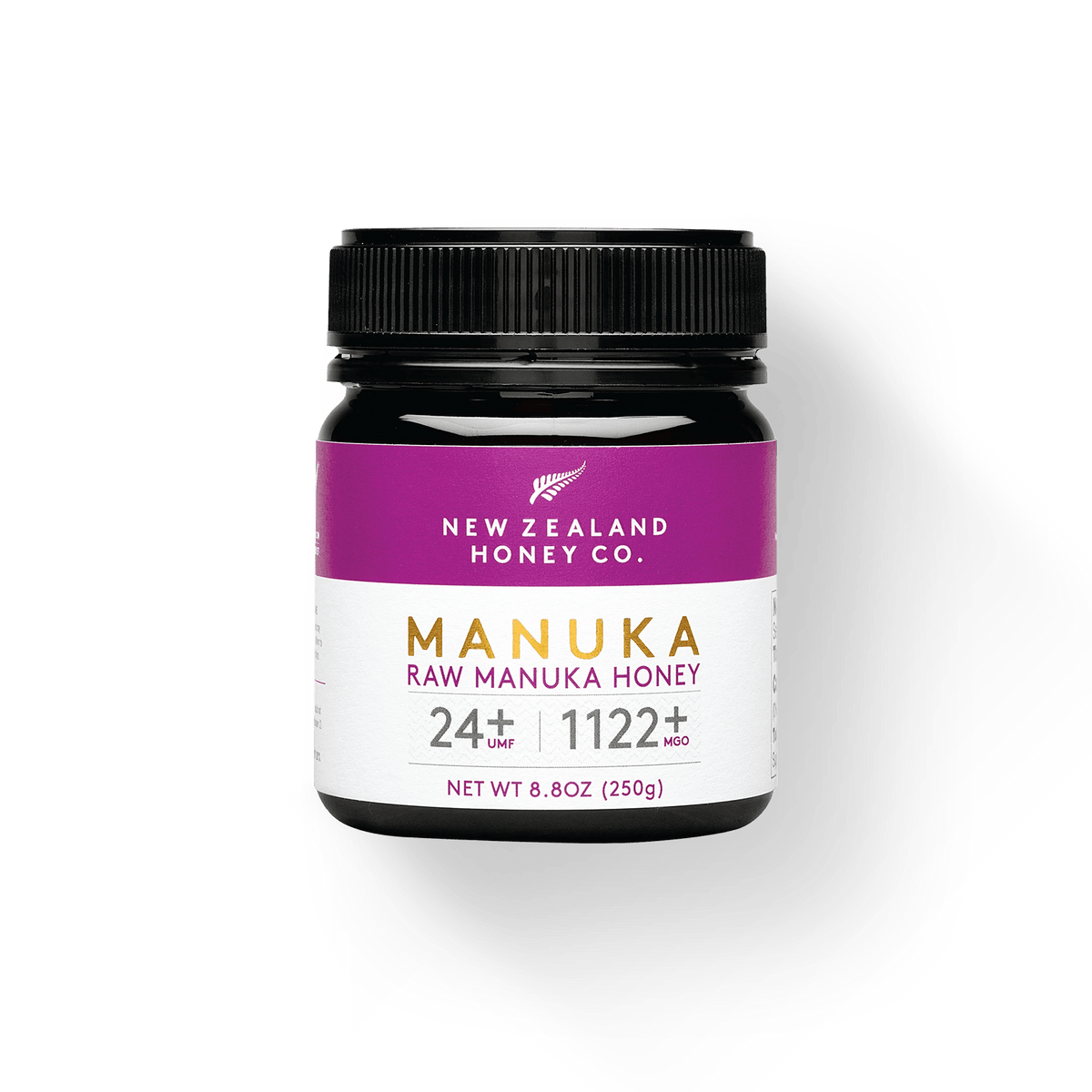

beginner-guide · 5 min read
First Month with Manuka Honey: What to Expect Week by Week
Just bought your first jar of Manuka Honey? Here's a realistic, week-by-week look at what your first month might look like, from taste and texture to daily dosing.
 By Clare
Updated 21 Sep 2026
By Clare
Updated 21 Sep 2026

beginner-guide · 5 min read
First Month with Manuka Honey: What to Expect Week by Week
Just bought your first jar of Manuka Honey? Here's a realistic, week-by-week look at what your first month might look like, from taste and texture to daily dosing.
By Clare
Updated 21 Sep 2026

beginner-guide · 5 min read
First Month with Manuka Honey: What to Expect Week by Week
Just bought your first jar of Manuka Honey? Here's a realistic, week-by-week look at what your first month might look like, from taste and texture to daily dosing.
By Clare
Updated 21 Sep 2026
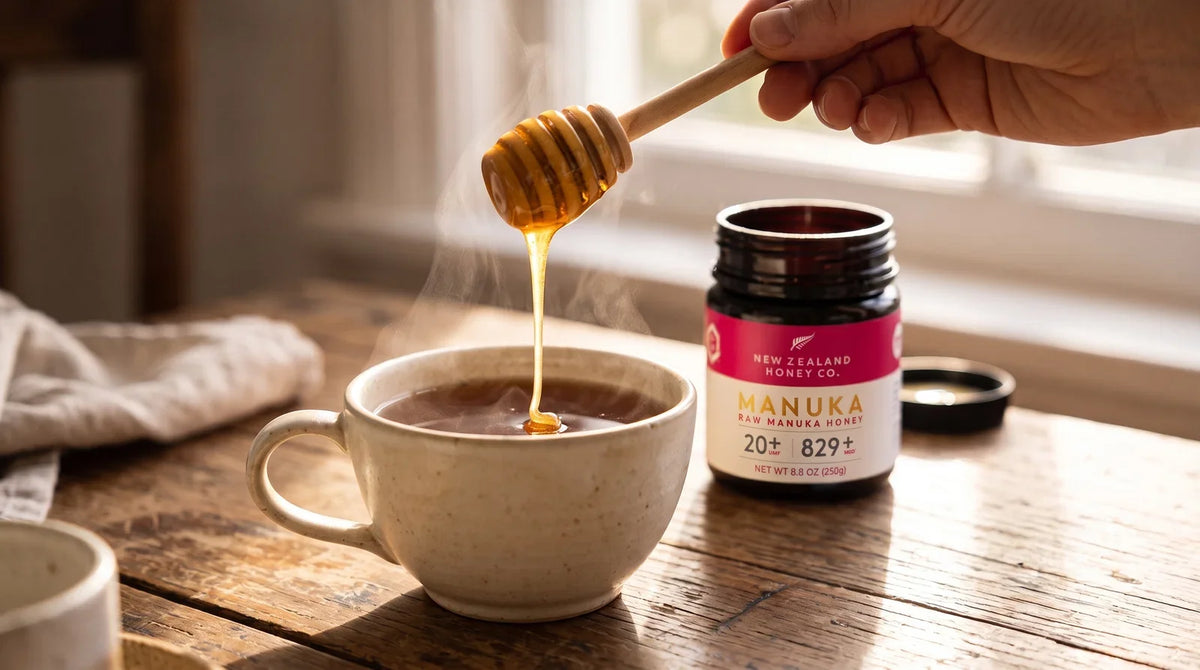
Almost every new Manuka Honey buyer hits the same moment: jar in hand, standing in the kitchen, unsure how much to actually take or whether it's going to do anything at all. If that sounds familiar, you're not missing something obvious — nearly everyone starts out with the same uncertainty. There's no instructions tucked under the lid, and searching online often raises more questions than it answers. Think of this as that missing guide: a straightforward look at what a typical first 30 days with Manuka Honey actually looks like, so you know what's realistic to expect and the experience feels worth it from the start.
What Manuka Honey Actually Is
Manuka Honey is produced when bees forage on the Manuka bush, a plant that flowers in remote parts of New Zealand for just two to eight weeks each year. Unlike regular honey, it contains naturally occurring methylglyoxal (MGO), the compound behind its distinct properties. Quality Manuka Honey is graded using the UMF™ (Unique Manuka Factor) system, which independently verifies MGO levels, along with other markers, before a jar ever reaches the shelf. The higher the UMF™ number, the higher the concentration of these natural compounds.
Why This Matters for a First-Time User
- A little goes a long way, so a jar can last weeks even with daily use
- Consistency tends to matter more than quantity in the first month
- Taste and texture vary by UMF™ grade, so it helps to know what's normal
- Every genuine batch is traceable via QR code, giving peace of mind about what's actually in the jar
- Manuka Honey supports a wellness routine, it is not positioned as a medical treatment
Getting Started: The First Few Days
Easing Into a Manuka Honey Routine
-
Pick Your Grade
Choose a UMF™ rated jar that matches your goals, a lower UMF (10-15+) for everyday sweetness and a gentler taste, or a higher UMF (20+ and up) if you're after more potent, antibacterial-forward properties. There's no wrong choice, just a different starting point.
-
Start With One Teaspoon
Take a single heaping teaspoon once a day to begin. There's no need to measure precisely or go bigger right away, the first few days are about getting comfortable with the taste and texture, not maximizing intake.
-
Choose a Consistent Time
Pick a moment that's already part of your day, first thing in the morning, with tea, or after a meal, so taking it becomes automatic rather than something you have to remember.
-
Try It a Few Different Ways
Take it straight off the spoon one day, stir it into tea or yogurt the next. A few days of experimenting helps you find the method you'll actually stick with long-term.
-
Let Go of Expecting Instant Results
Don't worry if nothing feels different yet, that's completely normal this early on. The first few days are about building the habit; any noticeable effects tend to show up over the following weeks, not the first.
I take a lil teaspoon of my honey every other morning or when I'm feeling a little depleted. It's almost a treat! It's smooth and delicious. Almost better than my favorite chocolate!
— Lucy C., Verified customer
Week by Week: A Realistic Timeline
Week one is mostly about adjusting to the taste and texture. Genuine Manuka Honey is thicker than supermarket honey, with an earthy, robust flavour that's noticeably different from clover or floral varieties. Higher UMF™ grades tend to taste stronger and less sweet. This is normal, not a sign of a bad batch.
Week two is when the daily habit starts to feel automatic rather than a novelty. Some people notice their digestion feels a little more settled, or that they reach for it instinctively when their throat feels scratchy. Others notice nothing dramatic yet, and that's fine too. Manuka Honey is designed to support a wellness routine gradually, not deliver an overnight transformation.
Week three is a good checkpoint to reassess the dose. If a teaspoon a day feels easy to maintain, it can stay as is. If it feels like too much or too little, this is the natural point to adjust, always within sensible daily amounts.
Week four marks the end of the first jar for most people using a teaspoon daily. This is the moment to reflect honestly: has the taste become familiar, has it slotted into a routine without effort, and is it worth restocking? For many, this is also when they consider whether a higher UMF™ grade suits their goals better than where they started.

Manuka Honey UMF™ 26+ | MGO 1282+
This rare UMF™ 26+ Manuka Honey is scarce in quantity and powerful in performance. Only a very small proportion of Manuka Honey ever makes it to this grade. In other words, it…
Shop NowI really enjoy the flavor profile of this honey.I have some daily to support my gut health. So far I have been using for 3 weeks and already notice less reflux.
— Mike M., Verified customer
How much Manuka Honey should a beginner take per day?
A teaspoon (around 5-10g) once daily is a sensible starting point for most first-time users. It can be eaten directly, stirred into warm water, or added to tea. Explore the full dosage guide for more detail on adjusting intake.
Why does my Manuka Honey taste different from regular honey?
Manuka Honey has a distinctive earthy, robust flavour and thicker texture compared to standard floral honeys. This comes from the Manuka bush itself, which flowers for only two to eight weeks a year in remote parts of New Zealand. A stronger, less sweet taste is generally associated with a higher UMF™ rating, not a fault.
Is it normal to not notice anything in the first week or two?
Yes. Manuka Honey is best understood as a daily wellness companion rather than a quick fix. Many people find that subtle changes, if any, become more apparent with consistent use over three to four weeks rather than days.
When should I consider a higher UMF™ grade?
After completing a first jar, it's reasonable to reassess. If the current grade feels mild or a specific wellness goal calls for stronger support, moving up in UMF™ rating is a natural next step. Comparing labels side by side makes this an easy, informed decision.
I take a spoonful every day. The taste is fantastic and it really works. You can feel the benefits within a couple weeks!!
— Anonymous, Verified customer
A Quick Health Note
- Manuka Honey supports general wellness but is not a medical treatment and should not replace advice from a healthcare professional.
- Children under 12 months should not be given honey of any kind due to the risk of infant botulism.
- Anyone with diabetes, allergies to bee products, or existing health conditions should check with a doctor before adding Manuka Honey to their routine.
Ready to Start Your First Jar?
Explore New Zealand Honey Co.'s range of independently tested and certified Manuka Honey, each batch traceable to the source and clearly labelled with its UMF™ rating, so the first month starts with confidence.
Shop Manuka Honey
Understanding Manuka Honey: Harvesting and Quality Verification
Manuka honey's value comes down to two things: a harvest window of just two to eight weeks, and independent lab verification of what's actually...

Manuka Honey for Men's Health: Science-Backed Support
Men juggling work, training and family often put wellness last. Learn how the active compounds like methylglyoxal, flavonoids, phenolic acids and oligosaccharides in Manuka...
Manuka Honey for Cats: Why Less is More.
Curious cat owners often ask if Manuka Honey is safe to share. Here's what's currently understood about Manuka Honey and cats, with an emphasis...
