


Manuka Honey Articles · 6 min read
Manuka Honey for Cats: Why Less is More.
Curious cat owners often ask if Manuka Honey is safe to share. Here's what's currently understood about Manuka Honey and cats, with an emphasis on caution, dosing, and knowing when not to.
 By Clare
Updated 17 Aug 2026
By Clare
Updated 17 Aug 2026

Manuka Honey Articles · 6 min read
Manuka Honey for Cats: Why Less is More.
Curious cat owners often ask if Manuka Honey is safe to share. Here's what's currently understood about Manuka Honey and cats, with an emphasis on caution, dosing, and knowing when not to.
By Clare
Updated 17 Aug 2026
Manuka Honey Articles · 6 min read
Manuka Honey for Cats: Why Less is More.
Curious cat owners often ask if Manuka Honey is safe to share. Here's what's currently understood about Manuka Honey and cats, with an emphasis on caution, dosing, and knowing when not to.
By Clare
Updated 17 Aug 2026
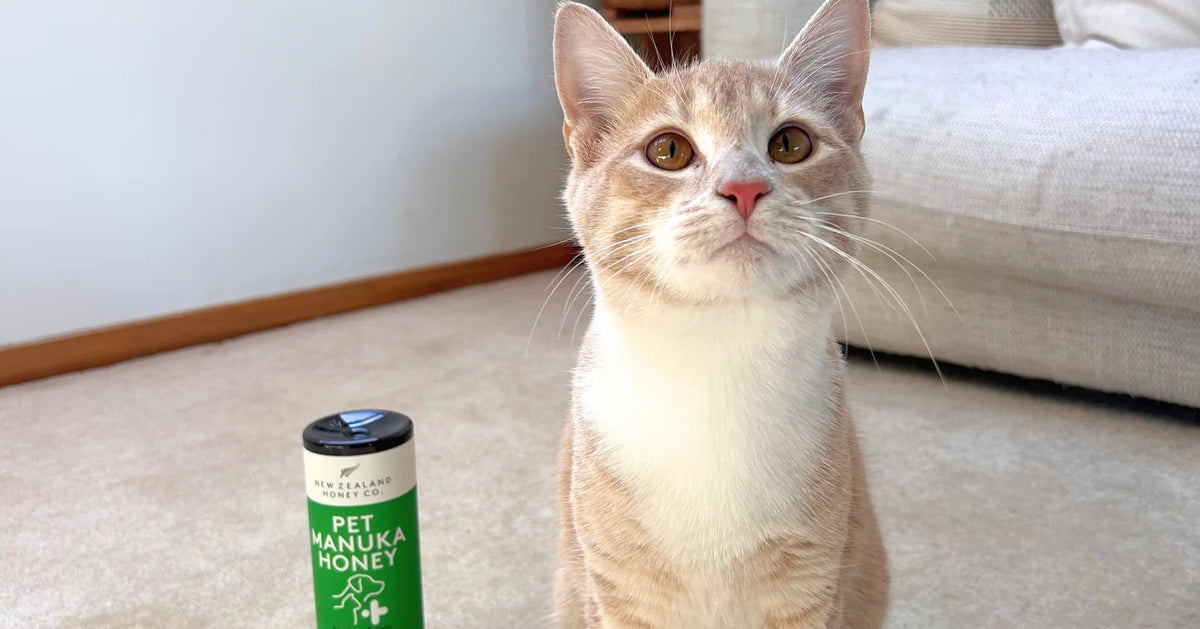
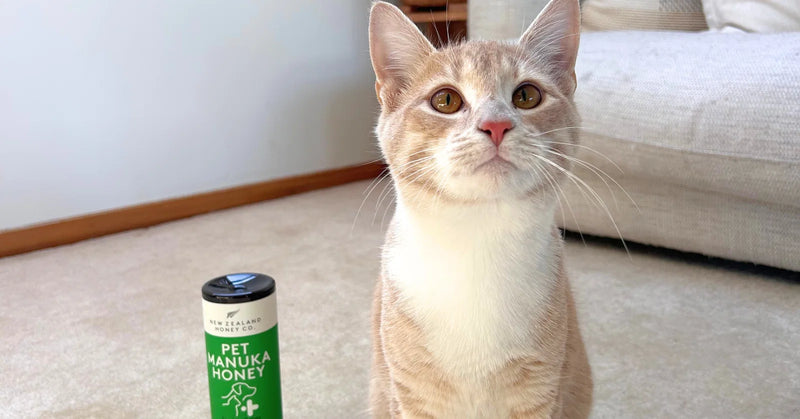
Scrolling through pet forums at midnight, wondering whether that jar of Manuka Honey in the pantry could help a cat's scratchy throat or slow-healing scrape, is a pretty common rabbit hole. Cat owners who already trust Manuka Honey for their own wellness routines naturally start asking whether their feline companions can benefit too. It's a fair question, and a good one to consider carefully. Cats are not small humans, and their bodies process food and sugar very differently. This guide walks through what's currently understood about Manuka Honey and cats, with an emphasis on caution, correct dosing, and knowing when to simply leave it in the cupboard.
Is it safe to give Manuka Honey to cats?
The Short Answer
Pure, authentic Manuka Honey can be offered to most healthy adult cats in very small, occasional amounts, typically no more than a quarter of a teaspoon once or twice a week, and only after checking with a veterinarian. It is not a food cats need daily, and it is never a substitute for veterinary care. Diabetic cats, cats under one year old, and cats with compromised immune systems should avoid it altogether. Topically, Manuka Honey has a long history of use for wound healing, though any wound on a cat should still be assessed by a vet first, especially since cats tend to lick dressings.
Exploring Natural Options for Cats
What Small Amounts of Manuka Honey May Offer
- Natural prebiotics: Manuka Honey contains oligosaccharides that may gently support the gut microbiome when used sparingly and appropriately.
- Topical support for minor wounds: Manuka Honey has a long-documented history of use on human skin wounds, and its antimicrobial properties [1] are one reason it's studied in clinical wound care settings.
- Soothing potential for occasional throat irritation: A tiny lick may offer comfort, similar to how it's used for human throats, though this is anecdotal for cats rather than clinically established.
- Traceable, tested quality: Choosing an independently tested Manuka Honey with an MGO rating means owners know exactly what they're purchasing.
It's worth being clear-eyed here. Manuka Honey is not formulated for cats, and there is far more research behind its use in human wellness and wound care than in feline health specifically. Cats are obligate carnivores with a much lower tolerance for sugar than humans, and their livers process certain compounds differently. This is why the appeal of Manuka Honey for cats sits mostly in careful, occasional, vet-approved use rather than a daily wellness ritual.
Getting Started: A Cautious, Step-by-Step Approach
Before Offering Manuka Honey to a Cat
-
Talk to a veterinarian first
This is non-negotiable. A vet can flag issues like diabetes, obesity, or dental disease that make honey unsuitable for a specific cat.
-
Choose an accredited product
Look for independently tested Manuka Honey with a clear MGO level on the label, so exactly what's being offered is known and traceable to the source.
-
Start with a tiny taste
A pea-sized amount, roughly an eighth of a teaspoon, is plenty for a first trial. Watch for any change in behaviour, stool, or appetite over the next 24 hours.
-
Keep frequency low
If a vet approves ongoing use, once or twice a week in quarter-teaspoon amounts is a reasonable ceiling for most healthy adult cats, not a daily habit.
-
Vet-guided topical use
For surface wounds or skin irritation, a vet may recommend a thin layer Manuka Honey under a light dressing. Cats will often try to lick it off, so dressing the wound is important.
What to expect if a vet gives the go-ahead: most healthy cats enjoy a small taste of Manuka Honey and owners may notice nothing dramatic, which is actually the goal. There's no rapid transformation to look for. Some owners report their cat seems a little more settled after a sore throat episode, or that a small topical dab seemed to help a minor scrape look cleaner within a few days. These are gentle, modest observations and they should never delay a vet visit if a wound isn't improving or a cat seems unwell. Consistency in small doses, paired with professional guidance, is what matter most.

Pet Manuka Honey MGO550+ 500g Squeezy + Pet Spoon
Made with premium New Zealand MGO 550+ Manuka Honey, Pet Manuka Honey is a rich source of natural prebiotics, antioxidants and enzymes for cats and dogs over 12 months of age.
Shop NowCommon Concerns Cat Owners Have
Is Manuka Honey safe for cats?
In small, occasional amounts, most healthy adult cats can tolerate pure, authentic Manuka Honey. It should never replace a balanced feline diet or veterinary treatment. Diabetic cats, kittens under one year, and cats with weakened immune systems should avoid it. Always check with a vet before offering any human food, including honey, to a cat.
What is the right Manuka Honey dosage for a cat?
There is no officially established feline dosage, so caution is key. Many vets who permit occasional use suggest starting with an eighth of a teaspoon and not exceeding a quarter teaspoon, once or twice a week, for a healthy adult cat. Smaller cats need proportionally less. This should always be confirmed with a veterinarian familiar with the individual cat's health history.
Can Manuka Honey be used on a cat's wound?
UMF™ certified Manuka Honey has a well-documented history of supporting wound care in humans, thanks to its antimicrobial properties. For cats, any topical use should be vet-guided, since cats often lick wounds and dressings, which can undo the benefit or lead to ingestion of more honey than intended. Deep wounds, punctures, or anything that looks infected need veterinary attention, not home treatment.
Does Manuka Honey act as a natural prebiotic for cats?
Manuka Honey contains natural oligosaccharides that can support a healthy gut microbiome in small amounts. Some owners explore it as a gentle, occasional prebiotic-style addition, but it should complement, not replace, a diet formulated for feline digestive health. A vet or veterinary nutritionist can advise on whether this fits a particular cat's needs.
Can kittens or diabetic cats have Manuka Honey?
No. Kittens under one year old have developing digestive systems that are not suited to honey of any kind, and diabetic cats need strict sugar control that even a small amount of honey can disrupt. Cats with compromised immune systems should also avoid raw honey products. These groups should be excluded from any honey-based wellness routine entirely.
A Note on Feline Health and Safety
- Manuka Honey is not a medical treatment and should never replace veterinary diagnosis or care for a sick or injured cat.
- Kittens under 12 months, diabetic cats, and cats with compromised immune systems should not be given honey in any form.
- Raw honey can occasionally contain botulism spores that pose a risk to very young or immunocompromised animals.
- Always consult a veterinarian before introducing Manuka Honey, or any new food or topical product, to a cat's routine.
- Stop use immediately and contact a vet if a cat shows vomiting, diarrhoea, lethargy, or unusual behaviour.
Curious About Manuka Honey's Quality Standards?
Every batch of New Zealand Honey Co. Manuka Honey is independently tested, with a traceable QR code back to its remote New Zealand source. Explore the range and talk to a vet about whether a small, occasional taste could fit into a cat's wellness routine.
Explore Certified Manuka HoneyReference
[1] The effect of New Zealand kanuka, manuka and clover honeys on bacterial growth dynamics and cellular morphology varies according to the species. Lu J, Carter D, Turnbull L, Rosendale D et al. Feb 2013
Manuka Honey as a Gift: 7 Things to Look For
Gifting Manuka Honey can be a thoughtful way to show you care, but with different grades, labels and strengths to choose from, finding the...

Manuka Honey for a Sore Throat: Best MGO Level to Use
That scratchy, raw feeling at the back of the throat is hard to ignore. Here's why Manuka Honey helps, which MGO level to choose,...
Is Manuka Honey Worth the Price? What You're Actually Paying For
Manuka Honey costs more than regular honey for six very specific, very verifiable reasons. From a flowering window as short as two weeks to...
