
Manuka Honey Articles · 7 min read
Manuka Honey for Men's Health: Science-Backed Support
Men juggling work, training and family often put wellness last. Learn how the active compounds like methylglyoxal, flavonoids, phenolic acids and oligosaccharides in Manuka Honey support immunity, gut balance and daily energy.
 By Clare
Updated 7 Sep 2026
By Clare
Updated 7 Sep 2026

Manuka Honey Articles · 7 min read
Manuka Honey for Men's Health: Science-Backed Support
Men juggling work, training and family often put wellness last. Learn how the active compounds like methylglyoxal, flavonoids, phenolic acids and oligosaccharides in Manuka Honey support immunity, gut balance and daily energy.
By Clare
Updated 7 Sep 2026

Manuka Honey Articles · 7 min read
Manuka Honey for Men's Health: Science-Backed Support
Men juggling work, training and family often put wellness last. Learn how the active compounds like methylglyoxal, flavonoids, phenolic acids and oligosaccharides in Manuka Honey support immunity, gut balance and daily energy.
By Clare
Updated 7 Sep 2026

Between early starts, long workdays, training sessions and family commitments, most men's wellness routines get squeezed into whatever time is left over. Immunity gets tested by broken sleep or frequent travel. Energy dips somewhere around 3pm. Gut health becomes an afterthought until it isn't. It's a familiar pattern for men aged 25 to 55 trying to stay on top of their health without adding another complicated regimen to the day. The good news is that supporting these areas doesn't always require a complete overhaul. Sometimes it starts with understanding what's actually in the foods already sitting in the pantry, and choosing ones backed by real evidence.
What's Really Behind Low Energy, Sluggish Digestion and Frequent Colds
These three complaints, low energy, an unsettled gut, and catching every cold going around, are rarely caused by one single thing. But they do share common threads: chronic low-grade inflammation, an imbalanced gut microbiome, and oxidative stress from busy, high-demand lifestyles. Diets heavy in processed foods, inconsistent sleep and high stress all contribute to this cycle.
This is where Manuka Honey's natural compound profile becomes genuinely interesting. Manuka Honey contains flavonoids and phenolic acids, plant-derived antioxidant and anti-inflammatory compounds that help the body manage oxidative stress.[1] It also contains oligosaccharides, naturally occurring carbohydrates that may support the delicate balance of gut bacteria. Unlike standard honey, Manuka Honey is independently tested and certified for these bioactive properties, which is what separates a premium jar of authentic Manuka Honey from ordinary table honey.
I love Manuka honey. I take a spoonful every morning to sweeten my day and ensure my immunity system is replenished from the day before. This all natural product is as sweet as its flavor. Thank you
— Verified Customer, UMF™ 20+ MGO 829+
The Framework: Compounds, Then Grade
The most reliable way to use Manuka Honey for wellness support is to think in two steps. First, understand which compounds do the work: flavonoids and phenolic acids for antioxidant support, oligosaccharides for gut balance, and methylglyoxal (MGO) for the honey's distinctive antibacterial strength. Second, choose a honey by its MGO and UMF™ rating, not just its price tag or label claims. A UMF™ certification confirms the honey has been independently tested and verified to contain the natural markers, including MGO, that make Manuka Honey unique. Without that verification, there's no way to know whether a jar delivers meaningful levels of these compounds or is closer to standard honey with a premium price.
How This Translates to Everyday Wellness
Where Manuka Honey Fits in a Daily Health Routine
- Antioxidant and anti-inflammatory support: Methylglyoxal, flavonoids and phenolic acids help the body manage everyday oxidative stress from training, travel and poor sleep.
- Gut balance: Naturally occurring oligosaccharides can support a healthier gut microbiome, which is increasingly linked to immune resilience.
- Immune resilience: Higher-MGO Manuka Honey has demonstrated antimicrobial activity in clinical wound research, supporting its traditional use for general immune support.
- Sustained energy: As a natural carbohydrate source, Manuka Honey can be used to replace processed sugars in a daily routine without the same energy crash.
- Traceable quality: Every batch is traceable to the source via QR code, so what's on the label reflects what's in the jar.
Been using this for a month now. Helping with my digestion, inflammation, and overall wellbeing.
— Verified Customer, UMF™ 20+ MGO 829+

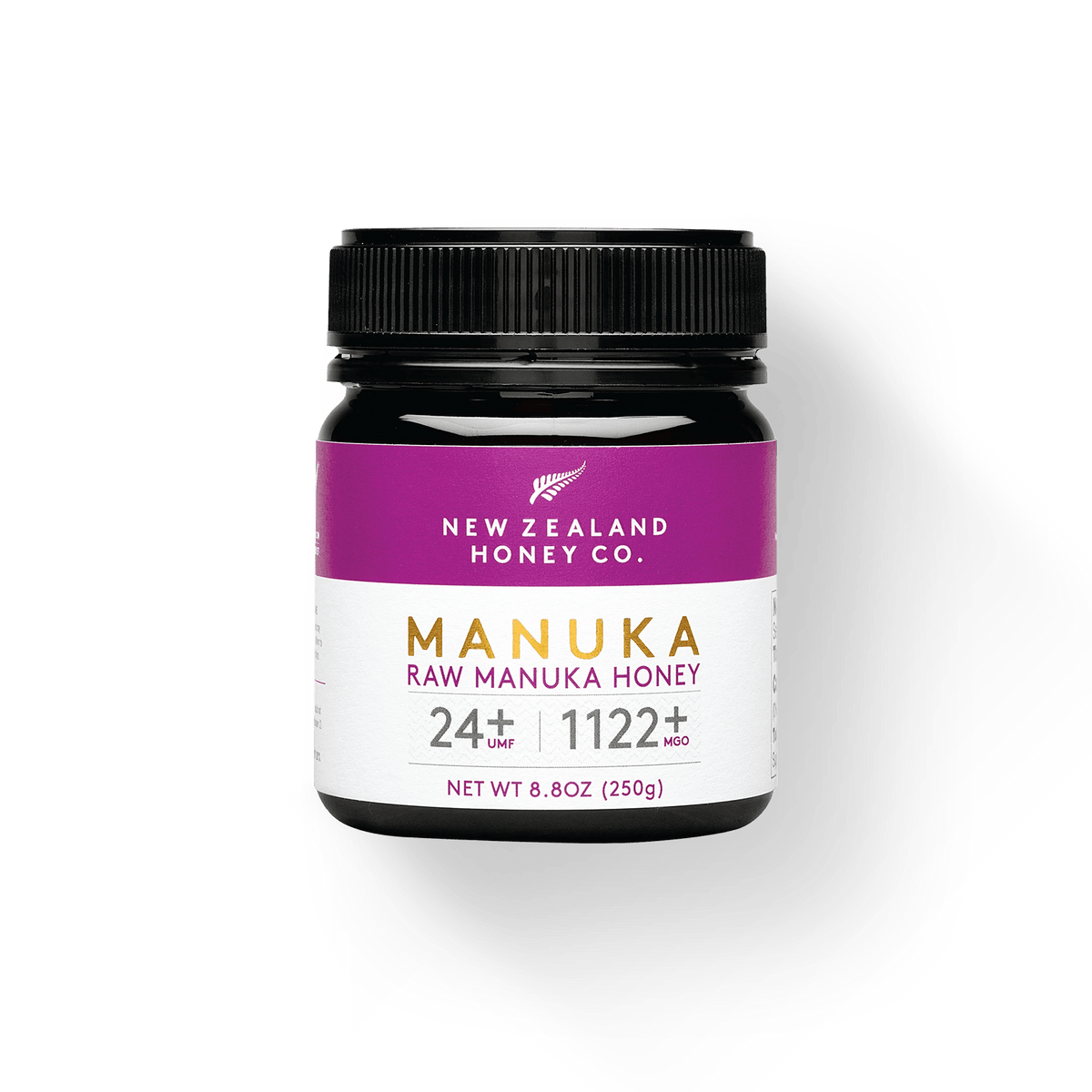
Manuka Honey UMF™ 20+ | MGO 829+
Your health is important. After all, you only get one body. This UMF™ 20+ high-grade Manuka Honey is packed with nutrients and to help you live your best life.
Shop NowGetting Started: Adding Manuka Honey to a Daily Routine
Four Steps to Start Using Manuka Honey for Wellness Support
-
Check the UMF™ and MGO rating
Look for a UMF™ grade of 15+ (MGO 514+) for general daily wellness use, or higher for more targeted support.
-
Start with a small daily dose
A teaspoon a day is a reasonable starting point. It can be taken directly from the spoon, stirred into warm (not boiling) water, or added to porridge, yoghurt or smoothies.
-
Time it with a routine already in place
Pairing it with breakfast or a post-workout meal makes it easier to stick with consistently, rather than treating it as an occasional extra.
-
Track how it feels over several weeks
Wellness support is gradual. Many people notice a difference in digestion or general resilience after a few weeks of consistent use, not overnight.
I take this honey every night before bed. Great for immunity, digestion, and a plethora of other benefits.
— Verified Customer, UMF 26+ MGO 1282+
Getting the Most Out of Every Jar
Best Practices for Real Results
- Avoid stirring Manuka Honey into boiling liquids. High heat can degrade some of its natural bioactive compounds.
- Store the jar at room temperature, away from direct sunlight, to preserve its quality over time.
- Match the UMF™ grade to the goal: everyday wellness support generally calls for a lower grade than targeted use.
- Use it as a replacement for refined sugar in tea, dressings or snacks, not as an addition on top of an already sugar-heavy diet.
- Be consistent. One teaspoon daily over several months supports your wellness journey more effectively than occasional, irregular use.
What the Research Says
Manuka Honey's role in wellness isn't just anecdotal. Clinical research has examined it in contexts ranging from wound care to its effects on oxidative stress.
A study into the effect of New Zealand Manuka Honey on chronic wound healing found that it can eradicate the biofilms of a range of Staphylococcus aureus bacteria strains, thereby allowing the effective management of wound healing.[2]
Laboratory research into Manuka Honey's effect on the oxidative agents that cause chronic inflammation found that it acted as a natural suppressant, reducing oxidative stress and supporting inflammatory related conditions.[3]
A recent in vitro study researched the antibacterial efficacy of Manuka Honey as the UMF™ grade increases. The findings showed that as the UMF™ grade increases, Manuka Honey suppresses bacterial growth more effectively, and that bacterial growth was reduced by up to 95%.[4]
While the research focusses on clinical applications rather than general daily wellness, it points to the same underlying mechanism relevant to everyday use: Manuka Honey's natural compounds have measurable antimicrobial and anti-inflammatory effects when the honey is genuine and adequately potent. This is precisely why MGO and UMF™ ratings matter so much when choosing a jar for personal use.
What MGO or UMF™ rating is best for men's general wellness?
For everyday use, a UMF™ 15+ (MGO 513+) or UMF™ 20+ (MGO 829+) rated Manuka Honey is a reasonable starting point. Those looking for more targeted support often choose UMF™ 24+ (MGO 1122+) or higher. Check out the full range of UMF™ graded Manuka Honey to compare options.
Can Manuka Honey actually support gut health?
Manuka Honey contains naturally occurring oligosaccharides, which can support a healthier balance of gut bacteria. It's best used as part of a broader diet that already supports digestive health, rather than a standalone fix.
How is Manuka Honey different from regular honey for these benefits?
Regular honey lacks the same concentration of methylglyoxal (MGO) and the verified levels of flavonoids and phenolic acids found in genuine Manuka Honey. UMF™ certification and independent testing confirm these compounds are present at meaningful levels, which is not something standard honey labels can guarantee.
A Note on Health Support
- Manuka Honey is a natural wellness product, not a medical treatment. It should be used to support a healthy lifestyle, not to replace medical advice, diagnosis or treatment.
- Men managing diabetes, blood sugar concerns or existing health conditions should speak with a healthcare provider before adding Manuka Honey to their routine.
- Individual results vary. Manuka Honey works best as part of a consistent, balanced approach to diet, sleep and exercise.
Ready to Support Your Wellness Journey?
Explore New Zealand Honey Co.'s range of UMF™ certified Manuka Honey, independently tested and traceable to the source, to find the grade that fits your daily routine.
Shop UMF™ Certified Manuka HoneyReferences
[1] Alvarez-Suarez J, Gasparrini M, Forbes-Hernández T, et al. "The Composition and Biological Activity of Honey: A Focus on Manuka Honey." Foods (Basel, Switzerland). 2014. DOI: 10.3390/foods3030420
[2] Jing Lu, Lynne Turbull, Catherine M., et al. "Manuka-type honeys can eradicate biofilms produced by Staphylococcus aureus strains with different biofilm-forming abilities." Published PeerJ 2014-03-25
[3] Gasparrini, M., Afrin, S., Forbes-Hernández, T.Y., Cianciosi, D., Reboredo-Rodriguez, P., Amici, A., Battino, M., Giampieri, F. "Protective effects of Manuka honey on LPS-treated RAW 264.7 macrophages. Part 2: Control of oxidative stress induced damage, increase of antioxidant enzyme activities and attenuation of inflammation." Universita Politecnica Delle Marche, DOI:10.1016/j.fct.2018.08.001
[4] PhD studentship, Aston University. "Moving from UMF 5+ to UMF 20+ Manuka honey cut the concentration needed to shut down 95 percent of MRSA." Science Blog

Manuka Honey for Cats: Why Less is More.
Curious cat owners often ask if Manuka Honey is safe to share. Here's what's currently understood about Manuka Honey and cats, with an emphasis...
How do you tell if Manuka Honey is real or fake?
Global demand for Manuka Honey has outpaced supply for years, and fraud has followed. Here's how diluted, mislabelled honey ends up on shelves, and...
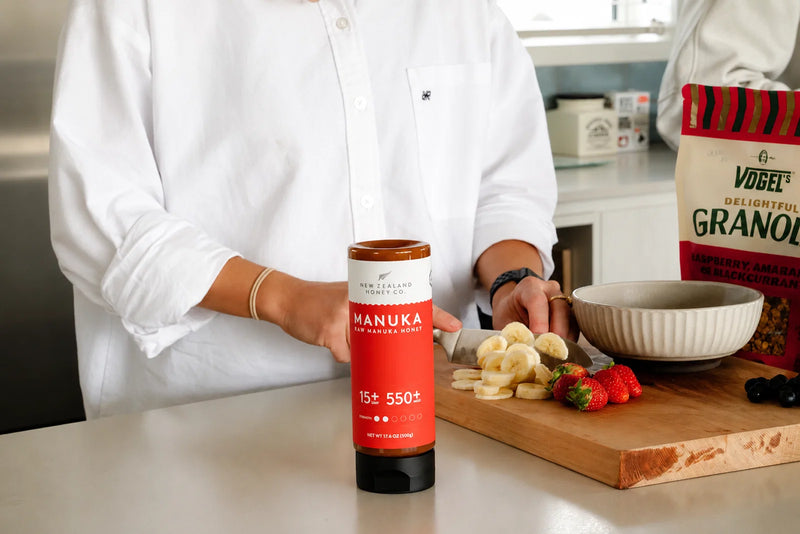
Manuka Honey Daily Wellness: Simple Habits That Stick
Discover how to build a realistic, affordable Manuka Honey daily wellness routine for the whole family, with practical uses for breakfast, warm drinks and...
