


Education · 6 min read
What Does a Queen Bee Look Like? Myths vs Facts
Most people picture a queen bee all wrong. Here's what she really looks like, how long she lives, and why her role in the hive matters to every jar of Manuka Honey.
 By Zoe
Updated 12 Nov 2026

Education · 6 min read
What Does a Queen Bee Look Like? Myths vs Facts
Most people picture a queen bee all wrong. Here's what she really looks like, how long she lives, and why her role in the hive matters to every jar of Manuka Honey.
By Zoe
Updated 12 Nov 2026
Education · 6 min read
What Does a Queen Bee Look Like? Myths vs Facts
Most people picture a queen bee all wrong. Here's what she really looks like, how long she lives, and why her role in the hive matters to every jar of Manuka Honey.
By Zoe
Updated 12 Nov 2026
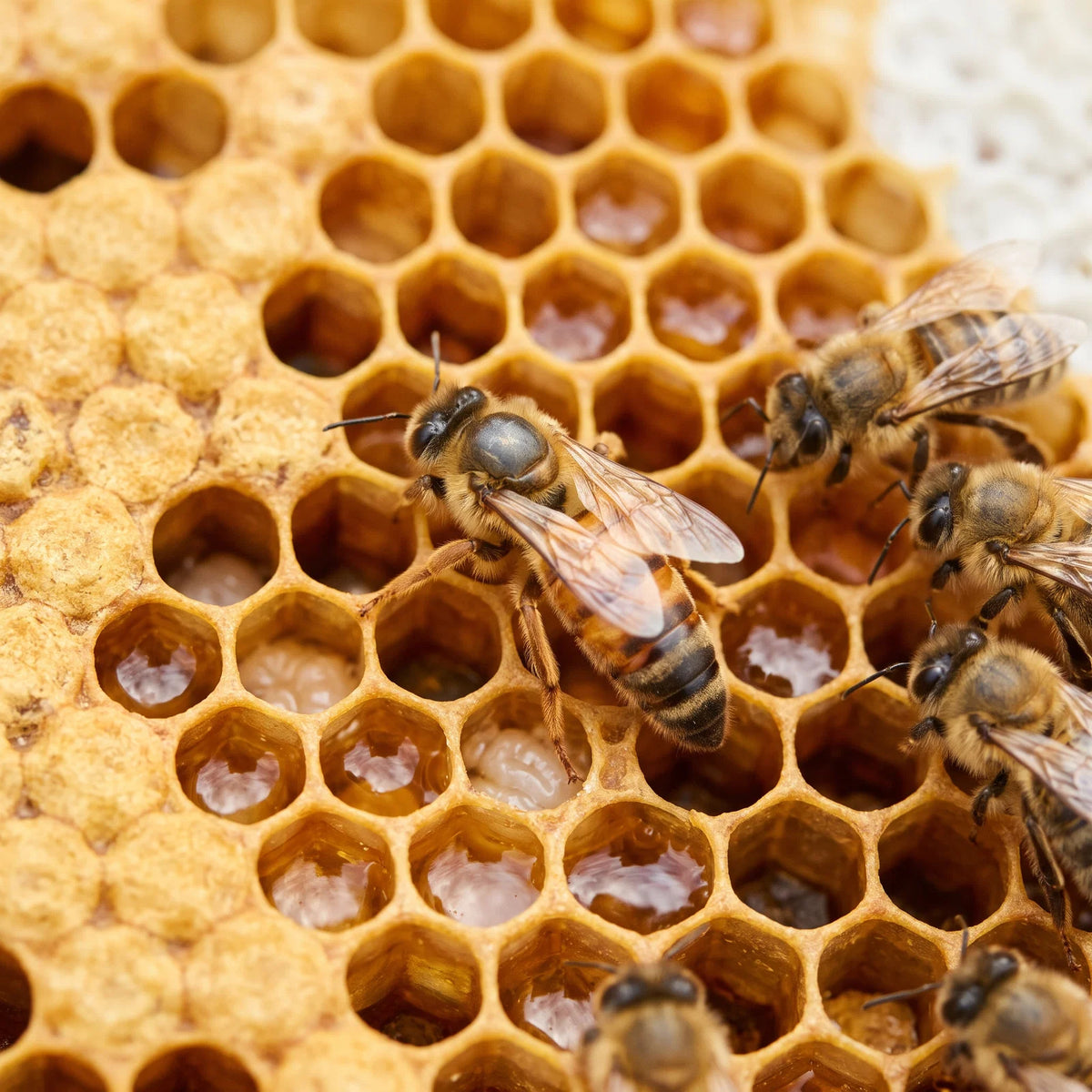
Ask most people to describe a queen bee and they'll say something like this: she's huge, she wears a crown of sorts, and she definitely doesn't sting. Almost none of it is true. The real queen bee is a quietly remarkable creature, and understanding her actually reveals why pure, authentic Manuka Honey is considered one of the rarest superfoods in the world. Her health determines the strength of the colony. The colony determines how much nectar gets collected. And in the remote landscapes of New Zealand, during a Manuka flowering window that lasts only two to eight weeks a year, every one of those details matters.
Bee folklore has been passed down for generations, long before anyone could look closely at a hive without getting stung. Much of what people believe about queen bees comes from old beekeeping stories, cartoons, or a general mix-up between queen bees and other insects entirely. Add in the fact that a queen is surrounded by thousands of lookalike workers, and it is easy to see how the myths took hold. The truth is simpler, and arguably more interesting, than the legend.
Myth: The Queen Bee Is Covered in Gold or Has a Crown-Like Marking
Because she's called a "queen," people often assume she looks regal, maybe with gold stripes or an obvious marking that sets her apart like a royal emblem. It's a natural assumption. Royalty implies ornamentation.
The Truth
- A queen bee has no crown, gold markings, or special coloring that distinguishes her at a glance.
- She is identifiable by her body shape: a notably longer, more tapered abdomen that extends past her folded wings.
- Her thorax is slightly larger than a worker bee's, and her legs are longer, but her coloring is usually similar to the rest of the colony.
- Beekeepers often mark queens with a small dot of paint themselves, precisely because she does not naturally stand out.
Myth: The Queen Bee Is Always the Biggest Bee in the Hive
This one persists because it's partly true, which makes it tricky. People assume size alone is the giveaway, picturing her as dramatically larger than every other bee, almost like a different species altogether.
The Truth
- The queen is longer than worker bees, but she is not always wider or more robust.
- Drones (male bees) actually have a stockier, broader body than the queen, which confuses many first-time hive observers.
- Length, not bulk, is the reliable marker. Her elongated abdomen is built for one primary purpose: laying up to 2,000 eggs a day during peak season.
- Experienced beekeepers look for her distinctive walk and the way worker bees orient themselves around her, almost like a small entourage, rather than relying on size alone.
Myth: The Queen Bee Doesn't Have a Stinger
Many people believe queen bees are stingless because they so rarely see one sting anything. Worker bees are the ones patrolling and defending, so it's assumed the queen simply lacks the equipment.
The Truth
- A queen bee does have a stinger, and unlike a worker bee, hers is smooth rather than barbed, meaning she can sting repeatedly without dying.
- She rarely uses it on humans. Her stinger is primarily reserved for rival queens during colony succession battles.
- In a hive, only one queen survives such encounters. It is a biological safeguard that keeps the colony stable and focused on one leader.
- This rivalry is part of why queen rearing is taken so seriously by beekeepers managing healthy, productive colonies.
Myth: Queen Bees Live Forever, or Barely Live at All
Lifespan myths tend to swing to extremes. Some assume a queen lives just a season, like a worker bee. Others have heard exaggerated claims that she lives indefinitely as long as she's fed well.
The Truth
- A queen bee typically lives two to five years, dramatically longer than a worker bee's six-week lifespan during active season.
- Her longevity comes down to diet. She is fed royal jelly exclusively throughout her life, a nutrient-dense secretion produced by worker bees.
- Egg-laying capacity does decline with age, which is why colonies will naturally replace an older queen through a process called supersedure.
- A thriving queen directly supports a thriving hive, which in turn supports strong nectar collection during New Zealand's short Manuka flowering season.
Myth: Beekeepers Simply Pick Whichever Bee They Want to Be Queen
Because beekeepers are sometimes seen marking or introducing queens, people assume the selection process is arbitrary, almost like choosing a team captain.
The Truth
- A queen bee is chosen by the colony itself, not by a beekeeper. Worker bees select a young larva and feed it royal jelly exclusively.
- This diet triggers the development of full reproductive organs, something larvae fed standard pollen and nectar never develop.
- If a hive loses its queen unexpectedly, workers can rear a new one from existing larvae within roughly 16 days.
- Beekeepers may guide conditions for healthy queen rearing, but the colony drives the biological process from start to finish.
Key Takeaways on Queen Bee Biology
- Identify her by shape, not color: a long, tapered abdomen set her apart more reliably than markings.
- Size matters less than length. Drones can be bulkier, but the queen is consistently the longest bee in the colony.
- She has a stinger and can use it more than once, though it is mainly reserved for rival queens.
- A healthy queen can live two to five years, and her wellbeing underpins the strength of the entire hive.
- The colony, not the beekeeper, decides and raises its queen through royal jelly feeding.
How Queen Bee Health Connects to Your Jar of Manuka Honey
From Hive to Harvest: Why the Queen Matters to Manuka Honey Quality
-
A strong queen builds a strong colony
A healthy, well-mated queen lays consistently, keeping worker bee numbers high enough to maximise foraging during the short Manuka flowering window.
-
More foragers means more Manuka nectar collected
Manuka flowers bloom for just two to eight weeks a year in remote parts of New Zealand, so colony strength during that narrow window directly affects how much genuine Manuka nectar is gathered.
-
Beekeepers monitor hive health closely
Apiarists track queen performance and colony vitality season to season, since a declining queen can mean a smaller, weaker harvest.
-
Every batch is tested and traced
Once harvested, honey is independently tested and certified for its UMF™ rating, with every batch traceable to the source via QR code, so the quality that starts with a healthy hive carries all the way to the jar.
What does a queen bee look like compared to a worker bee?
A queen bee has a longer, more tapered abdomen that extends past her folded wings, along with a slightly larger thorax and longer legs. She is not necessarily the biggest or most colorful bee in the hive. Her length, rather than her color or bulk, is the most reliable identifying feature.
How long do queen bees live?
A queen bee typically lives two to five years, far longer than a worker bee's six-week lifespan. Her extended lifespan is largely due to an exclusive diet of royal jelly throughout her life. To learn more about how healthy hives support the rarity of this superfood, see our Manuka Honey guide.
Does the queen bee have a stinger, and does she use it?
Yes, a queen bee has a smooth, non-barbed stinger, allowing her to sting multiple times without dying. She rarely stings humans and mainly uses her stinger against rival queens during colony succession.
Discover the Hive Behind Every Jar
A thriving queen bee is just the beginning of what makes authentic Manuka Honey one of the rarest superfoods on earth. Explore New Zealand Honey Co.'s UMF™ certified range, independently tested and traceable to the source, and support your wellness journey with honey as remarkable as the bees behind it.
Shop UMF™ Certified Manuka Honey
How to Make Manuka Honey Lollipops at Home
Turn pure, UMF™ certified Manuka Honey into soothing homemade lollipops. This simple recipe is a natural, better-for-you treat the whole family can enjoy.
Garlic and Honey Benefits: A Beginner's Guide
Curious about garlic and honey but don't know where to start? This beginner's guide breaks down the benefits, a simple fermentation method, and why...
Honey and Cinnamon Together: What the Pairing Really Does
Honey and cinnamon have been paired for centuries, but what actually happens when they're combined? This deep dive explores the properties of each ingredient,...
