
Manuka Honey Articles · 8 min read
Manuka Honey Benefits: A Practical Guide
From a daily wellness boost and immune support to glowing skin and healthy hair - discover what Manuka Honey really does, and how to choose the right UMF™ grade for you.
 By Clare
Updated 2 Jul 2026
By Clare
Updated 2 Jul 2026

Manuka Honey Articles · 8 min read
Manuka Honey Benefits: A Practical Guide
From a daily wellness boost and immune support to glowing skin and healthy hair - discover what Manuka Honey really does, and how to choose the right UMF™ grade for you.
By Clare
Updated 2 Jul 2026
Manuka Honey Articles · 8 min read
Manuka Honey Benefits: A Practical Guide
From a daily wellness boost and immune support to glowing skin and healthy hair - discover what Manuka Honey really does, and how to choose the right UMF™ grade for you.
By Clare
Updated 2 Jul 2026
What Manuka Honey Can Really Do For You
Manuka Honey isn't just expensive honey, it's in a category of its own. This rare, monofloral honey from New Zealand carries unusually high levels of a natural compound called methylglyoxal (MGO), the active compound behind its natural antibacterial properties. That's what UMF™ certification measures, and it's why people the world over keep a jar within reach.
So what's it actually good for? A daily spoonful supports a healthy immune system, brings digestive balance to your daily routine, and works beautifully for skincare, haircare and wound care. One ingredient, around 2,000 natural compounds.
In this guide to Manuka Honey benefits we'll cover:
- What is Manuka Honey good for?
- The science behind the magic
- The benefits of eating Manuka Honey
- Manuka Honey for scars and wounds
- Manuka Honey for skincare and haircare
- How to choose your UMF™ grade
- Manuka Honey FAQs
I love this stuff. Nature’s liquid gold. I take a small teaspoon a day and have not been sick in a year.
— Vazrik Z., Verified Customer, UMF™ 20+ MGO 1122+
What Is Manuka Honey Good For?
Short answer: more than anything else in your pantry. Manuka Honey supports immunity and digestion, it's a natural sweetener, and a star ingredient in homemade skincare and haircare, all from one jar. That versatility, paired with its naturally high concentration of beneficial compounds, is why a single jar tends to earn permanent shelf space once it arrives. As part of a balanced diet, a daily spoonful is a ritual people build into their mornings, in warm water with lemon, in a smoothie, over yogurt or simply off the spoon.
Broadly, the benefits fall into two camps: the ones you get by eating it and the ones you get by using it on your skin and hair. This guide takes each in turn, starting with what actually makes Manuka Honey so special in the first place.
The Science Behind The Magic - MGO And UMF™ Explained
What sets Manuka Honey apart is methylglyoxal (MGO) — a natural compound it carries at levels far beyond ordinary honey, and the active compound behind its naturally antibacterial properties. The more MGO, the more potent the honey.
The UMF™ grading system measures the MGO levels in Manuka Honey along with three other compounds: leptosperin (authenticity marker unique to Manuka), DHA (precursor to MGO), and HMF (freshness indicator). This independent testing certifies that a Manuka Honey is pure, raw, monofloral, and genuinely from New Zealand. The higher the UMF™ grade the more potent and rare the the honey.
Eating Manuka Honey For Wellness
The popularity of Manuka Honey from New Zealand has skyrocketed and this is partly due to its unique antibacterial properties that make it a versatile natural remedy for many health issues. The best news? You just have to eat it. Here are some of the benefits you can expect.
Supports immunity
Manuka Honey contains uniquely high levels of the antibacterial compound methylglyoxal (MGO). The higher the MGO content, the more antibacterial the honey. This compound helps fight infection and reduce inflammation both inside and outside of the body.
Digestive health
As well as natural antibiotic properties, Manuka Honey contains prebiotic oligosaccharides which can have a beneficial effect on the microbial balance of the gut. This means as well as supporting digestive health, Manuka Honey can help to reduce acid reflux and indigestion.
Oral health
This might seem strange since honey contains sugar, but Manuka Honey's antibacterial properties can help to support oral health. In moderation, Manuka Honey may reduce plaque, ease gingivitis and keep your breath smelling fresh.
Sexual health
Manuka honey has been found to boost testosterone production which in turn can increase libido, as well as sperm production and motility. Eating Manuka Honey can support male and female sexual health by keeping the reproductive organs healthy and functioning optimally.
Allergy relief
Manuka honey can help to ease the unpleasant symptoms of seasonal allergies, from sinusitis to sore throats.
I take this honey daily to keep my immunity high. It works better than anything else I have tried. And it tastes great!
— Mark S., Verified Customer, UMF 26+ MGO 1281+
The Effect Of Manuka Honey On Scars And Wounds
There is now extensive research into the efficacy of Manuka Honey in wound care and tissue regeneration. This is particularly important today given the growth of antibacterial resistance. It started with research conducted by Professor Peter Molan who discovered the wound healing properties of Manuka Honey.
“With the use of Manuka Honey, selected to have the right type and level of antibacterial activity, and with an appropriate dressing protocol that keeps honey present on the wound bed at all times, uncomplicated wounds will heal rapidly, painlessly, and without a visible scar.” Professor Peter Molan, The Use Of Manuka Honey To Promote Wound Healing.
“There is high quality evidence that honey heals partial thickness burns around 4 to 5 days more quickly than conventional dressings." Cochrane, Honey as a topical treatment for acute and chronic wounds.
Examples of what Manuka Honey may help with:
- Skin recovery at home from first-degree burns.
- Prevention of infection after cuts.
- Decreased inflammatory response in patients recovering from wounds.
It's always important to discuss the specifics of your situation with your physician before taking action.
I love everything about this honey, the taste, the medicinal uses, the fast shipping and the customer service. I have used it on wounds and a toothache with wonderful results and have been taking it for years now. It is definitely worth every penny.
— Anonymous, Verified Customer, UMF™ 24+ MGO 1122+
The Benefits Of Manuka Honey For Skincare
From moisture retention to antibacterial defences and healing, studies have shown that Manuka Honey has the potential support skin health:
- Hydration and softness: Manuka Honey acts as a humectant (drawing water into the skin) and an emollient (softening and smoothing). That makes it ideal for tackling dryness and restoring comfort.
- Surface protection: Naturally occurring compounds, including methylglyoxal (MGO), help keep the skin’s surface balanced and clear.
- Skin-friendly pH: Manuka Honey can help to regulate pH levels, supporting the skin barrier to stay healthy.
- Rich, dense texture: Unlike runny supermarket honey, genuine Manuka Honey sits exactly where you apply it (assuming you're not in an extremely hot climate), forming a soothing layer whether you’re masking or spot treating.
- Preventing infection: Manuka Honey has potent antibacterial and antifungal properties, helping to prevent the skin's surface from infection and supporting healthy healing.
- Versatility: From daily dryness and acne-prone skin to supporting scarred areas and calming reactive patches, people use Manuka Honey in many different ways.
Manuka Honey Benefits For Hair And Scalp
Skincare doesn't stop at your face. Those same moisture-loving, naturally antibacterial properties make Manuka Honey a favourite for hair and scalp, especially if yours runs dry or damaged. As a humectant it helps lock moisture into the hair shaft, supporting softer, healthier-looking lengths and a comfortable, hydrated scalp.
The easiest win is a homemade manuka honey hair mask: work it through, let it do its thing, then rinse. One ingredient, no complicated regime.
How To Choose Your UMF™ Grade
The UMF™ grading system is used to ensure that Manuka Honey is pure, raw, monofloral and produced and packaged exclusively in New Zealand. Unfortunately, there are a lot of fakes on the market, so this independent verification system helps to regulate the real thing. The UMF™ grade directly corresponds with the MGO content of the honey. The higher the grade, the more potent its antibacterial properties.
Match the grade to how you'll use it.
- UMF™ 10+ MGO 263+ supports natural vitality for active families - it's a kitchen staple.
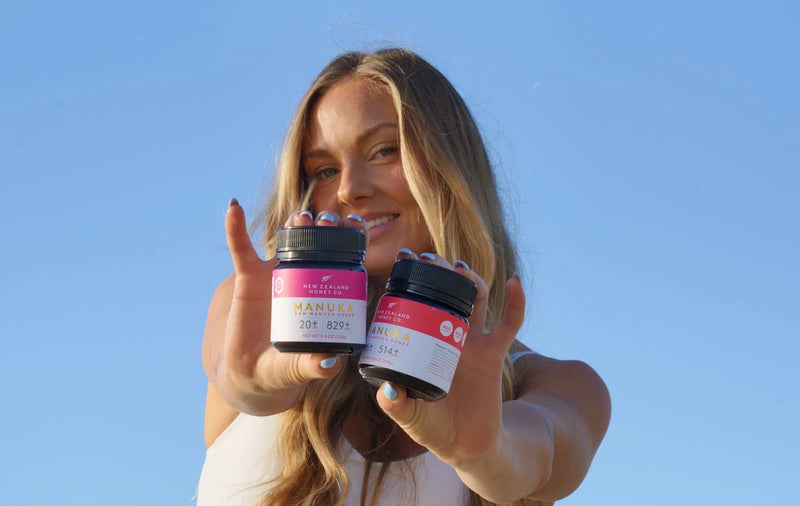
- UMF™ 15+ MGO 514+ fuels everyday wellness and supports immunity and well-being.
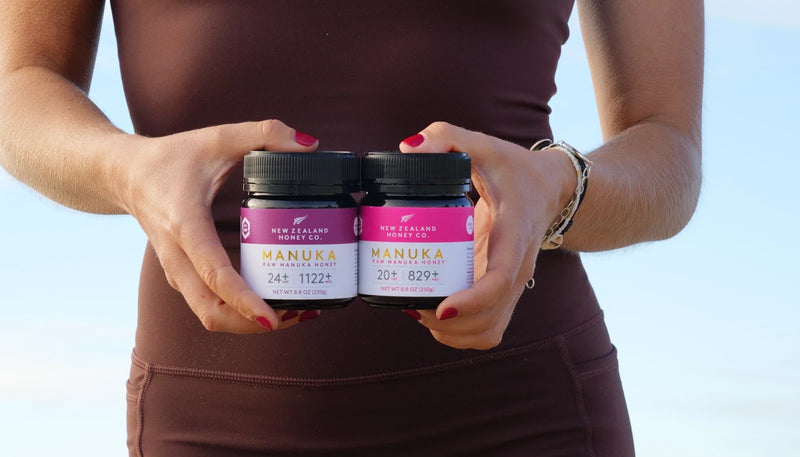
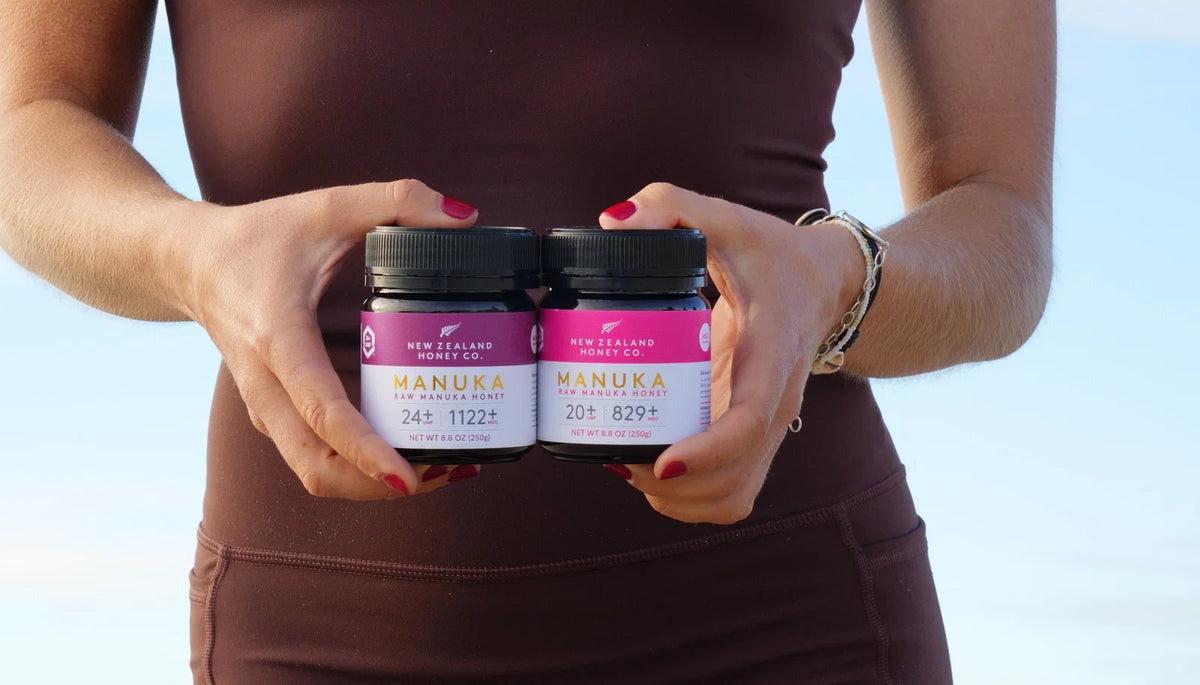
- UMF™ 20+ MGO 829+ packed with nutrients and essential vitality, perfect for skincare and hair care, as well as immune support.
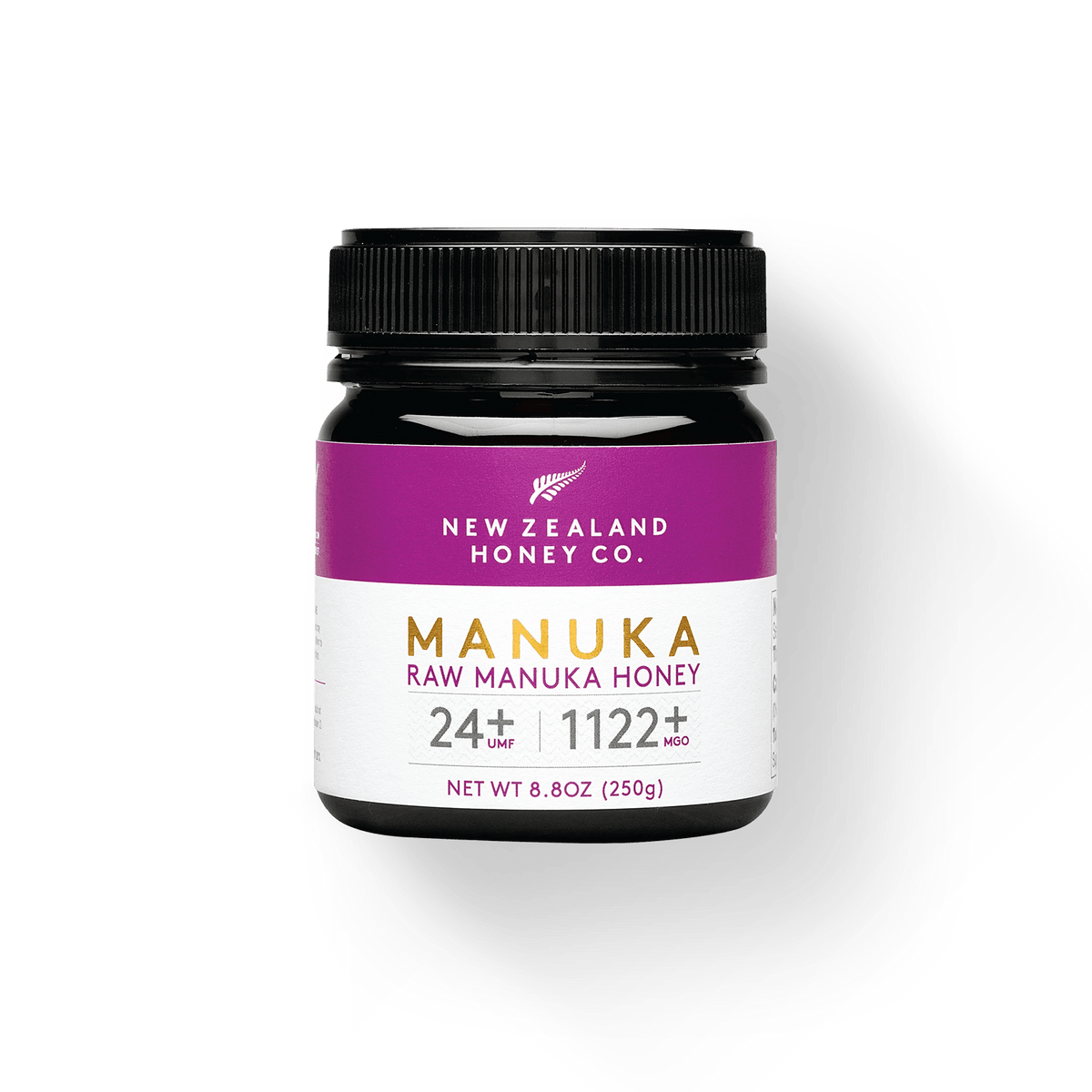
- UMF™ 24+ MGO 1122+ high potency honey for premium every day use, digestive wellbeing and wound support.
- UMF™ 26+ MGO 1282+ exceptionally rare and potent honey for support of a specific health issues and wound care.
- UMF™ 28+ MGO 1450+ powerful and ultra rare, for when your health and wellness needs the best.
Why is Manuka Honey so prized?
It contains methylglyoxal (MGO) at far higher levels than ordinary honey. That compound, plus Manuka's natural antioxidants, gives the honey its naturally antibacterial properties — a verified characteristic of the honey, which is exactly what UMF™ certification measures.
Is Manuka Honey better than regular honey?
For wellness, yes. As a sugar alternative most raw honeys do the job, but Manuka's far higher concentration of beneficial compounds is why people choose it as a natural-wellness food, not just a sweetener.
Is Manuka Honey worth the price?
For most people, absolutely — if you value a certified, traceable, premium honey for daily wellness and DIY skincare. You pay more for UMF™-graded Manuka, and the certificate is your guarantee it's genuine.
Why is Manuka Honey so expensive?
Genuine manuka is rare, harvested in a short seasonal window of two to eight weeks each year, and the most regulated and tested honey in the world.
Is it ok to have Manuka Honey every day?
Yes - a daily spoonful is a great way to enjoy it as part of a balanced diet. It's still a sugar, so keep portions sensible.
How do I get the most from it?
Make it consistent. A daily spoonful, stirred into warm water, over yogurt, or straight off the spoon. For skin and hair, a simple DIY mask once or twice a week.
Who shouldn't have Manuka Honey?
Never give honey to infants under 12 months, and avoid it if you have a bee or honey allergy. Managing a health condition? Talk to your doctor before changing your diet.
Get the best results with New Zealand Honey Co. Manuka Honey
Every jar from New Zealand Honey Co. is independently tested, carries a verified UMF™ grade and MGO level, and a QR code traceable to the source. Pure, authentic Manuka Honey — optimised for everyday wellness and backed by the certification that actually means something.
Explore the rangeThis article is for general informational purposes only and is not medical advice. These statements have not been evaluated by the Food and Drug Administration. This product is not intended to diagnose, treat, cure, or prevent any disease. Not suitable for children under 12 months — honey should never be given to infants. If you are managing a health condition, talk to your doctor before changing your di
Manuka Honey Certifications Explained
Not all Manuka Honey certifications are created equal. Understanding the difference between UMF™ ratings, MGO levels, and unverified grading claims could be the difference...
How to Choose a Manuka Honey Brand
Not all Manuka Honey is created equal. This practical guide walks you through four quality pillars to help you evaluate any brand with confidence,...

The Best Regions for Manuka Honey Explained
Not all Manuka Honey is created equal — and geography is a big reason why. Explore how the Far North and Queenstown Lakes regions...
