
Manuka Honey Articles · 4 min read
Understanding Manuka Honey: Harvesting and Quality Verification
Manuka honey's value comes down to two things: a harvest window of just two to eight weeks, and independent lab verification of what's actually in the jar. This article explains how New Zealand Honey Co. sources, tests, and traces every batch, from remote hive sites to the four UMF™ markers that confirm authenticity, potency, and freshness.
 By Clare
Updated 11 Sep 2026
By Clare
Updated 11 Sep 2026

Manuka Honey Articles · 4 min read
Understanding Manuka Honey: Harvesting and Quality Verification
Manuka honey's value comes down to two things: a harvest window of just two to eight weeks, and independent lab verification of what's actually in the jar. This article explains how New Zealand Honey Co. sources, tests, and traces every batch, from remote hive sites to the four UMF™ markers that confirm authenticity, potency, and freshness.
By Clare
Updated 11 Sep 2026
Manuka Honey Articles · 4 min read
Understanding Manuka Honey: Harvesting and Quality Verification
Manuka honey's value comes down to two things: a harvest window of just two to eight weeks, and independent lab verification of what's actually in the jar. This article explains how New Zealand Honey Co. sources, tests, and traces every batch, from remote hive sites to the four UMF™ markers that confirm authenticity, potency, and freshness.
By Clare
Updated 11 Sep 2026
Manuka honey comes from the nectar of Leptospermum scoparium, a plant native to New Zealand. It flowers for a short period each summer, and only in certain regions. Those two constraints shape everything about how the honey is produced: where hives can be placed, how narrow the harvest window is, and why independent laboratory testing is needed to confirm what is in the jar.
New Zealand Honey Co. sources honey through partner beekeepers across the country, from Northland in the far north to Otago in the South Island. Every batch is then tested by independent New Zealand laboratories, Analytica Laboratories and Hill Laboratories, before it is packed and labelled.
Harvesting and Sustainability
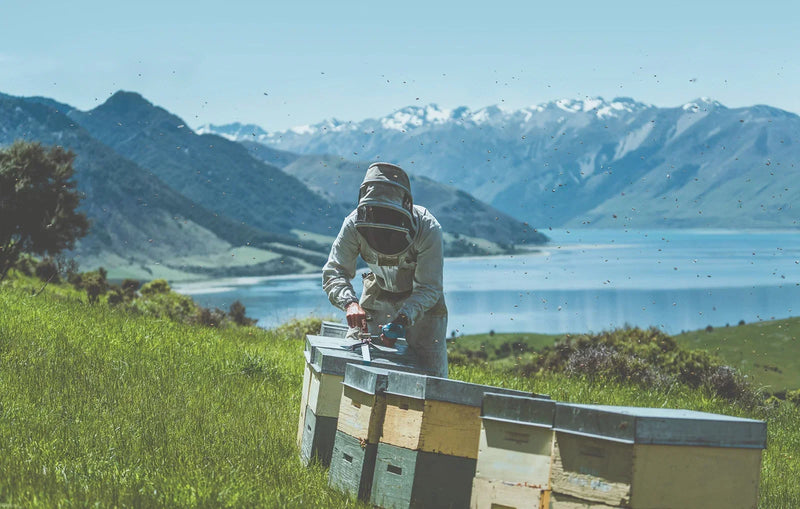
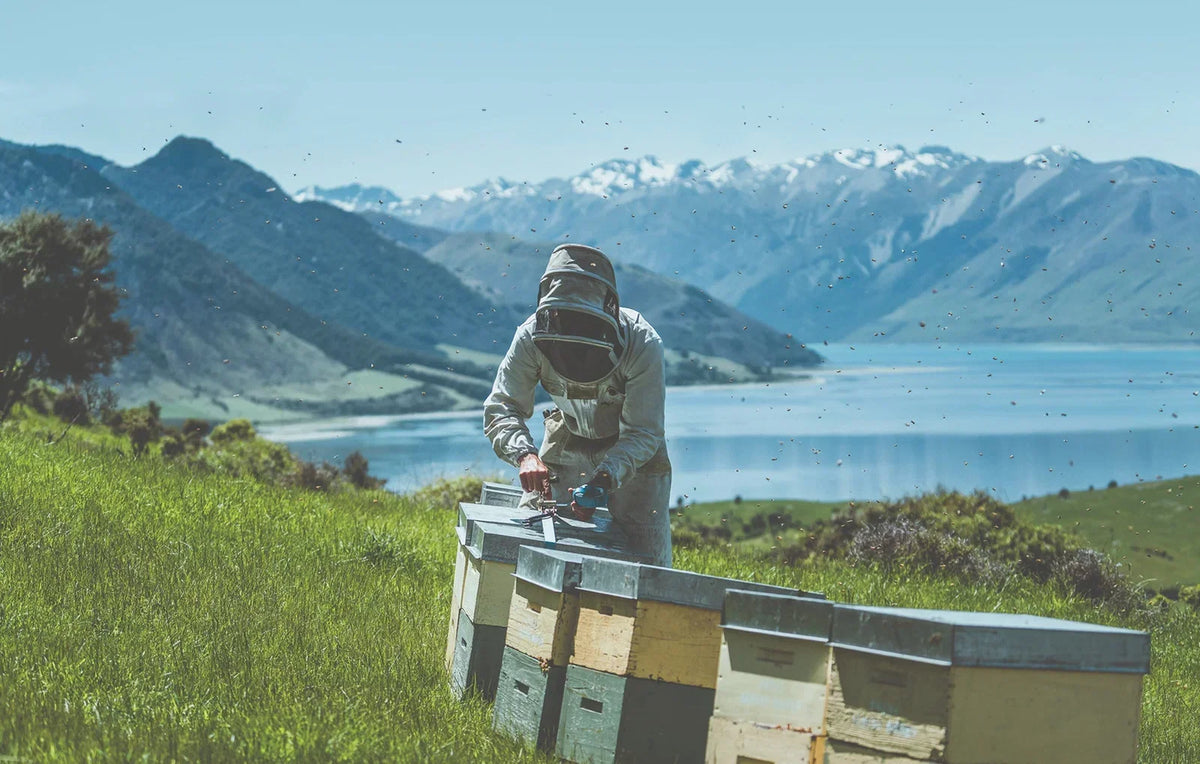
A harvest window of two to eight weeks. Manuka flowers for only two to eight weeks a year, and the timing shifts by region and by season. Beekeepers monitor flowering, weather, and hive condition to place hives before the bloom and remove them once it ends. A poor season - cold, wet, or windy weather during the flowering period - reduces both volume and potency, because bees cannot forage in those conditions.
Remote, rugged sites. Manuka grows wild in undisturbed country, much of it mountainous and away from farmland and roads. Hives are placed in these locations to reduce the chance of bees foraging on other floral sources or encountering agrichemicals. The logistics are demanding: sites are reached over unsealed tracks or by air, hive boxes are heavy when full, and the placement and retrieval both have to happen inside the flowering window. Obtaining monofloral-grade Manuka honey is a specialised task that requires trained, experienced apiarists.
Colony health across the season. Standard practice in New Zealand apiculture is to harvest only surplus honey, leaving the colony with reserves over winter. New Zealand Honey Co.'s partner beekeepers do not administer antibiotics to their bees, managing hive health through husbandry instead. Nectar collection is a single stage in a year-round cycle of hive inspection, disease monitoring, and overwintering; the honey volume available in any given year is a function of how well that cycle was managed.
Land use. Manuka is a low-intensity land use. It grows without irrigation, cultivation, or fertiliser input, and establishing it on retired pasture returns that land toward native cover. Manuka production therefore gives landowners an economic reason to leave marginal land in regenerating native vegetation rather than clearing it.
Processing. After extraction the honey is not pasteurised and nothing is added to it. It is foraged, harvested, extracted, packed, labelled, and tested in New Zealand.
Authenticity and Testing
Manuka honey cannot be verified by taste, colour, or a producer's own claim. It is verified by measuring specific compounds in a laboratory. Terms such as "Active" or "Bio-Active", and proprietary in-house numbers, are unregulated in most markets and carry no mandatory testing requirement or external audit trail.
The four UMF™ markers. Every batch of New Zealand Honey Co. Manuka honey is independently tested and certified under the UMF™ grading system, administered by the Unique Manuka Factor Honey Association (UMFHA). Testing is carried out by Analytica Laboratories and Hill Laboratories, two accredited New Zealand laboratories that specialise in honey analysis and operate independently of the producer. The system measures four compounds:
| Marker | What it establishes |
|---|---|
| MGO (methylglyoxal) | Potency. The compound is most closely associated with Manuka honey's non-peroxide activity. |
| Leptosperin | Authenticity. Found in Manuka nectar, so its presence confirms the honey's floral source. |
| DHA (dihydroxyacetone) | Shelf life. DHA converts to MGO over time, so it indicates how potency will hold. |
| HMF (hydroxymethylfurfural) | Freshness. Rises with age and heat exposure, so a low result indicates the honey has not been overheated or held too long. |
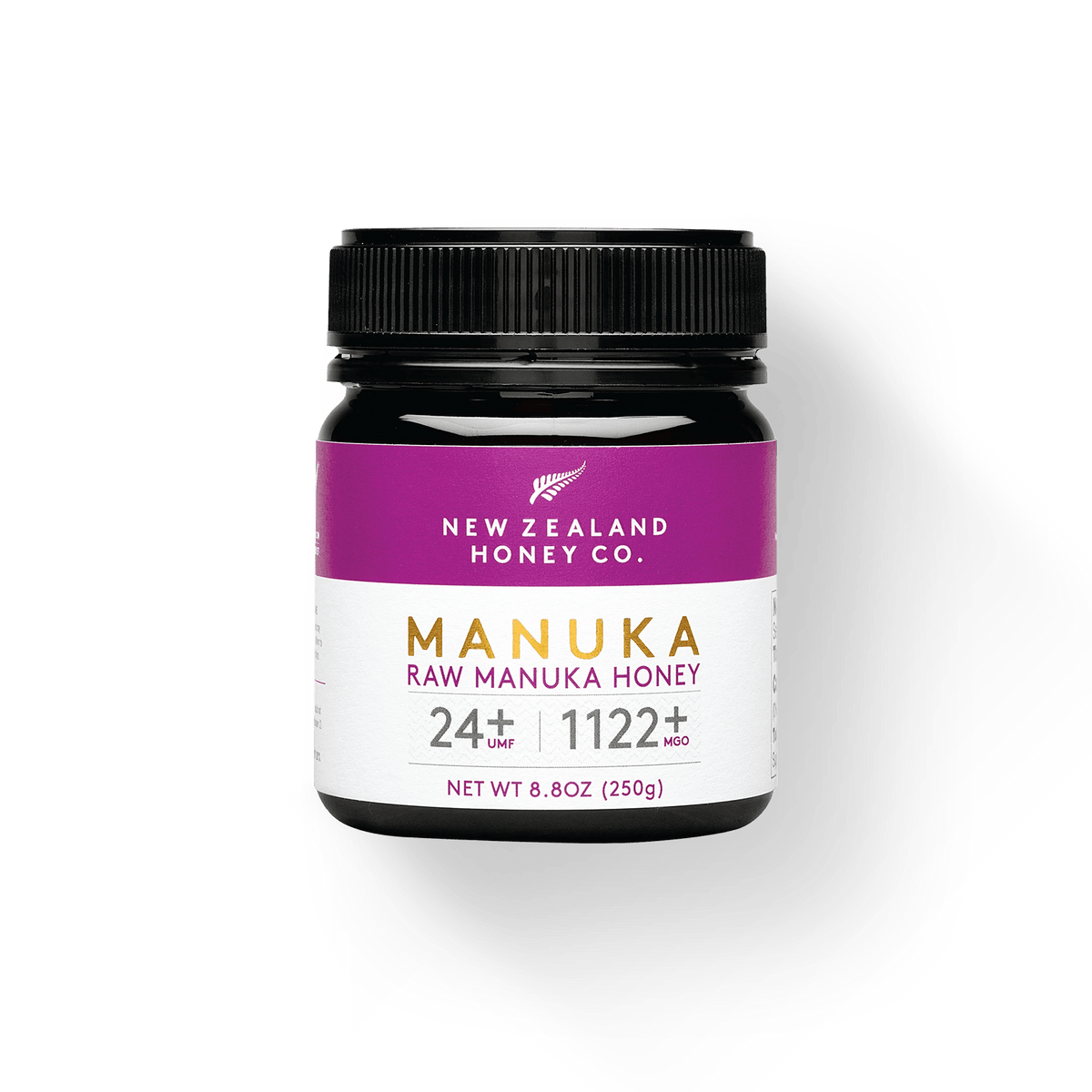
A UMF™ grade corresponds to a minimum MGO concentration in mg/kg. UMF™ 10+ corresponds to MGO 263+, UMF™ 15+ to MGO 514+, UMF™ 20+ to MGO 829+, and UMF™ 24+ to MGO 1122+. An MGO figure on its own indicates potency but does not confirm the honey is genuine Manuka; that requires the full marker profile.
Contaminant and residue testing. Beyond the UMF™ markers, batches are tested at the same independent laboratories for glyphosate and other agrichemical residues. The honey holds Detox Project certification and third-party verification against the Non-GMO Project Standard, and contains no antibiotics or additives. The full set of lab testing and certification credentials is published separately.
Traceability. Each jar carries a QR code linking to that batch's region of origin, its UMF™ certificate, and its laboratory test results. The same records are searchable online without a jar in hand: enter a batch number in the Official Certificate Search to view the certificate and test results for any batch. This is the point of independent testing: the consumer is not asked to accept the producer's word, but can read the certificate for the specific jar they bought.
External review. New Zealand Honey Co.'s UMF™ 15+ Manuka honey was named a Top Pick by ConsumerLab.com, an independent health product testing organisation, with UMF™ 20+ also recognised.

Manuka Honey UMF™ 15+ | MGO 514+
You’re living an active lifestyle and you care about what goes in (and on) your body. This UMF™ 15+ Manuka Honey is optimised for life, to help you get the most out of your da…
Shop Now
Manuka Honey UMF™ 20+ | MGO 829+
Your health is important. After all, you only get one body. This UMF™ 20+ high-grade Manuka Honey is packed with nutrients and essential vitality to help you live your best li…
Shop Now
Manuka Honey for Men's Health: Science-Backed Support
Men juggling work, training and family often put wellness last. Learn how the active compounds like methylglyoxal, flavonoids, phenolic acids and oligosaccharides in Manuka...
Manuka Honey for Cats: Why Less is More.
Curious cat owners often ask if Manuka Honey is safe to share. Here's what's currently understood about Manuka Honey and cats, with an emphasis...
How do you tell if Manuka Honey is real or fake?
Global demand for Manuka Honey has outpaced supply for years, and fraud has followed. Here's how diluted, mislabelled honey ends up on shelves, and...
