
Manuka Honey Articles · 7 min read
How to Choose a Manuka Honey Brand: 7 Key Factors
With so many options on the shelf, choosing the right Manuka Honey brand can feel overwhelming. This practical guide breaks down the 7 key factors every buyer should check before spending their money.
 By Clare
Updated 23 Jun 2026
By Clare
Updated 23 Jun 2026

Manuka Honey Articles · 7 min read
How to Choose a Manuka Honey Brand: 7 Key Factors
With so many options on the shelf, choosing the right Manuka Honey brand can feel overwhelming. This practical guide breaks down the 7 key factors every buyer should check before spending their money.
By Clare
Updated 23 Jun 2026
Manuka Honey Articles · 7 min read
How to Choose a Manuka Honey Brand: 7 Key Factors
With so many options on the shelf, choosing the right Manuka Honey brand can feel overwhelming. This practical guide breaks down the 7 key factors every buyer should check before spending their money.
By Clare
Updated 23 Jun 2026
Picture this: you're scrolling through an online shop, looking at a wall of Manuka Honey products. Some jars cost twice as much as others. Labels are covered in numbers and acronyms. And every brand claims to be the best. Where do you even begin?
The truth is, not all Manuka Honey is created equal — and some products marketed as Manuka Honey offer very little of what makes this rare superfood worth seeking out. Learning how to read the labels properly means you stop guessing and start choosing with confidence. This guide walks through the 7 factors that genuinely matter when selecting an authentic Manuka Honey brand.
The 7 Factors to Check Before You Buy
-
Check for a UMF™ Rating on the Label
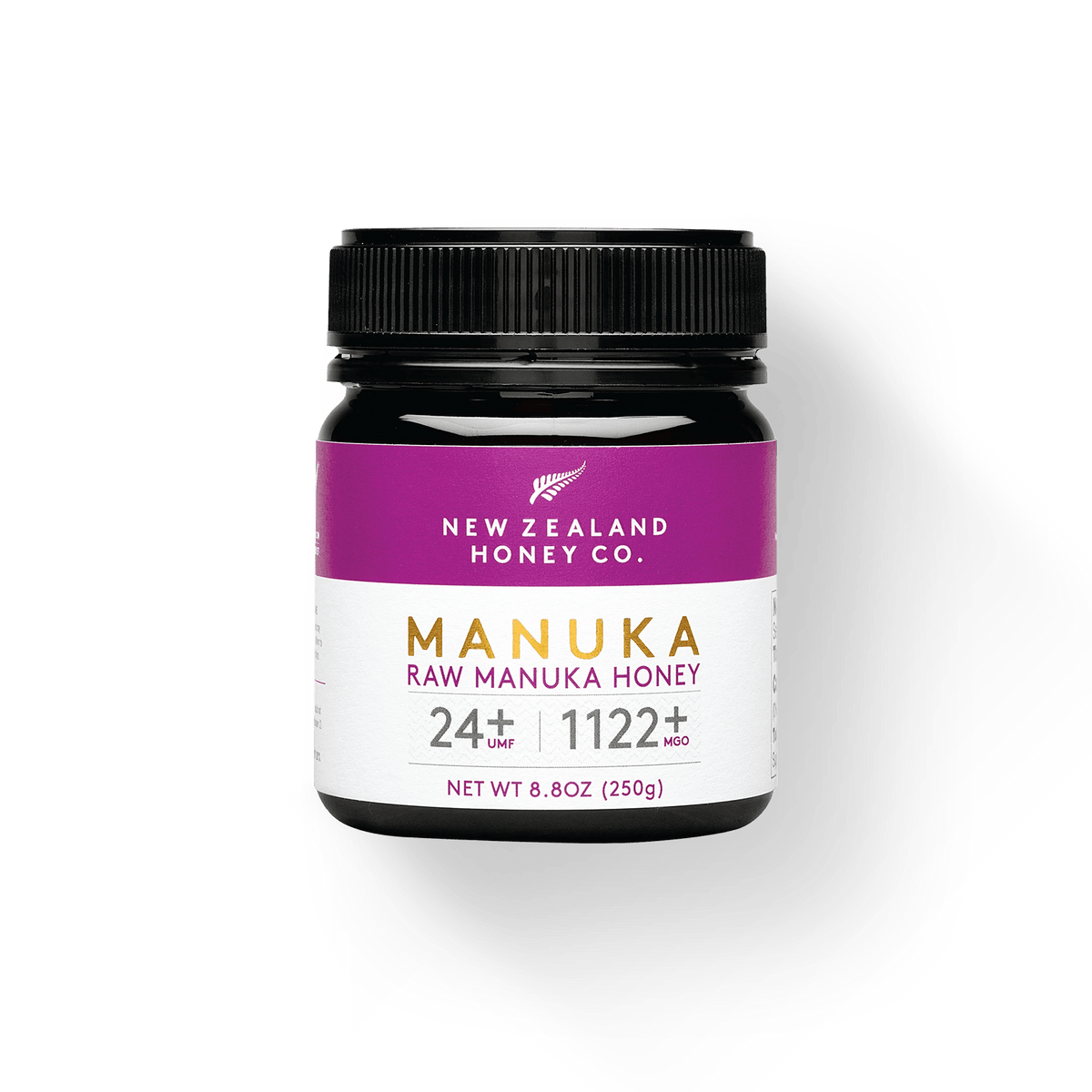
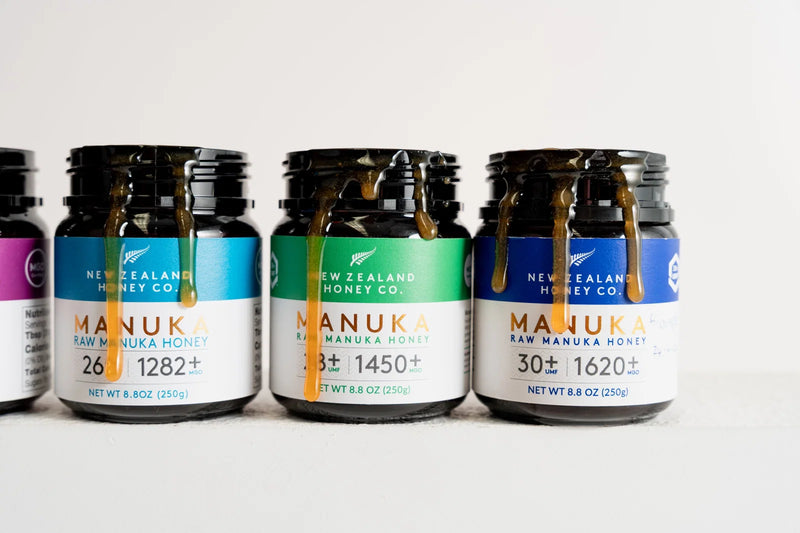
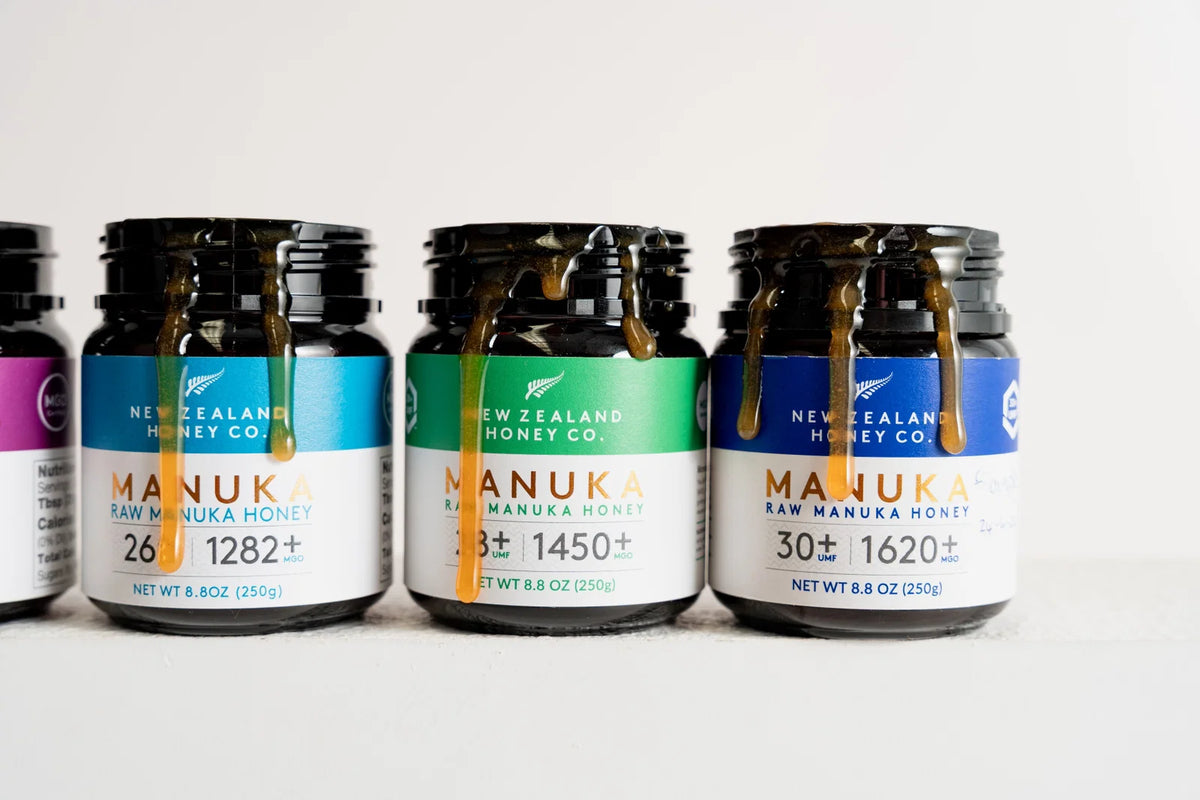
The Unique Manuka Factor (UMF™) grading system is the gold standard for measuring the potency and authenticity of Manuka Honey. It is independently administered by the UMF Honey Association in New Zealand and tests for three key compounds: Leptosperin, DHA, and MGO. A jar without a UMF™ rating on the label offers no guarantee of quality or authenticity. Look for a UMF™ number clearly printed on the front - and always check that the trademark symbol is present. UMF™ 15+ MGO 514+ is considered a good entry-level choice for general wellness. UMF™ 20+ MGO 829+ and above is popular for more targeted use.
-
Understand MGO Levels and What They Mean
MGO stands for methylglyoxal, the naturally occurring compound responsible for many of Manuka Honey's distinctive properties. The MGO levels carried by Manuka Honey products are printed on the label and give you a direct measure of potency. The higher the MGO, the more potent the honey. A credible brand will guarantee the specific MGO level on every batch.
-
Confirm the Honey Is Independently Tested and Certified
Any brand can claim its honey is high quality. What separates genuine producers is independent, third-party verification. Look for language confirming the honey is independently tested, and certified before it reaches the shelf. Reputable brands submit every batch to accredited laboratories - not just representative samples. This testing confirms MGO levels, screens for adulteration, and ensures the product matches what the label promises. If a brand cannot point to independent testing, treat that as a red flag.
-
Verify It Is Sourced From New Zealand
Authentic Manuka Honey comes exclusively from New Zealand, where the Manuka tree (Leptospermum scoparium) grows wild across remote landscapes. The Manuka flowering season lasts only 2 to 8 weeks per year, which makes this one of the rarest superfoods on the planet and contributes significantly to its value. Products labelled as Manuka Honey but produced outside New Zealand are not the genuine article. Check the label for a clear country-of-origin statement. If it simply says 'packed in' rather than 'produced in' New Zealand, dig deeper.
-
Look for Traceability — Can You Track the Batch?
A transparent brand has nothing to hide. Leading Manuka Honey producers now offer QR codes on their jars that allow consumers to trace the honey right back to its source hive location and testing results. This kind of traceability is a strong indicator of a brand that takes quality seriously at every stage of production. If a jar offers no batch information or traceability feature, you are essentially taking the brand's word for it — and that is not good enough when you are paying a premium price.
-
Assess the Brand's Reputation and Transparency
A credible Manuka Honey brand will be open about its sourcing, grading, and testing processes. Check whether the brand's website clearly explains the UMF™ certification process, independent testing and provides contact details for customer enquiries. Brands that are evasive about where their honey comes from, or that make vague claims without supporting evidence, are worth approaching with caution. Longevity in the market and a track record of consistent product quality are also good indicators. It's also worth checking the customer reviews on their website.
-
Match the Grade to Your Intended Use
One of the most common buying mistakes is choosing a grade that does not match the intended purpose. For general daily wellness, stirring into warm water, adding to breakfast, or supporting everyday health — a UMF™ 15+ MGO 514+ product is a sensible and cost-effective starting point. For more targeted applications, higher grades such as UMF™ 20+ MG0 829+, UMF™ 24+ MGO 1122+ or UMF™ 26+ MGO 1282+ are worth considering. Buying the highest grade available when you only need everyday support is not necessary — but buying too low a grade and expecting noticeable results is equally counterproductive.
This honey is one of the best I've ever tried. I've fallen in love with it now. It's helped my allergies in a big way. I don't get up in the morning having to blow my nose all morning long after my sleep. It's helped my gut health, my stomach bloating is so much better and i feel like it gives me some energy. I use it in my coffee every morning and 1 teaspoon by itself every evening before bed. I'm so happy I found this. And it shipped really fast.
— Verified Customer, UMF™ 15+ MGO 514+
Pro Tips From Experienced Manuka Honey Buyers
- Always buy Manuka Honey with the UMF™ trademark symbol — not just the letters 'UMF'. The trademark confirms the producer is a licensed member of the UMF Honey Association.
- If a price seems too good to be true, it probably is. Pure, authentic, UMF™ certified Manuka Honey with a guaranteed MGO level cannot be produced cheaply given the rarity of the flowering season and the cost of independent certification.
- Use the brand's QR code or batch lookup tool if available. It takes 30 seconds and gives you genuine peace of mind about what is in the jar.
Watch Out For These Common Pitfalls
- No UMF™ number on the label: MGO alone, without UMF™ certification, does not confirm authenticity. Some brands list MGO without undergoing the full UMF™ certification process.
- Vague origin claims: Labels saying 'inspired by New Zealand' or 'New Zealand style' are not the same as honey genuinely sourced and produced in New Zealand.
- Unusually low prices: Authentic Manuka Honey involves significant production costs. A UMF™ 20+ product priced similarly to supermarket honey should raise questions.
- No batch traceability: If there is no way to verify what is in the jar beyond the label itself, that is a transparency gap worth noting.
Common Questions About Buying Manuka Honey
What is the difference between UMF™ rating and MGO level?
MGO (methylglyoxal) is the primary active compound in Manuka Honey, and its concentration is measured in milligrams per kilogram. The UMF™ rating is a broader quality standard that tests for MGO alongside two other markers - Leptosperin and DHA - to verify authenticity and potency. Think of MGO as one piece of the puzzle, and UMF™ as the full picture. A product with a UMF™ rating has passed independent testing across all three markers, which is why UMF™ certification is considered the more comprehensive measure.
Is a higher UMF™ rating always better?
Not necessarily — it depends on your intended use. Higher grades such as UMF™ 20+ and above are popular for targeted wellness applications, but for everyday use a UMF™ 10+ or UMF™ 15+ product is well suited and more cost-effective. The key is matching the grade to your goal. Buying the highest grade on the shelf without a specific reason for it means spending more than you need to.
Can Manuka Honey from outside New Zealand be genuine?
No. Genuine Manuka Honey is produced exclusively in New Zealand from the nectar of the Manuka bush. Some honey labelled as Manuka or sold under similar-sounding names is produced in other countries, but it does not carry the same properties or independent certification. Always check the country of origin on the label and look for UMF™ certification, which is issued only to licensed New Zealand producers.
Choosing Well Is the First Step
Manuka Honey is one of the rarest superfoods available — but only if you buy the real thing. The seven factors in this guide give you a straightforward framework: check the UMF™ rating, understand the MGO level, confirm independent certification, verify New Zealand origin, look for traceability, assess brand transparency, and match the grade to your use. Apply these consistently and you will rarely go wrong.
I love it and buy it regularly. Lately I’ve been supplying my family with it also. They all love it too. It’s good for your immune system. No colds or flu here!
— Verified Customer, UMF 24+ MGO 1122+
Your health is important. After all, you only get one body — and what you put into it deserves the same level of care you give to everything else. A jar of pure, authentic Manuka Honey, chosen well, is a small but meaningful investment in your everyday wellness.
Ready to Find Your Perfect Manuka Honey?
Browse our range of UMF™ certified, independently tested Manuka Honey — traceable to the source and guaranteed to the grade on the label. Every batch, every time.
Shop Authentic Manuka Honey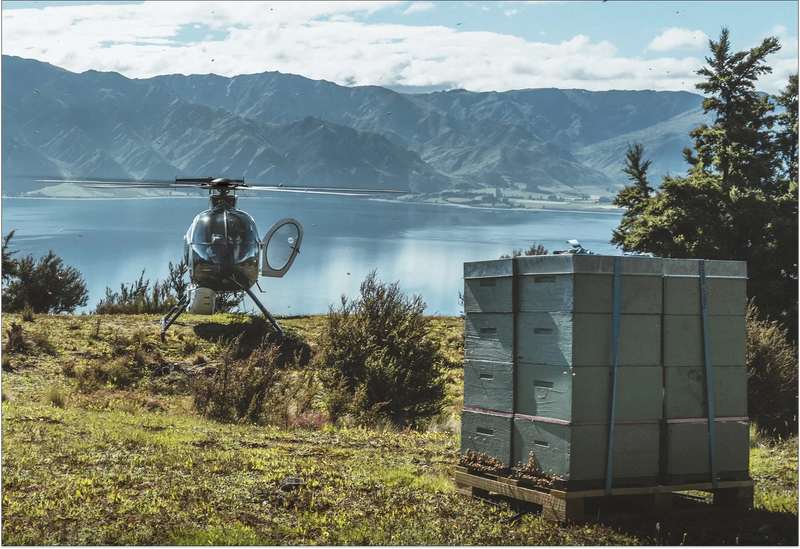
The Best Regions for Manuka Honey Explained
Not all Manuka Honey is created equal — and geography is a big reason why. Explore how the Far North and Queenstown Lakes regions...
Glyphosate in Honey: What You Need to Know
Glyphosate residues in honey are a growing concern for health-conscious consumers. Understanding how contamination occurs and what rigorous independent testing looks like helps you...

Manuka Honey & Manuka Soothing Drops for Post-Tonsillectomy Relief
Recovering from a tonsillectomy is tough on the throat. Discover how pure Manuka Honey and Manuka Soothing Drops work together to support natural throat...
