


Manuka Honey Benefits · 10 min read
Manuka Honey & Manuka Soothing Drops for Post-Tonsillectomy Relief
Recovering from a tonsillectomy is tough on the throat. Discover how pure Manuka Honey and Manuka Soothing Drops work together to support natural throat healing and make swallowing more comfortable.
 By Clare
Updated 17 Aug 2026
By Clare
Updated 17 Aug 2026

Manuka Honey Benefits · 10 min read
Manuka Honey & Manuka Soothing Drops for Post-Tonsillectomy Relief
Recovering from a tonsillectomy is tough on the throat. Discover how pure Manuka Honey and Manuka Soothing Drops work together to support natural throat healing and make swallowing more comfortable.
By Clare
Updated 17 Aug 2026

Manuka Honey Benefits · 10 min read
Manuka Honey & Manuka Soothing Drops for Post-Tonsillectomy Relief
Recovering from a tonsillectomy is tough on the throat. Discover how pure Manuka Honey and Manuka Soothing Drops work together to support natural throat healing and make swallowing more comfortable.
By Clare
Updated 17 Aug 2026

A Gentler Way Through Tonsillectomy Recovery
Tonsillectomy recovery is no small thing. The throat is raw, swallowing is painful, and the days following surgery can feel relentless. Most people reach straight for pharmaceutical options, and that is entirely understandable. But for those who want to support their recovery with something more natural alongside their prescribed care, pure Manuka Honey and Manuka Soothing Drops offer a thoughtful, evidence-backed complement to standard post-operative routines. This post walks through exactly how a dual-action approach works and how to use these products practically during an uncomfortable recovery window.
What You Will Achieve with This Approach
The goal here is straightforward: a more comfortable recovery experience, with targeted support at every stage. Authentic Manuka Honey works from the inside, delivering its naturally occurring methylglyoxal (MGO) content directly to irritated throat tissue with every spoonful. Manuka Soothing Drops provide immediate relief by coating the throat and easing the discomfort that makes swallowing feel so uncomfortable in the first week post-surgery. Used together, these two products address different but complementary needs. One supports the broader healing environment. The other provides rapid, targeted comfort at the moment it is most needed. Neither replaces medical treatment. Both are designed to support your wellness journey through recovery.
I bought Manuka Soothing Drops to help with healing and comfort after a tonsillectomy, and they were honestly one of the best things I had on hand during recovery. The taste is surprisingly good—not overly medicinal at all. Based on other reviews, I was expecting something more "health product"-like, but these actually taste like a mild, slightly sweet fruit and honey blend. Thev're smooth, soothing, and easy to tolerate even when your throat is extremely sensitive. What really makes these stand out is the inclusion of Manuka honey. It's well known for its natural antibacterial and healing properties, and you can definitely feel the difference. Instead of just temporarily numbing the throat, these seemed to actually support the healing process while calming irritation. They helped a lot with pain-the soothing coating effect gave quick relief, especially during the first few difficult days when swallowing is the hardest. It made it much easier to stay hydrated and get some comfort between doses of pain medication. If you or someone you know is going through a tonsillectomy (or dealing with a really sore throat), I would absolutely recommend having these on hand. They made a noticeable difference in both comfort and recovery.
— Angie, P., United States, Verified customer
The Products at a Glance - Dual Action Support
New Zealand Honey Co. offers two products that work in tandem for post tonsillectomy throat comfort:
- UMF™ certified Manuka Honey - An independently tested Manuka Honey with a guaranteed level of MGO (methylglyoxal). MGO is the naturally occurring compound that gives authentic Manuka Honey its unique properties. Each batch is traceable to the source via QR code, and the MGO level is confirmed on the label.
- Manuka Soothing Drops with are a convenient lozenge format combining pure Manuka Honey MGO 250+ with lemon for fast throat coating relief. Ideal for moments when swallowing is most uncomfortable.
Getting Started: Your First Days of Recovery
How to Introduce Manuka Honey After a Tonsillectomy
-
Check with your surgeon or care team first
Before introducing any new food or supplement post-operatively, confirm it is appropriate for your specific situation. Manuka Honey is a natural food, but your health care team knows your case best. Most patients are cleared for soft foods and liquids within 24 hours.
-
Start with a small amount of Manuka Honey
Take one teaspoon of pure Manuka Honey and allow it to coat the throat slowly. Do not dilute it with hot liquid immediately, as heat can affect the natural properties of the honey. Let it sit for a moment before swallowing.
-
Time it around meals and medication
Many people find natural throat healing is best supported by taking a spoonful of Manuka Honey 20 to 30 minutes before eating. This helps coat the throat and makes the act of swallowing food more manageable.
-
Use Manuka Soothing Drops for fast relief
Keep a supply of Manuka Soothing Drops with Lemon on hand for times when a spoonful of honey is not convenient. These are especially useful during the night when waking with a dry, painful throat is common after tonsillectomy surgery.
-
Build a consistent daily routine
Consistency matters. A teaspoon of Manuka Honey in the morning, one or two soothing drops throughout the day, and a final spoonful before bed creates a rhythm of ongoing throat support across the full recovery window, typically 10 to 14 days.
Advanced Usage Tips for Faster Comfort
Power User Tips for Post-Tonsillectomy Manuka Honey Use
- Chill your Manuka Honey slightly before use. A cool teaspoon has an additional soothing effect on inflamed tissue and may feel more comfortable than honey at room temperature.
- Pair your morning spoonful with warm (not hot) water and a slice of lemon. This helps rehydrate the throat gently after a night of mouth breathing, which is common post-surgery.
- Keep Manuka Soothing Drops on your bedside table. Waking in the night with a dry, painful throat is one of the most disruptive parts of tonsillectomy recovery. A soothing lozenge dissolves slowly and coats the throat without needing to get out of bed.
Key Features and Why They Matter for Throat Recovery
New Zealand Honey Co. Manuka Honey
One of the rarest superfoods available, sourced from the remote landscapes of New Zealand during the Manuka tree flowering window of just 2 to 8 weeks per year. The UMF™ rating guarantees a meaningful concentration of methylglyoxal, the compound at the heart of Manuka Honey's unique properties. Independently tested and certified, with every batch traceable to the source via QR code.
- Guaranteed MGO minimum, confirmed on the label
- UMF™ certified and independently tested
- Thick, natural consistency ideal for throat coating
- Traceable to the source via QR code on every jar
- Sourced from pristine New Zealand Manuka flora

Manuka Honey UMF™ 26+ | MGO 1282+
This rare UMF™ 26+ Manuka Honey is scarce in quantity and powerful in performance. Only a very small proportion of Manuka Honey ever makes it to this grade.
Shop NowManuka Soothing Drops with Lemon
Designed for immediate, targeted relief, these soothing drops combine pure Manuka Honey with the natural brightness of lemon in a convenient lozenge format. They dissolve slowly, coating the throat as they go, and are optimised for everyday wellness moments including the particularly challenging days of tonsillectomy recovery.
- Contain MGO 250+ Manuka Honey to support healing
- Lemon provides a gentle, refreshing flavour
- Slow-dissolving format maximises throat coating contact time
- Easy to use at any time of day or night
- Compact format ideal for bedside or on-the-go during recovery

Manuka Soothing Drops with Lemon | MGO 250+
Our Manuka Soothing Drops with a squeeze of lemon are delicious throat lozenges, supercharged with the benefits of pure New Zealand Manuka honey. Designed to bring lasting rel…
Shop NowWhy UMF™ Matters for Manuka Honey Throat Pain
Not all Manuka Honey is created equal. The UMF™ number on the label tells you exactly how much methylglyoxal (MGO) is present in that jar. For post-tonsillectomy use, where the goal is meaningful throat support rather than every day wellness, the concentration matters. Every jar of New Zealand Honey Co. Manuka Honey has its UMF™ rating and MGO level confirmed on the label and is independently tested and certified.
There is no guesswork involved, and every batch is traceable to the source. MGO (methylglyoxal) is the naturally occurring compound that gives authentic Manuka Honey its unique antibacterial and anti-inflammatory properties [1]. Understanding what MGO is and why it matters helps you make informed choices about which Manuka Honey product is right for your recovery needs.
Realistic Recovery Timelines and What to Expect
Tonsillectomy recovery typically runs between 10 and 14 days for most adults. The first three to four days are usually the most uncomfortable. Days five to seven can actually feel worse before they feel better, as the surgical scabs begin to heal and occasional bleeding is a possibility. This is the window where consistent throat support matters most.
Many people who try high-grade Manuka Honey during recovery notice a difference in how manageable swallowing feels with regular use. The thick, natural consistency of the honey is part of what makes it effective for throat coating. It does not evaporate or dissipate the way a liquid might. It stays in contact with the throat tissue for longer.
Manuka Soothing Drops provide a different kind of comfort. The slow dissolution of the lozenge means the throat receives a gradual coating rather than a single burst, which many people find particularly helpful during the night or between meals when discomfort tends to peak.
This is not a rapid fix. Natural throat healing takes time, and these products are designed to support that process, not accelerate it unnaturally. The goal is to make each day of recovery a little more comfortable than it might otherwise be.
I've been taking a teaspoon of Manuka honey three times a day before my meals. My swallowing issues from severe acid reflux have greatly improved and a recent scope showed a great improvement in inflammation! I'm completely convinced that Manuka honey has made the difference!
— Patricia M., Verified customer
Common Questions About Manuka Honey After a Tonsillectomy
Is Manuka Honey safe to use immediately after a tonsillectomy?
Most patients are cleared for soft foods and liquids within 24 hours of surgery, and pure Manuka Honey is a natural food that is generally well tolerated. However, always check with your surgeon or care team before introducing any new food post-operatively. They are best placed to advise based on your individual recovery.
How many times a day should Manuka Honey be taken for post-tonsillectomy throat pain?
A practical and consistent routine involves one teaspoon of UMF™ rated Manuka Honey two to three times daily, ideally before meals to help coat the throat ahead of swallowing. Manuka Soothing Drops with Lemon can be used as needed throughout the day and night for additional comfort. Consistency across the full 10 to 14 day recovery window is more important than any single large dose.
What is the difference between UMF™ and MGO ratings on Manuka Honey?
Both UMF™ (Unique Manuka Factor) and MGO (methylglyoxal) are grading systems used to measure the quality and potency of Manuka Honey. MGO measures the concentration of methylglyoxal directly in milligrams per kilogram. UMF™ is a broader quality trademark that also accounts for additional markers of authenticity. New Zealand Honey Co. products carry both certifications, giving you a complete picture of what is in the jar.
Can caregivers use these products to help children recovering from a tonsillectomy?
Honey should not be given to children under 12 months of age due to the risk of infant botulism. For older children recovering from a tonsillectomy, Manuka Honey is generally considered safe, but the dosage and suitability should always be confirmed with the child's paediatric care team first. Manuka Soothing Drops are designed for children over 6 years; always check the product label and consult a healthcare professional before giving lozenges to children.
What's the best grade of UMF™ Manuka Honey for post Tonsillectomy care?
The higher the UMF™ grade, the more potent the honey and the higher the concentration of the active compounds. A UMF™ grade of UMF™ 24+ I MGO 1122+ or UMF™ 26+ I MGO 1282+ would be ideal for post surgery support.
Supporting Recovery the Natural Way
Post-tonsillectomy recovery is a time when the body is doing real work. The throat is healing from a surgical procedure, and every meal, every sip of water, and every conversation is a reminder of that process. Adding pure Manuka Honey and Manuka Soothing Drops to a recovery routine will not make the experience painless. But many people find that consistent, natural throat support makes the days more manageable.
The key is choosing products that are genuinely what they claim to be. Independently tested and certified, traceable to the source, and formulated with a guaranteed MGO level. That is exactly what New Zealand Honey Co. delivers in every jar and every drop.
Your health is important. After all, you only get one body. Give it the quality it deserves, particularly in the moments when it needs support most.
Manuka honey drops worked wonders on my dry throat! I suffer from Sjogrens disease and have dry mouth and throat all the time. The dryness impacts my speech and swallowing. The Manuka honey drops are like delicious velvet to my throat and I am grateful for the opportunity to carry them around with me everywhere.
— Caryn B., Verified customer
Support Your Throat Recovery with Pure Manuka Honey
Explore New Zealand Honey Co.'s Manuka Honey and Manuka Soothing Drops with Lemon. Independently tested, UMF™ certified, and traceable to the source. Give your recovery the quality it deserves.
Shop the RangeReferences
[1] Lu J, Carter D, Turnbull L, et al. "The effect of New Zealand kanuka, manuka and clover honeys on bacterial growth dynamics and cellular morphology varies according to the species.". PloS one. 2013. DOI: 10.1371/journal.pone.0055898
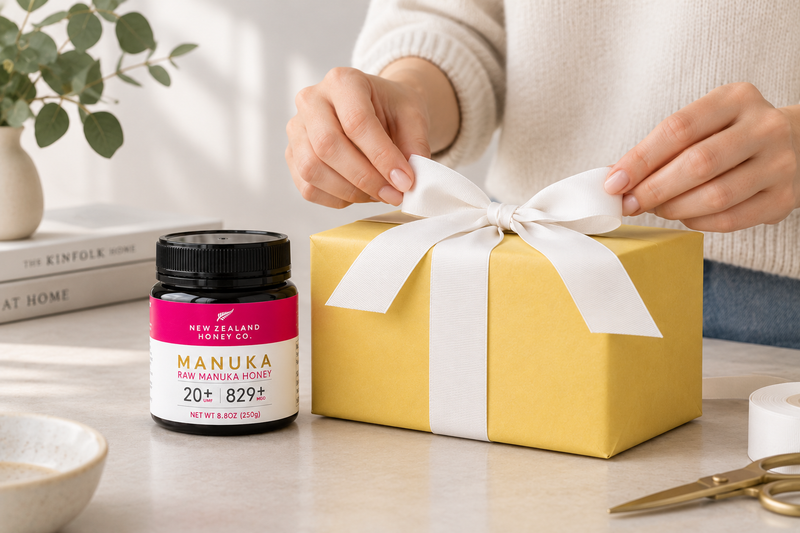
Manuka Honey as a Gift: 7 Things to Look For
Gifting Manuka Honey can be a thoughtful way to show you care, but with different grades, labels and strengths to choose from, finding the...

Manuka Honey for a Sore Throat: Best MGO Level to Use
That scratchy, raw feeling at the back of the throat is hard to ignore. Here's why Manuka Honey helps, which MGO level to choose,...
Is Manuka Honey Worth the Price? What You're Actually Paying For
Manuka Honey costs more than regular honey for six very specific, very verifiable reasons. From a flowering window as short as two weeks to...
