


Manuka Honey Articles · 5 min read
Can You Eat Honeycomb? A Simple Guide to Raw Comb Honey (and Manuka Honeycomb)
Yes, you can eat honeycomb, wax and all. This guide covers what honeycomb is, whether the beeswax is safe to eat, and eight easy ways to enjoy raw comb honey, from cheese boards to warm toast. It also explains what makes Manuka honeycomb from New Zealand different and how to read UMF and MGO grading on the label.
 By Zoe
Updated 23 Nov 2026

Manuka Honey Articles · 5 min read
Can You Eat Honeycomb? A Simple Guide to Raw Comb Honey (and Manuka Honeycomb)
Yes, you can eat honeycomb, wax and all. This guide covers what honeycomb is, whether the beeswax is safe to eat, and eight easy ways to enjoy raw comb honey, from cheese boards to warm toast. It also explains what makes Manuka honeycomb from New Zealand different and how to read UMF and MGO grading on the label.
By Zoe
Updated 23 Nov 2026
Manuka Honey Articles · 5 min read
Can You Eat Honeycomb? A Simple Guide to Raw Comb Honey (and Manuka Honeycomb)
Yes, you can eat honeycomb, wax and all. This guide covers what honeycomb is, whether the beeswax is safe to eat, and eight easy ways to enjoy raw comb honey, from cheese boards to warm toast. It also explains what makes Manuka honeycomb from New Zealand different and how to read UMF and MGO grading on the label.
By Zoe
Updated 23 Nov 2026
Essential takeaways
- Yes, honeycomb is edible, wax and all. Beeswax is non-toxic and simply passes through the body.
- Enjoy it in moderation. A spoonful or two at a time is plenty.
- Never give honey or honeycomb to babies under 12 months, due to the risk of infant botulism.
- Comb honey is raw honey in its least processed form: unheated, unfiltered and full of natural texture.
- Easy ways to eat it: on toast, on a cheese board, with yogurt or straight from the spoon.
- Manuka honeycomb from New Zealand has a bold, earthy flavor. Look for UMF or MGO grading on the label.
- Store it at room temperature in an airtight container. Crystallization is natural and doesn't mean it's gone bad.
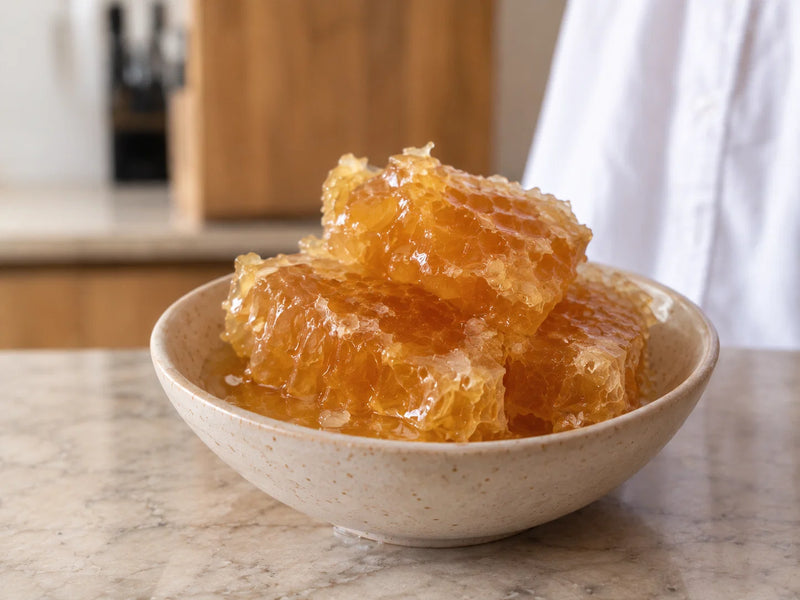
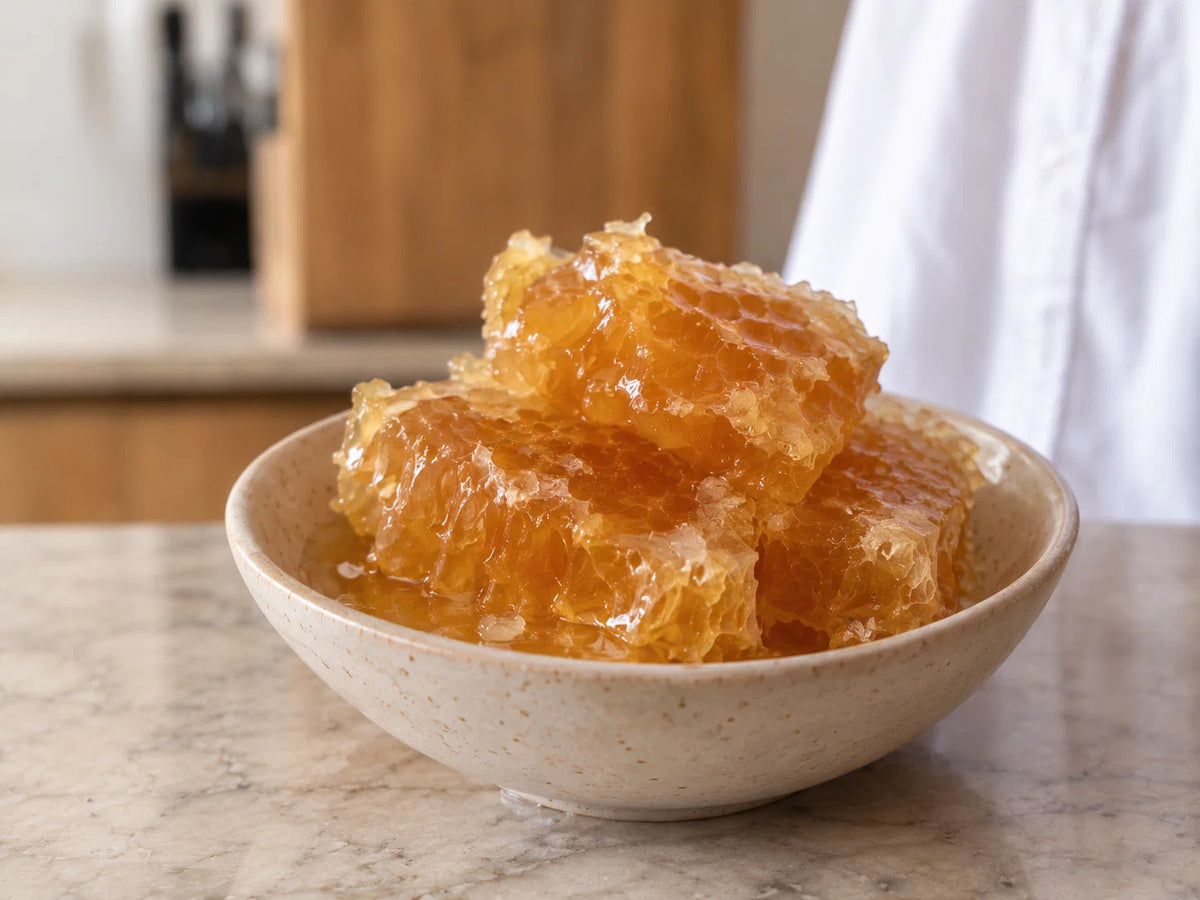
Yes, you can eat honeycomb, wax and all. Honeycomb is honey in its most natural form: raw honey sealed inside the hexagonal beeswax cells that bees build in the hive. Nothing is extracted, heated or filtered, so what you get is exactly what the bees made. Here is everything you need to know about eating honeycomb, from whether the wax is safe to the best ways to enjoy it.
What is honeycomb?
Honeycomb is a network of six-sided wax cells that honeybees build to store honey and raise their young. Bees produce the wax from glands on their abdomens, shape it into cells, fill the cells with honey and then cap them with a thin layer of fresh wax. Comb honey is simply a piece of that capped comb, cut straight from the frame and packed as it is.
Because comb honey skips extraction and filtering, it keeps the natural pollen and texture that are often lost when honey is processed. Many people consider it the purest way to enjoy raw honey.
Is it safe to eat the beeswax?
For most healthy adults and children over 12 months, yes. Beeswax is non-toxic and is commonly eaten along with the honey. Your body can't fully digest the wax, so it simply passes through. Eating it in normal food portions is generally considered safe.
A few things to keep in mind:
- Enjoy it in moderation. A spoonful or two at a time is plenty. Very large amounts of wax aren't recommended.
- Prefer to skip the wax? That's fine too. Chew the comb like gum until the honey is gone, then discard the wax.
- Never give honey or honeycomb to babies under 12 months. Like all honey, honeycomb can contain spores that cause infant botulism. The CDC advises against giving any honey to children under one year old.
- Allergies. If you are allergic to bee stings, pollen or bee products, talk to your doctor before trying honeycomb.
What does honeycomb taste like?
Honeycomb tastes like the honey inside it, with a soft, chewy, slightly waxy texture. When you bite in, the cells burst and the honey floods out. The flavor depends on the flowers the bees visited. Clover comb is mild and sweet, while Manuka honeycomb from New Zealand is richer and more earthy, with a slightly bitter, caramel-like finish.

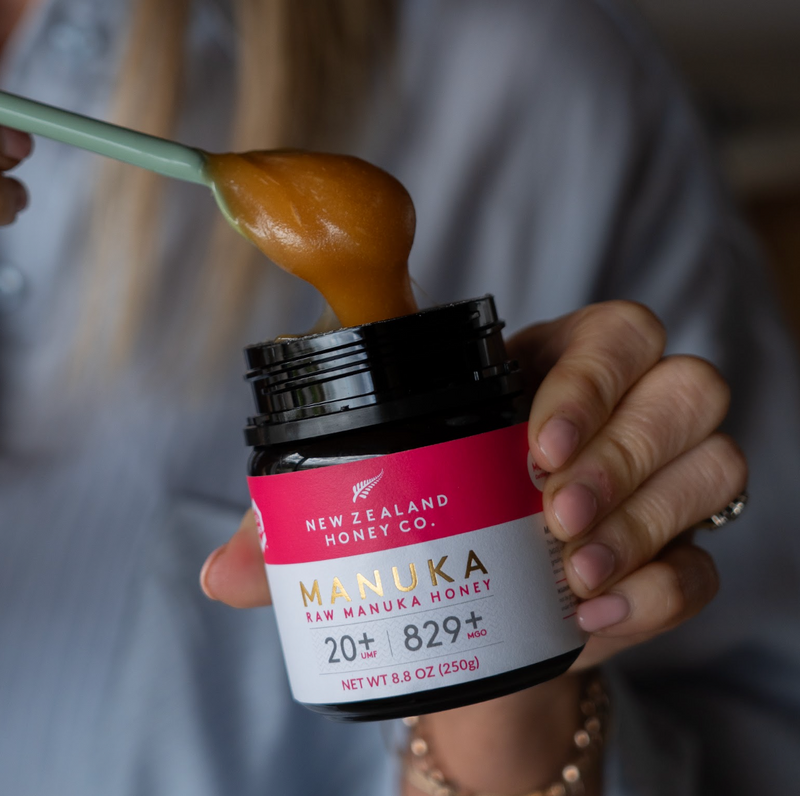
Manuka Honey UMF™ 20+ | MGO 829+
Your health is important. After all, you only get one body. This UMF™ 20+ high-grade Manuka Honey is packed with nutrients and essential vitality to help you live your best li…
Shop NowHow to eat honeycomb: 8 easy ideas
- Straight from the spoon. The simplest way to try it for the first time.
- On warm toast. Spread a piece on buttered sourdough and let it melt slightly.
- On a cheese board. Honeycomb pairs beautifully with blue cheese, aged cheddar, brie and goat cheese.
- With yogurt or oatmeal. Add a few chunks to Greek yogurt, porridge or granola bowls.
- On pancakes or waffles. A slice of comb on top makes a natural syrup.
- With fruit. Try it with sliced apple, pear or fresh figs.
- In tea. Drop a small piece into warm (not boiling) tea and let the honey dissolve.
- On ice cream. Shave a little comb over vanilla ice cream for a crunchy, chewy topping.
Manuka honeycomb: what makes it different?
Manuka honeycomb comes from bees that forage on the flowers of the Manuka tree, which grows in New Zealand. It's prized for its bold, distinctive flavor and for the independent grading systems, like UMF, that verify its authenticity.
When shopping for Manuka honey products, look for independent grading. The UMF (Unique Manuka Factor) mark is licensed by the UMF Honey Association and shows the honey has been independently tested for authenticity and quality markers, including MGO. New Zealand's Ministry for Primary Industries (MPI) also sets a scientific definition for what can be labeled Manuka honey for export. Checking the UMF or MGO rating on the label helps you know exactly what you're buying.
How to store honeycomb
Keep honeycomb in an airtight container at room temperature, away from direct sunlight. There's no need to refrigerate it, as cold temperatures speed up crystallization. Honey naturally resists spoilage, so stored properly, honeycomb keeps for a very long time.
If your honeycomb crystallizes, don't worry. Crystallization is a natural process in raw honey and doesn't mean it has gone bad. Many people enjoy the crunchier texture.
Frequently asked questions
Can you eat honeycomb raw?
Yes. Honeycomb is sold raw and is meant to be eaten as it is, with no cooking or preparation needed.
Do you swallow the wax in honeycomb?
You can. The wax is edible and passes through your body. If you don't like the texture, chew it and discard the wax.
Can kids eat honeycomb?
Children over 12 months can enjoy honeycomb in small amounts. Never give honey or honeycomb to babies under one year old.
Is honeycomb better than regular honey?
Honeycomb is less processed than most jarred honey, so it keeps its natural texture and pollen. Whether it's "better" comes down to taste and how you plan to use it.
How much honeycomb should I eat?
Treat it like any sweetener: enjoy a spoonful or two as part of a balanced diet.
The bottom line
Honeycomb is completely edible, from the golden honey to the soft beeswax cells that hold it. Enjoy it on toast, cheese boards or yogurt, or simply by the spoonful. If you want to try something special, Manuka honey from New Zealand offers a bold, distinctive flavor. Just check the UMF or MGO grading on the label, and remember to keep all honey away from babies under 12 months.
At New Zealand Honey Co, every jar of our Manuka honey is UMF certified and traceable back to the New Zealand landscapes where our bees forage. Explore our Manuka honey range and find your favorite way to enjoy it.
Is Honey Vegan? An Honest Answer From a Honey Company
Is honey vegan? We'd rather give you a straight answer than dodge it. Find out whether Manuka honey is vegan, the role bees play...
What is Raw Manuka Honey? Raw Honey vs Regular Honey Explained
Is raw honey better for you, and is Manuka honey raw? Here's everything you need to know about raw honey, raw Manuka honey, and...
What Is Manuka Honey?
The short answer: Manuka honey is a honey made by bees from the nectar of the Manuka tree (Leptospermum scoparium), which grows wild across...
