


Wellness · 7 min read
Does Honey Help a Dry Cough?
That tickly, nagging dry cough that won't quit can wear anyone down. Here's what's actually behind honey's reputation as a cough reliever, and how to use it sensibly.
 By Zoe
13 Nov 2026

Wellness · 7 min read
Does Honey Help a Dry Cough?
That tickly, nagging dry cough that won't quit can wear anyone down. Here's what's actually behind honey's reputation as a cough reliever, and how to use it sensibly.
By Zoe
13 Nov 2026

Wellness · 7 min read
Does Honey Help a Dry Cough?
That tickly, nagging dry cough that won't quit can wear anyone down. Here's what's actually behind honey's reputation as a cough reliever, and how to use it sensibly.
By Zoe
13 Nov 2026

It starts as a tickle. Then it's a cough that interrupts meetings, wakes you at 2am, and makes colleagues glance over with concern. A dry, non-productive cough is one of the most frustrating symptoms to sit with, mostly because there's no mucus to clear, just an irritated airway that keeps firing off the same reflex, again and again. Before reaching for another lozenge, many people turn to something already sitting in their pantry: honey. But does honey help a dry cough, or is that just something our grandparents told us to make the medicine go down easier? This article unpacks what's actually happening in the throat during a dry cough, why honey has earned its reputation, and how to use it sensibly alongside proper medical care.
What Makes a Dry Cough Different
A dry cough, sometimes called a non-productive cough, doesn't bring up mucus or phlegm. It's usually triggered by irritation or inflammation in the throat and airways, often from a viral infection, allergies, dry air, or post-nasal drip. Unlike a wet cough, which serves a purpose by clearing the lungs, a dry cough is largely unproductive. It's the body's cough reflex misfiring in response to a sensitised, irritated throat lining.
This distinction matters. A sore throat is often about pain and swallowing discomfort. A dry cough is about an overactive reflex and irritated nerve endings lining the airway. Honey can support both, but the mechanism for soothing a scratchy throat is slightly different from the mechanism that may help settle a persistent cough.
Why Honey Has a Reputation as a Cough Soother
Honey's thick, viscous texture coats the back of the throat, forming a soothing layer over irritated tissue. This simple coating effect can reduce the sensitivity that triggers the next cough spasm. Honey is also naturally soothing to mucous membranes, which may explain why it has been used as a traditional remedy for throat irritation for generations, long before pharmacy shelves existed.
Manuka Honey adds another layer of interest. It's one of the rarest superfoods, produced only when bees forage on the Manuka bush during a flowering window that lasts just two to eight weeks a year in remote parts of New Zealand. Unlike regular table honey, UMF™ certified Manuka Honey is independently tested and certified for its natural compounds, including methylglyoxal (MGO), giving each jar a guaranteed, traceable potency level.
These throat drops are amazing! I recently had a bad cough due to Covid, and these drops quieted my cough and soothed my throat almost immediately after taking. I highly recommend these!
— Anonymous, Verified customer

Manuka Soothing Drops with Lemon | MGO 250+
Our Manuka Soothing Drops with a squeeze of lemon are delicious throat lozenges, supercharged with the benefits of pure New Zealand Manuka honey. Designed to bring lasting rel…
Shop NowWhy This Matters Day to Day
A dry cough that lingers for days can disrupt sleep, strain the voice, and leave the throat feeling raw and exhausted. Because a dry cough has no mucus to clear, the goal of home care isn't to loosen anything. It's to calm irritation and reduce the frequency of the cough reflex. This is where a simple, natural step like a spoonful of honey before bed can fit into a broader wellness routine, alongside rest, hydration, and steam. It's a small, low-risk addition that supports comfort while the body does the work of recovering.
Key Things to Understand
- A dry cough is driven by throat irritation and an overactive cough reflex, not mucus buildup.
- Honey's thick texture coats the throat, which may reduce the irritation that triggers coughing.
- Manuka Honey is independently tested and certified, with MGO levels specified on every label.
- Honey supports comfort and wellness. It is not a medical treatment and should complement, not replace, professional care for a persistent or worsening cough.
Getting Started: Using Manuka Honey for a Dry Cough
A Simple, Sensible Approach
-
Choose a certified jar
Look for UMF™ certification and a stated MGO level so the potency is guaranteed, not guessed.
-
Take it straight, or in warm (not boiling) water
A teaspoon on its own lets the honey coat the throat directly. Very hot water can diminish some of its natural qualities.
-
Use it before bed
Coughing often worsens at night when lying flat. A spoonful before sleep may help reduce nighttime irritation.
-
Pair it with rest and hydration
Honey works best as part of a broader routine that supports your body's natural recovery.
-
Track how you feel
If the cough persists beyond a couple of weeks, or comes with fever, breathlessness, or chest pain, it's time to speak with a doctor.

Manuka Honey UMF™ 24+ | MGO 1122+
For those times in life when quality comes first. This pure UMF™ 24+ Manuka Honey is powerfully active, sourced from wild and rugged locations around Aotearoa New Zealand and …
Shop NowA Note on Safety and Realistic Expectations
It's worth being clear: honey is not a cure for a dry cough, and it should never replace medical advice for a cough that is severe, prolonged, or linked to an underlying condition. Honey should never be given to children under 12 months of age due to the risk of infant botulism [1]. For everyone else, honey is generally very safe, which is part of why it has remained a trusted household staple for so long.
For those managing dry mouth alongside a cough, perhaps from mouth breathing overnight or certain medications, Manuka Honey oral rinses have also been explored as a way to support comfort. Research registered on ClinicalTrials.gov examined a Manuka Honey oral rinse for xerostomia (dry mouth) in older adults, using a protocol of 20ml rinses three times daily after meals, and reported promising improvements in both subjective comfort and salivary measures (ClinicalTrials.gov Study NCT06240806). While this trial centres on dry mouth rather than cough specifically, it reflects the same soothing, moisture-retaining quality of Manuka Honey that makes it appealing for throat comfort more broadly.
The Manuka cough drops taste great and soothe that relentless tickle in the back of your throat, highly recommended.
— Ricky A., Verified customer
Separately, laboratory and clinical research into Manuka Honey's broader properties, including its anti-inflammatory effects on skin and tissue, has shown it can calm inflammatory responses at a cellular level. One clinical and mechanistic study found that Manuka Honey reduced inflammatory markers and inhibited mast cell degranulation, a process linked to irritation and allergic-type responses (PubMed, Study PMID 28474502) [2]. While this research focused on skin rather than the throat, it offers useful insight into why honey's soothing reputation extends beyond simple texture and sweetness.
Does honey help a dry cough?
Honey can support comfort during a dry cough by coating the throat and reducing irritation that triggers the cough reflex. It's traditionally used for this purpose and fits well into a broader wellness routine, though it should complement rather than replace medical care. Explore UMF™ certified Manuka Honey for a quality option.
Is honey good for a dry cough or only a wet cough?
Honey is traditionally used for both. For a dry cough, its thick texture soothes irritation and may reduce the frequency of coughing. For a wet cough, it can help ease throat discomfort from frequent coughing, though it doesn't work to clear mucus the way an expectorant does.
Can Manuka Honey cure a dry cough?
No. Manuka Honey is not a medical treatment and cannot cure a cough. It may support comfort and wellness as a natural complement to rest, hydration, and medical advice, particularly if a cough persists or worsens.
How much honey should I take for a dry cough?
A teaspoon taken straight, or stirred into warm water, before bed or as needed is a common approach. There's no strict clinical dosage for cough relief, so it's best used as a gentle, supportive addition rather than a measured treatment.
When should I see a doctor instead of relying on honey?
If a dry cough lasts longer than two to three weeks, is accompanied by fever, chest pain, breathlessness, or worsens over time, it's important to consult a healthcare professional rather than relying on home remedies alone.
Support Your Wellness Journey With Pure, Authentic Manuka Honey
Every jar from New Zealand Honey Co. is independently tested and certified, with a guaranteed UMF™ rating and traceable to its source in remote New Zealand landscapes. A small step, rooted in quality, for everyday comfort.
Shop UMF™ Certified Manuka HoneyReferences
- [1] Mohd Tamrin M. "The dilemma of diagnosing wound botulism in an infant: A rare case of paralysis with topical application of honey". International journal of infectious diseases : IJID : official publication of the International Society for Infectious Diseases. 2020. DOI: 10.1016/j.ijid.2020.03.044
- [2] Abdullah Alangari, Keith Morris, Bashir A. Lwaleed, et al. "Honey is potentially effective in the treatment of atopic dermatitis: Clinical and mechanistic studies". Immunity Inflammation and Disease. 2017. DOI: 10.1002/iid3.153
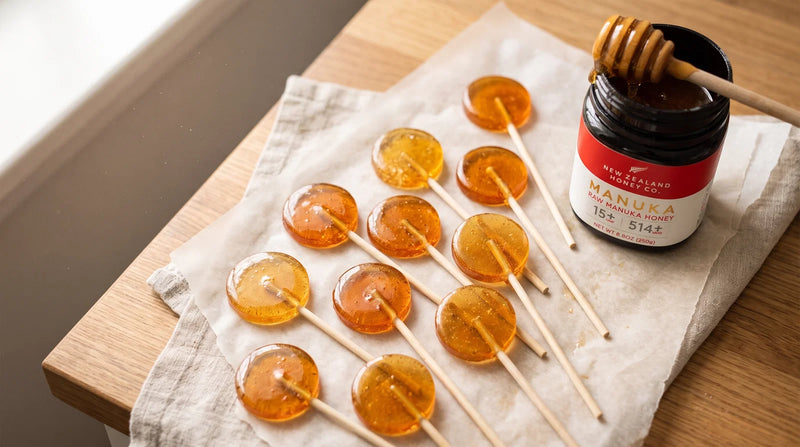
How to Make Manuka Honey Lollipops at Home
Turn pure, UMF™ certified Manuka Honey into soothing homemade lollipops. This simple recipe is a natural, better-for-you treat the whole family can enjoy.
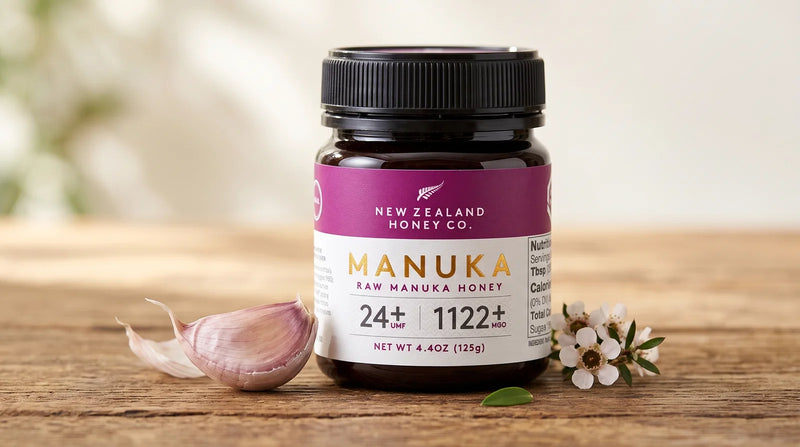
Garlic and Honey Benefits: A Beginner's Guide
Curious about garlic and honey but don't know where to start? This beginner's guide breaks down the benefits, a simple fermentation method, and why...
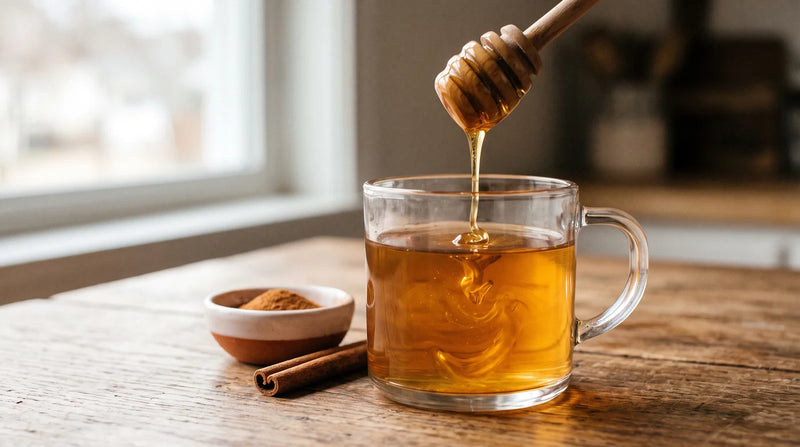
Honey and Cinnamon Together: What the Pairing Really Does
Honey and cinnamon have been paired for centuries, but what actually happens when they're combined? This deep dive explores the properties of each ingredient,...
