
EDUCATION
How to Tell if Honey is Pure [your foolproof guide]
7 minutes.
Essential Takeaways
Just because a jar of honey claims to be 100% pure, this doesn’t necessarily guarantee that it’s always the case.
The testing required to use the term “pure honey” doesn’t tell us much about what’s actually in it.
There are some at-home tests you can do to check the purity of your honey, but the best way to ensure you get genuinely pure honey is to do your research on the brand.
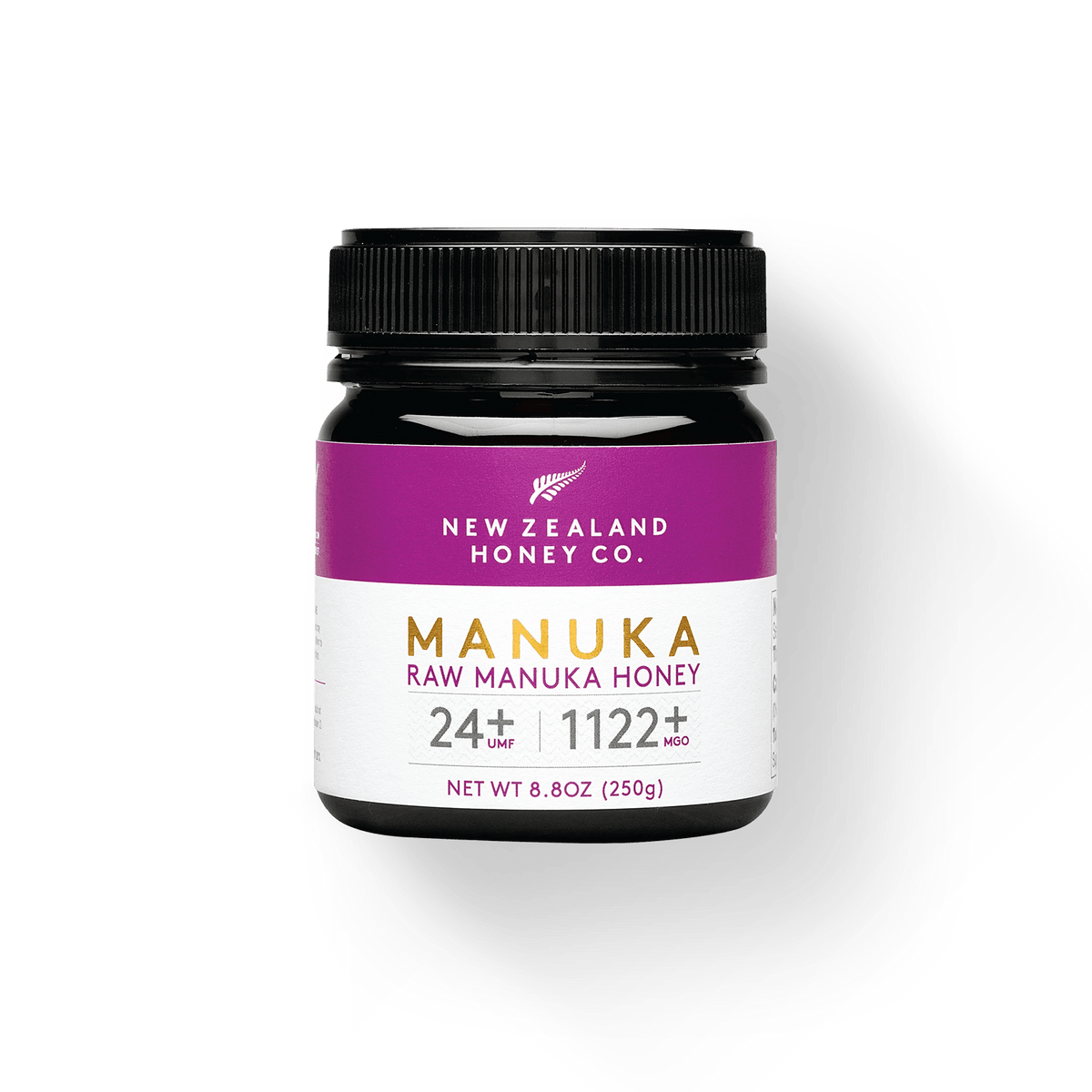
You can be sure that UMF™ certified manuka honey like ours is pure because it goes through rigorous, standardised independent testing.
There’s a problem with the term “pure honey”. In practice, it doesn’t actually mean very much.
This isn’t at all like the labels you find on our genuine manuka honey jars.
Our manuka honey has been rigorously tested, vetted, and certified by independent laboratories.
As a result of the huge global honey demand and limited testing, regular honey has become one of the most faked foods¹ in the world.
In this guide, we’ll take you through some of the warning signs of impure honey, how to test your honey at home, and what to look for in honey brands that indicates genuine purity.
By the end, you’ll be confident that you know how to tell if honey is pure.
In this guide to spotting pure honey:
What is pure honey?
What do we mean by “pure” honey?
There are a few different terms you might come across here, so let’s break them down.
| Pure honey | Pure monofloral honey | Pure multifloral honey |
| Unadulterated honey, i.e. no additives. This doesn’t necessarily mean the honey is also raw or organic. | The unadulterated honey has come predominantly from the nectar of one species of plant. All of our honeys are pure monofloral manuka honey. | The unadulterated honey has come from the nectar of multiple plants species. It’s more difficult to regulate what’s in these honeys as a result. |
Read more: What is monofloral honey and why does it matter?
Sadly, it’s not a given that a product labeled “honey”, or even “pure honey”, is in fact, purely honey.
That’s because honey is such a hot commodity throughout the world that the supply can’t always keep up with the demand.
Not only that, but the common test used to identify “pure honey”, the C4 carbohydrate test², doesn’t distinguish between the types of sugars found in honey samples.
Some may come from the honey itself, and some may not.
As a result, diluted or contaminated products make it onto the shelves. And it can be difficult to know which is trustworthy and which isn’t.
But starting here is a great step. It’s all about understanding what makes certain honeys “fake” and knowing how to spot them.
The most common ways that honey is adulterated
-
Added sugar syrup
It’s a cheap ingredient and hard to detect. Some sugar types can only be identified using specialized technology, so jars may not be checked at this level during production or import.
-
Obscured country of origin
The US placed anti-dumping duties onto honey exports coming from certain countries³ to try to derail the problem of diluted products on shelves⁴. Unfortunately, some of those exports are now labeled as coming from their country of transfer rather than origin, making it harder to spot the imposters.
-
Not testing for or disclosing contaminants
Pesticides can be found in honey for a number of reasons. Bees travel miles to collect nectar, so it’s difficult to control whether they take from organic or non-organic plants if the hives aren’t placed in remote areas.
Beekeepers may also use pesticides to treat their hives (this isn’t something we do).
We test our honey for contaminants and all our products are certified glyphosate free.
Since the test for pure honey doesn’t actually identify what’s in the honey sample, there’s no general certification you can look for to ensure you’re getting the real stuff.
This is one of the reasons why manuka honey is pricier and more coveted; it is tested, highly regulated and traceable.
With the right accreditations, you know you can trust what’s in your jar.
Read more: Fake honey: what you need to know to avoid buying it.
What is pure honey good for?
Both regular honey and manuka honey specifically have been tested for potential health benefits.
Pure manuka honey often comes out on top for its unique potency of antibacterial properties.
These properties are useful for a broad range of medical purposes from daily health and wellness to topical treatments. (It all depends on which manuka honey grade you go for).
Evidence shows that pure manuka honey is good for:
- Cleaning and healing wounds
- Protecting and repairing scars
- Easing digestive and stomach problems
- Managing diabetes
- Alleviating rosacea, acne, and eczema
- Easing allergy symptoms
And lots more.
Read more: Thinking of buying medical grade honey? Read this first…
How to tell if honey is pure
Here’s a quick checklist of signs that your honey isn’t pure.
Keep scrolling for some at-home tests you can perform to help determine whether your honey is likely to be the real deal.
3 signs that your honey isn’t pure
If you want to know the difference between pure and impure honey, look for these signs.
Whilst not foolproof, they are red flags for adulterated honey.
-
It’s unusually runny
Pure honey is typically thick and viscous. While it can become more runny when warm, it shouldn't be unnaturally so.
-
It doesn’t crystallize
Crystallization is a natural process that happens to the sugars in pure honey. It’s a good sign of a pure product, but it should be noted that not all pure honeys crystallize either.
-
It’s overly sweet
Adulterated honey may contain additional sweeteners. Pure honey often has a more natural flavor. This does vary though between honey types, so isn’t a reliable measure of purity on its own.
Still unsure if your honey is pure?
Try some of these easy tests below. They’re still not 100% conclusive, but they should give you a pretty good idea.
Testing pure honey with your thumb
Put a drop of honey on your thumbnail.
Does it run off easily, or stay steady for a while?
Pure honey is a viscous, sticky substance. It shouldn’t run straight off your thumb.
It's important to note that honey that is very warm will also have a thinner viscosity - this can be corrected by cooling it in a cool pantry or even refridgerated for a time. But a quality manuka honey will still have substance to it.
Testing pure honey with vinegar
Honey and vinegar is actually a common wellness duo. It’s called oxymel⁵.
Oxymel should have a syrupy consistency.
If you add 2-3 drops of vinegar to your honey and it foams, it’s unlikely that your honey is as pure as you might like.
Testing pure honey with water
Add a spoonful of honey to a glass of water.
Pure honey should settle in the water.
If your honey dissolves immediately, it’s possible it also isn't pure or has been altered in some way.
5 questions to ask when buying pure honey
We can’t know whether honey is genuinely 100% pure without testing it in a lab.
(Unless it’s manuka honey with a certified UMF™ grade. In this case, the testing has been done for you).
But there are some questions that we can ask to verify whether a brand that calls its honey “100% pure” can be trusted.
-
Can you see “pure honey” on the label?
Ok, it sounds obvious, but it’s only step one.
-
Does this brand have a well-established reputation?
Do a little digging. How does their website look? Their social media? Do they have a lot of reviews online? Do they appear to be credible and trustworthy in the industry?
-
Are they transparent about their processes and manufacturing?
Honest honey brands have nothing to hide. Is it easy to find information about how they produce their honey?
-
Are they transparent about where their honey is produced and packaged?
We previously mentioned the issues with some international honey exports. Find out where your honey is coming from.
-
Do they have any official accreditations?
If the honey is not manuka honey, then it won’t have a UMF™ grading. But there may be other genuine and helpful accreditations that the brand has earned to suggest it’s trustworthy.
It’s not rocket science.
If the honey is ridiculously cheap compared to others on the shelves, and you can’t find much information about the brand, then it’s potentially not pure honey.
Be sure your honey is 100% pure, always…
The most reliable source of pure honey is certified pure manuka honey.
That’s because, as one of the most famous and priciest honeys on the market, it’s subject to special rules and regulations⁶.
This protects both customers and the integrity of the honey.
All our honeys are 100% pure and certified glyphosate free.
They’re produced, packaged and labelled right here in New Zealand by our experienced beekeepers.
External sources referenced:
¹Honey is one of the most faked foods in the world, Insider.
²Presence of C4 sugars in honey samples, ResearchGate.
³Truth, lies, and honey, The Conversation.
⁴Honey from the people’s republic of China, Federal Register.
⁵Honey and vinegar: are there health benefits? WebMD.
⁶UMF four factor quality testing, UMFHA.
Internal sources referenced:
What’s the deal with organic honey?
How to avoid buying fake manuka honey
Our honeys are glyphosate free: what that means
Why is manuka honey expensive?
