
Manuka Honey Articles · 9 min read
Manuka Honey Certifications Explained
Not all Manuka Honey certifications are created equal. Understanding the difference between UMF™ ratings, MGO levels, and unverified grading claims could be the difference between buying genuine quality and paying a premium for very little.
 By Clare
Updated 30 Jun 2026
By Clare
Updated 30 Jun 2026

Manuka Honey Articles · 9 min read
Manuka Honey Certifications Explained
Not all Manuka Honey certifications are created equal. Understanding the difference between UMF™ ratings, MGO levels, and unverified grading claims could be the difference between buying genuine quality and paying a premium for very little.
By Clare
Updated 30 Jun 2026
Manuka Honey Articles · 9 min read
Manuka Honey Certifications Explained
Not all Manuka Honey certifications are created equal. Understanding the difference between UMF™ ratings, MGO levels, and unverified grading claims could be the difference between buying genuine quality and paying a premium for very little.
By Clare
Updated 30 Jun 2026
Here is a number worth pausing on: global Manuka Honey production from New Zealand sits at around 1,700 tonnes per year. Yet significantly more than that is sold worldwide under the Manuka name. That gap exists because the market has a problem with authenticity, and certification labels are right at the centre of it. Some grading systems are rigorous and independently verified. Others are proprietary labels applied by the seller, with no external checks at all. Knowing which is which is not just useful — it is essential if quality actually matters to you.
Why Certification Confusion Is So Common
Manuka Honey sits at a premium price point, and wherever there is premium pricing, there is incentive to cut corners. Brands have responded to consumer demand for proof of quality by creating their own rating systems. Some of these are transparent and useful. Others use familiar-sounding terminology to imply rigour that simply does not exist behind the label. Because the language of Manuka Honey grading — terms like "active", "bio-active", and various proprietary numbers — can sound authoritative, it is easy for shoppers to assume a level of independent oversight that was never actually applied. The result is a market where genuine certification and unverified claims sit side by side on the same shelf.
Myth 1: All Manuka Honey Ratings Mean the Same Thing
Shop for Manuka Honey online and you will find jars labelled with numbers. They look like a consistent scale. It is easy to assume they are all measuring the same thing in the same way. Many shoppers do.
The Truth About Manuka Honey Ratings
- There is no single universal Manuka Honey grading standard. Different systems measure different things.
- UMF™ (Unique Manuka Factor) is an independently audited system. It measures MGO, leptosperin, DHA, and HMF - four markers that together confirm potency, authenticity and freshness.
- MGO ratings measure methylglyoxal levels, the key antibacterial component in genuine Manuka Honey.
- Labels marked 'Active', 'Bio-Active', or with a proprietary number are not independently verified. They can be applied by the manufacturer based on their own internal testing, with no external audit trail.
Quality and taste are very good. I am happy to use this honey as I know it's the genuine product. I would definitely recommend to family and friends. Will buy again.
— Cynthia T., Verified Customer, UMF™ 20+ MGO 829+

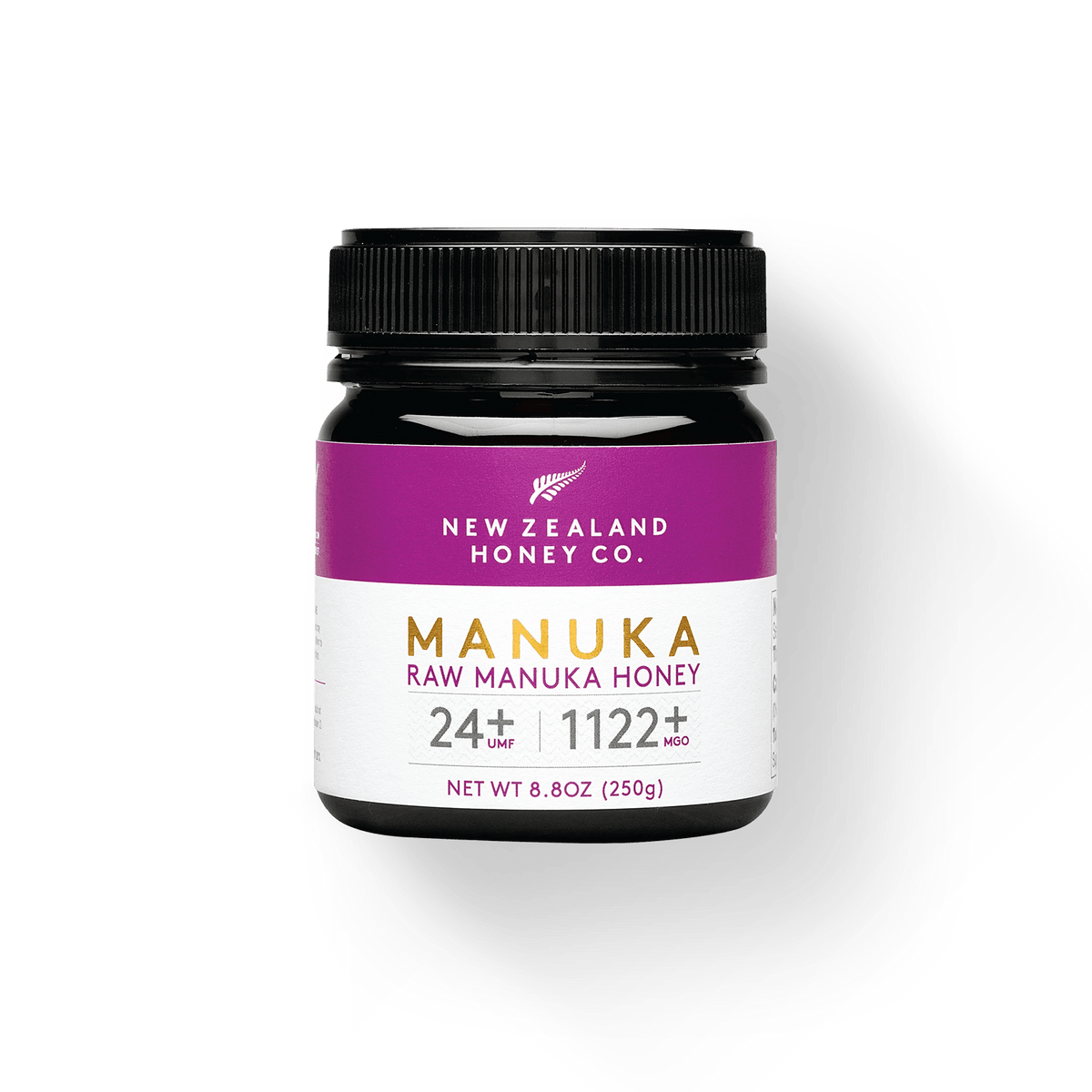
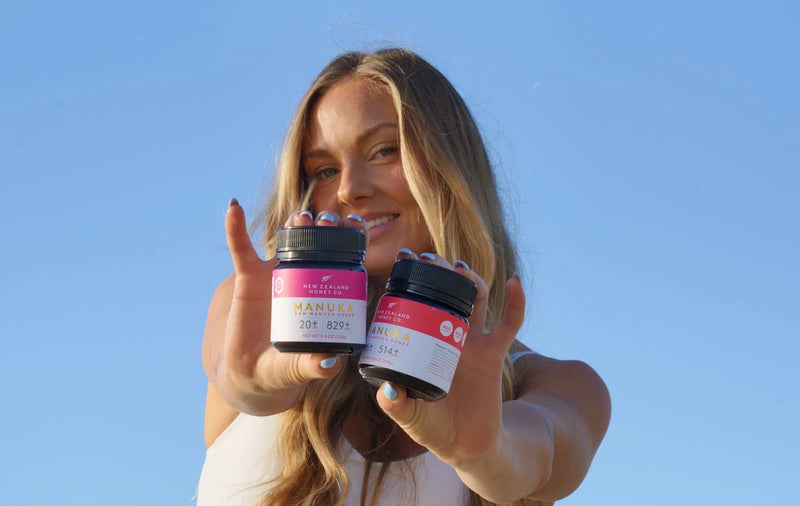
Manuka Honey UMF™ 20+ | MGO 829+
Your health is important. After all, you only get one body. This high-grade Manuka Honey is packed with nutrients and essential vitality to help you live your best life.
Shop NowMyth 2: A High MGO Level Is All the Proof You Need
Methylglyoxal is the compound most closely associated with Manuka Honey's distinctive properties, so it makes sense that people treat the MGO number as the definitive quality marker. Higher MGO, better honey — right? Not quite. The issue is that MGO can be artificially elevated. Honey stored at high temperatures, or honey from other floral sources, can show elevated MGO readings. Without additional markers to confirm the honey's origin and composition, MGO alone does not close the authenticity question.
What MGO Tells You — and What It Does Not
- MGO (methylglyoxal) is a genuine and measurable marker of Manuka Honey's antibacterial activity.
- MGO levels correlate with UMF™ grades, for example, MGO 263+ is equivalent to UMF™ 10+, MGO 514+ to UMF™ 15+, MGO 829+ to UMF™ 20+.
- MGO alone does not confirm the honey is genuine Manuka Honey.
- If a product carries only an MGO rating with no UMF™ certification, ask whether independent testing has confirmed the full composition profile.
Myth 3: 'Active' and 'Bio-Active' Labels Signal Quality
The word 'active' on a honey label sounds purposeful and science-backed. For many shoppers, it implies that the product has been tested and found to have meaningful levels of beneficial compounds. The reality is, in most markets, there is no regulation governing the use of this term on honey. Any producer can print 'Active 15+' on a jar based entirely on their own internal assessment, with no independent body confirming the result.
What 'Active' and 'Bio-Active' Actually Mean
- 'Active' and 'Bio-Active' are not regulated terms. They carry no mandatory testing requirements in most markets.
- These labels are often applied by the brand itself, based on internal data that has not been reviewed or audited by a third party.
- Some 'active' honeys are genuinely high quality — but the label itself provides no guarantee. The underlying testing methodology matters far more than the marketing language.
- When in doubt, look for independently tested and certified products with a clear audit trail, not self-assigned ratings.
Myth 4: UMF™ Is Just Another Brand's Marketing System
Given the volume of proprietary rating systems in the Manuka Honey market, some shoppers have become understandably sceptical of all of them, including UMF™. If every brand invents its own scale, who is to say UMF™ is any different? This scepticism is fair to a point, but the structure behind UMF™ is meaningfully different from a self-assigned grading system.
Why UMF™ Is a Genuine Independent Standard
- UMF™ stands for Unique Manuka Factor and is governed by the UMF Honey Association (UMFHA), an independent New Zealand industry body — not a honey brand.
- UMFHA licenses producers to use the UMF™ trademark only after their honey passes third-party laboratory testing. Producers pay for this certification and are subject to ongoing audits.
- The UMF™ rating system measures four key compounds: MGO (antibacterial activity), leptosperin (authenticity marker unique to Manuka), DHA (precursor to MGO), and HMF (freshness indicator).
- A genuine UMF™ label includes the grade number, the UMFHA logo, and the producer's licence number — all of which can be verified independently.
Myth 5: Certification on the Label Is Enough — You Do Not Need to Check Further
Even when shoppers know to look for UMF™ certification, many assume the label itself is sufficient verification. But counterfeit and misrepresented products exist. A logo printed on a jar and a legitimately licensed product are not always the same thing. The infrastructure to verify authenticity exists — most people just do not use it.
Going One Step Further With Verification
- The UMFHA maintains a public register of licensed producers. Any genuine UMF™ product can be traced back to a licensed operation on that register.
- Batch-level traceability is a meaningful differentiator. New Zealand Honey Co. includes QR codes on packaging that allow shoppers to trace the exact batch from hive to jar.
- If a UMF™ label does not include a producer licence number, treat it with caution — this is a required element of genuine UMF™ certification.
- Independent testing at the batch level goes beyond certification. It confirms that the specific jar in your hand meets the grade stated, not just that the brand in general is licensed.
Red Flags: Certification Claims Worth Questioning
Knowing what a good certification looks like is useful. Knowing what warning signs to watch for is equally important. Fake Manuka Honey certifications and misleading grading claims are a real feature of this market, not a theoretical concern.
Treat These as Warning Signs
- A '+' number with no recognisable third-party body behind it — for example, '20+' with no UMF™ trademark or independently audited equivalent.
- 'Active' or 'Bio-Active' as the primary quality claim, with no independent testing documentation available.
- No batch-level traceability. If you cannot trace your jar to a specific harvest and hive location, the supply chain transparency is limited.
- Unusually low pricing for a supposedly high-grade product. Genuine high-UMF™ Manuka Honey is genuinely expensive to produce — the Manuka flowering window lasts only 2 to 8 weeks per year, and independent certification adds further cost.
- Vague origin claims. Real Manuka Honey comes from New Zealand. If the country of origin is unclear or buried in small print, that is worth noting.
- No producer licence number on a UMF™ label. This is a required element — its absence suggests the trademark may not be legitimately licensed.
What to Actually Look for When Buying
The Practical Buying Checklist
- Look for the UMF™ trademark with a grade number and a visible producer licence number.
- Check that MGO levels are stated clearly on the label and correspond to the UMF™ grade — this confirms the brand is being transparent about its testing.
- Prioritise independently tested and certified products. Independent testing means a laboratory with no commercial relationship to the producer has verified the results.
- Use batch traceability where available. A QR code linking to batch-specific test results is the strongest form of transparency a brand can offer.
- If you are buying for specific wellness purposes, higher UMF™ grades (UMF™ 20+ MGO 829+ and above) are generally considered more appropriate than entry-level grades.
- Buy from producers who can demonstrate their certification is current — UMFHA licences require renewal, and ongoing audits are part of the standard.
We are longtime subscribers to New Zealand Honey Co. Our favorite honey is the UMF™ 15+ MGO 514+. Their quality is unmatched and there's comfort in knowing you're getting genuine, UMF™ graded honey.
— Jennifer C., Verified Customer, UMF™ 15+ MGO 514+

Manuka Honey UMF™ 15+ | MGO 514+
You’re living an active lifestyle and you care about what goes in your body. This UMF™ 15+ Manuka Honey is optimised for life, to help you get the most out of your day.
Shop NowHow to Apply This When You Next Shop
A Simple Verification Process
-
Check the label for the UMF™ trademark
Genuine UMF™ certification includes the UMF™ logo, a grade number, and the producer's UMFHA licence number. If any of these elements are missing, the product may not be legitimately UMF™ certified.
-
Cross-reference the MGO level
A transparent brand will state both UMF™ grade and MGO content. These should correspond: UMF™ 10+ should show MGO 263+ or higher, UMF™ 15+ should show MGO 514+, and UMF™ 20+ should show MGO 829+. Discrepancies are worth questioning.
-
Look for a QR code or batch reference
Scan any QR code on the packaging to see where the batch-specific test results lead. Traceable to the source means being able to follow that jar back to a specific harvest, hive location, and independently verified test result.
-
Verify the producer on the UMFHA register
The UMF Honey Association maintains a publicly accessible register of licensed producers. A quick search of the producer's name or licence number confirms whether their certification is current and genuine.
-
Choose a grade appropriate to your use
For general daily wellness, UMF™ 10+ MGO 263+ or UMF™ 15+ MGO 514+ is a solid starting point. For more targeted use, UMF™ 20+ MGO 829+ and above is worth considering. New Zealand Honey Co. offers a range across grades, all independently tested and certified.
Genuine Certification. Full Traceability. No Guesswork.
Every jar from New Zealand Honey Co. is independently tested, carries a verified UMF™ grade and MGO level, and a QR code traceable to the source. Pure, authentic Manuka Honey — optimised for everyday wellness and backed by the certification that actually means something.
Shop UMF™ Certified Manuka Honey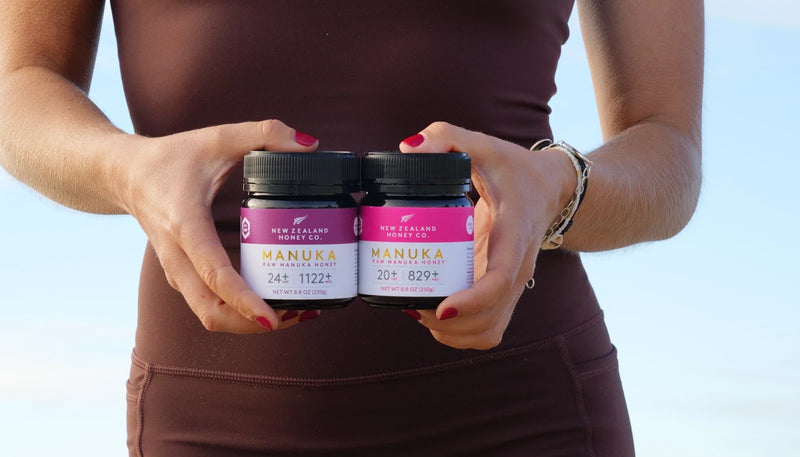
Manuka Honey Benefits: A Practical Guide
From a daily wellness boost and immune support to glowing skin and healthy hair - discover what Manuka Honey really does, and how to...
How to Choose a Manuka Honey Brand
Not all Manuka Honey is created equal. This practical guide walks you through four quality pillars to help you evaluate any brand with confidence,...
The Best Regions for Manuka Honey Explained
Not all Manuka Honey is created equal — and geography is a big reason why. Explore how the Far North and Queenstown Lakes regions...
