


Manuka Honey Articles · 9 min read
Glyphosate in Honey: What You Need to Know
Glyphosate residues in honey are a growing concern for health-conscious consumers. Understanding how contamination occurs and what rigorous independent testing looks like helps you make genuinely informed choices about the honey you bring home.
 By Clare
Updated 26 May 2026
By Clare
Updated 26 May 2026

Manuka Honey Articles · 9 min read
Glyphosate in Honey: What You Need to Know
Glyphosate residues in honey are a growing concern for health-conscious consumers. Understanding how contamination occurs and what rigorous independent testing looks like helps you make genuinely informed choices about the honey you bring home.
By Clare
Updated 26 May 2026
Manuka Honey Articles · 9 min read
Glyphosate in Honey: What You Need to Know
Glyphosate residues in honey are a growing concern for health-conscious consumers. Understanding how contamination occurs and what rigorous independent testing looks like helps you make genuinely informed choices about the honey you bring home.
By Clare
Updated 26 May 2026
Pesticide contamination is not a comfortable topic. But for anyone who takes wellness seriously enough to scrutinise ingredient labels, read nutrition panels, and pay attention to where food comes from, it is a necessary one. Glyphosate in honey has become a quietly urgent question in food safety circles, and it deserves a straightforward, honest answer.
This article walks through how glyphosate residues enter honey in the first place, what the risks look like in context, why independent honey testing is the most reliable safeguard available, and why the source of your honey matters more than most people realise.
How Glyphosate Ends Up in Honey
Glyphosate is the world's most widely used herbicide. It kills weeds by inhibiting a specific enzyme pathway found in plants, and it became commercially dominant following the introduction of herbicide-tolerant crops in the 1990s. Today it is applied across hundreds of millions of hectares of farmland globally, from cereal crops to orchards to roadside verges.
Honey bees are highly mobile foragers. A single colony can cover a foraging radius of three to five kilometres, meaning bees routinely encounter land that has been treated with herbicides whether or not the hive is positioned near agricultural fields. When bees collect nectar and pollen from plants that have absorbed glyphosate through the soil or via direct spray drift, trace residues can be carried back to the hive and incorporated into honey during the production process.
Contamination pathways include direct spray on flowering weeds that bees visit, soil uptake by flowering plants adjacent to treated fields, and spray drift during windy application conditions. This is not a theoretical risk. Food safety agencies in North America, Europe, and Australia have detected glyphosate residues in commercial honey samples at varying levels, prompting ongoing regulatory review.
The challenge for consumers is that conventional honey labelling provides no information about pesticide residues. A jar bearing a natural or organic-looking design communicates nothing about what was found, or not found, during testing. That is where independent honey testing becomes essential.
The Contamination Picture: What Is Actually Known
Glyphosate residues in honey have been documented across a wide range of commercial products in multiple countries. Detection does not automatically mean danger. Regulatory agencies set maximum residue limits (MRLs) to define acceptable thresholds, and many detected levels fall below these limits. However, the debate around what constitutes a safe long-term exposure level for glyphosate is ongoing, and consumer confidence is understandably affected when any residue appears in a product positioned as a natural food.
The central concern for health-conscious buyers is not always acute toxicity. It is cumulative exposure. Honey is often consumed daily, sometimes multiple times a day, and by children. When pesticide residues in honey are present across multiple dietary sources simultaneously, the combined picture becomes harder to assess. This is why many nutritionists and wellness-focused individuals increasingly seek foods that have been independently tested and confirmed free of pesticide residues, rather than simply assuming they are safe because they fall within regulatory limits.
Geography plays a significant role. Honey produced in regions with intensive monoculture farming, high herbicide usage, and dense agricultural land use is statistically more likely to carry pesticide residues than honey from remote, low-intensity landscapes. The foraging environment of the bees is, in practical terms, the first and most meaningful line of defence.
The Core Facts Worth Holding Onto
What the Evidence Tells Us About Glyphosate and Honey
- Glyphosate residues have been detected in commercial honey samples across multiple countries, particularly in products sourced from agricultural regions.
- Bees can forage up to five kilometres from the hive, meaning even remotely located hives can be exposed to herbicide-treated land.
- Regulatory maximum residue limits exist, but ongoing debate surrounds what constitutes acceptable long-term cumulative exposure.
- Geographic source matters: honey from remote, low-pesticide-use environments carries a lower contamination risk than honey from intensive farming regions.
- Independently tested and certified honey provides a documented chain of evidence that untested products simply cannot match.
Putting It Into Practice: What to Look For When Buying Honey
Understanding the contamination pathway is one thing. Knowing how to act on that understanding when standing in front of a shelf of honey jars is another. The practical question is: how do you identify honey that has genuinely been tested for pesticide residues?
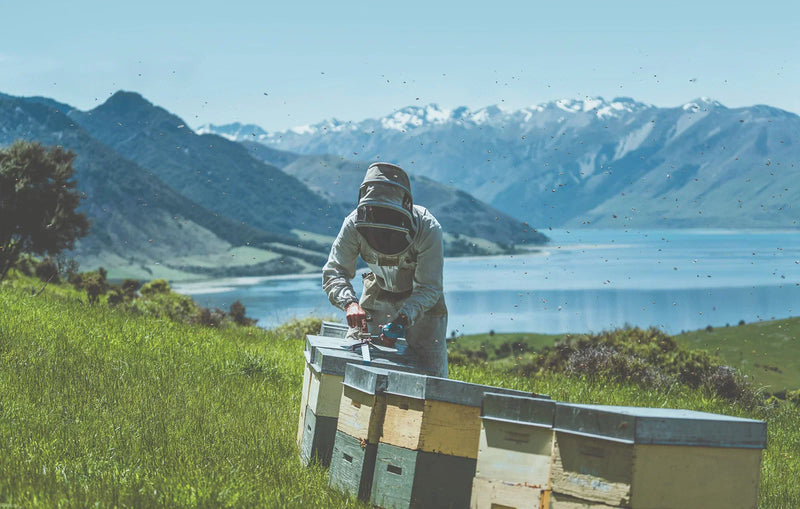
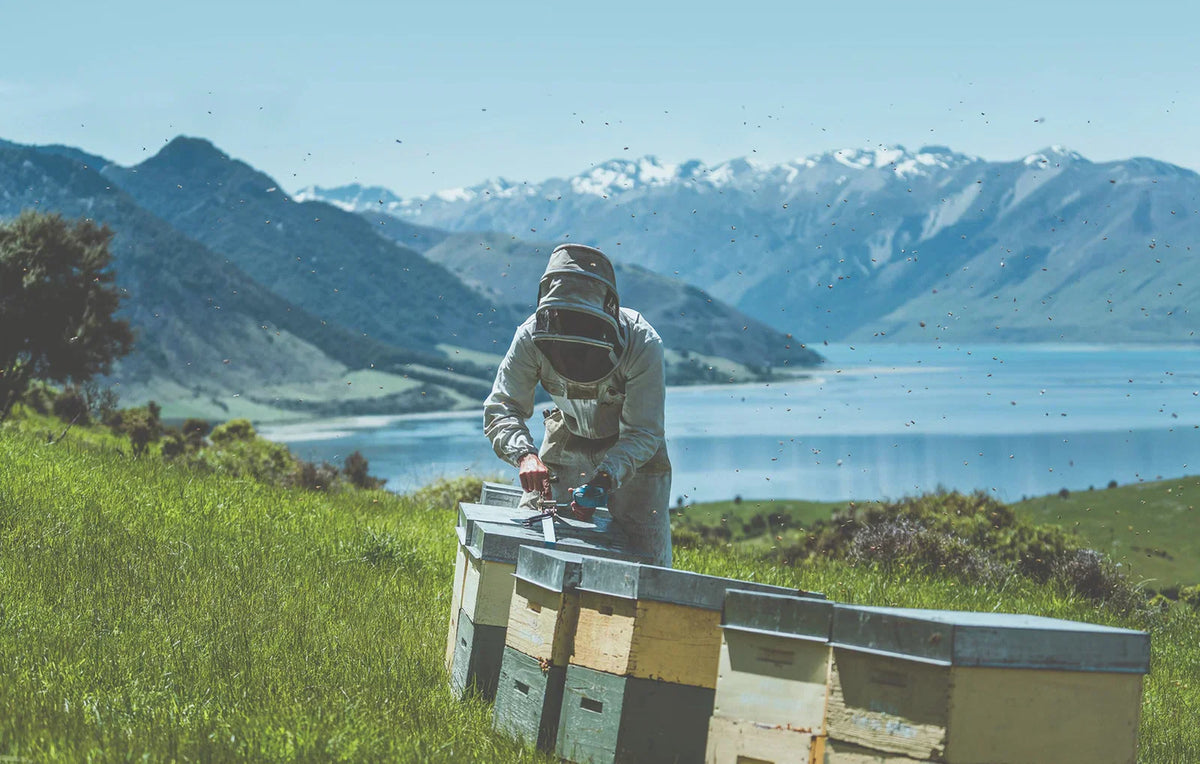
Start with source transparency. Honey that is traceable to the source, meaning a specific region or even a specific set of hives, allows you to evaluate the growing environment. Remote landscapes, away from intensive agriculture, are inherently lower-risk foraging territories for bees. New Zealand's South Island high country and far North coastal wilderness areas, sit at a significant distance from the herbicide applications common to conventional farming zones.
Next, look for independently tested and certified products. Not all certifications are equal. The UMF™ (Unique Manuka Factor) grading system, applied specifically to Manuka Honey, requires independent laboratory testing of every batch. This testing verifies the authenticity and potency markers of Manuka Honey, and reputable producers extend this rigorous approach to include multi-residue pesticide screening as part of their quality assurance process.
New Zealand Honey Co. takes batch-level traceability seriously. Every jar carries a QR code that connects directly to the provenance data for that batch. This is not marketing language. It is a verifiable system that allows any buyer to confirm where their honey came from and what it was tested for. For parents, for people managing wellness routines, and for anyone who thinks carefully about what they consume, that level of transparency is meaningful.
Independent testing is a must
New Zealand Honey Co. has partnered with The Detox Project to make sure all our honey is free from glyphosate.
The Detox Project is an independent organisation that works with governments and investors to research and support new alternative technologies to replace chemical herbicides. As well as this, The Detox Project provides independent testing of products and 'glyphosate free' certification.
New Zealand Honey Co. Manuka Honey is tested twice a year by The Detox Project to ensure it is verified as free from glyphosate. But we've gone a little further than that. Every batch of New Zealand Honey Co. Manuka honey is also independently tested through New Zealand based Analytica Laboratories, to ensure there’s no presence of glyphosate, because that’s how committed we are to a pure product.
This honey has a rich toffee color and flavor is outstanding! The UMF™ 24+ (MGO 1122+) is by far my favorite from New Zealand Honey. I feel it tackles my frequent sinus and respiratory issues. One teaspoon daily for my morning routine, on an empty stomach starts your day the natural way! I caught this on a terrific winter sale! Try it & see for yourself. This honey is certified and independently tested so the quality is there! Tastes delicious!
— Anonymous, Verified Customer, UMF™ 24+ I MGO 1122+

Manuka Honey UMF™ 24+ | MGO 1122+
For those times in life when quality comes first. This pure UMF™ 24+ Manuka Honey is powerfully active, sourced from wild and rugged locations around Aotearoa New Zealand and …
Shop NowSituations Where Extra Caution Is Warranted
- If you are buying honey for young children or infants (noting that honey is not recommended for children under 12 months regardless of source), pesticide testing documentation becomes especially important. Children's bodies process chemical exposures differently to adults.
- Organic certification alone does not guarantee glyphosate-free honey. Certified organic hives can still have bees that forage beyond the organic boundary onto conventionally managed land. Independent multi-residue pesticide testing is a more specific and reliable assurance than organic labelling.
- Cheap bulk honeys, particularly those blended from multiple country sources, are among the least likely to have undergone individual batch pesticide screening. Price is not the only indicator of quality, but significant underpricing in this category is often a signal worth noting.
- If you consume honey daily as part of a wellness routine, cumulative exposure considerations apply more than if you use honey occasionally. Daily users have the strongest rationale for choosing independently tested products.
- Local or farmers' market honey is not automatically safer. Small-scale producers may not have the resources to conduct multi-residue pesticide testing.
Common Questions About Glyphosate Residues in Honey
Is Manuka Honey glyphosate free?
Authentic Manuka Honey sourced from remote New Zealand landscapes carries a significantly lower risk of glyphosate contamination than honey from intensively farmed regions. However, 'glyphosate free' as a verified claim requires documented independent batch testing rather than a general assumption. Look for producers who publish their pesticide testing results and offer batch-level traceability. New Zealand Honey Co. provides QR code traceability on every jar, connecting you directly to the testing data for your specific batch.
Does the UMF™ certification cover pesticide testing?
UMF™ certification is a grading system that independently verifies the authenticity and potency markers of Manuka Honey, including MGO levels, leptosperin, and HMF content. It establishes that the honey is genuine and meets the grade stated on the label. Pesticide residue screening is a separate but equally important layer of quality assurance. Reputable UMF™-certified producers include multi-residue pesticide screening as part of their broader testing protocols. Always ask whether your chosen brand tests specifically for pesticide residues in addition to holding UMF™ certification.
How can I check if my honey has been tested for pesticide residues?
The most direct approach is to look for a QR code or batch number on the jar that links to published testing data. Reputable producers make this information accessible rather than requiring you to contact them directly. You can also look for official documentation on the producer's website detailing their testing scope, which should include multi-residue pesticide screening alongside the standard quality markers. If a producer cannot tell you specifically what their honey was tested for and who conducted the testing, that is a meaningful gap in transparency.
The Takeaway: Source, Test, Trust
Glyphosate in honey is a real and documented issue in global food supply chains. It is not a reason to avoid honey altogether, but it is a reason to be thoughtful about which honey you choose and to ask more of the brands you trust with your wellness routine.
The three factors that matter most are geographic source, independent testing, and transparency about results. Pure, authentic Manuka Honey from remote New Zealand landscapes, independently tested and certified at the batch level, and traceable to the source via a verifiable system, represents one of the rarest superfoods available precisely because this level of care is built into every step of production.
Choosing honey that has genuinely been tested for pesticide residues is a small but considered step toward an approach to wellness that does not rely on assumption. It is worth giving it some thought, and it is worth asking the right questions before the next jar ends up in your kitchen.
Explore Honey You Can Actually Verify
Every jar of New Zealand Honey Co. Manuka Honey is independently tested and certified, traceable to the source via QR code, and sourced from some of New Zealand's most remote landscapes. Give it a go and taste the difference that rigorous standards make.
Shop Independently Tested Manuka Honey
Manuka Honey as a Gift: 7 Things to Look For
Gifting Manuka Honey can be a thoughtful way to show you care, but with different grades, labels and strengths to choose from, finding the...

Manuka Honey for a Sore Throat: Best MGO Level to Use
That scratchy, raw feeling at the back of the throat is hard to ignore. Here's why Manuka Honey helps, which MGO level to choose,...
Is Manuka Honey Worth the Price? What You're Actually Paying For
Manuka Honey costs more than regular honey for six very specific, very verifiable reasons. From a flowering window as short as two weeks to...
