
Propolis & Manuka Honey: Natural Throat & Immune Support

Propolis and Manuka Honey are two of nature's most studied wellness ingredients. Together, they offer meaningful support for throat comfort, oral health, and everyday immune function.
Two Powerhouses, One Goal: Supporting Your Natural Defences
When the seasons change and that familiar scratchy feeling creeps into the back of your throat, most people reach for whatever is closest. But a growing number of health-conscious individuals are turning to something older, more natural, and increasingly well-researched: propolis and Manuka Honey.Both have been used for centuries across different cultures. Both are now the subject of serious scientific study. And when combined, they offer a compelling, natural approach to throat health, oral wellbeing, and everyday immune support.This article breaks down what propolis actually is, how it works alongside Manuka Honey, what the science says, and how to bring both into a practical daily routine. Whether new to natural wellness or already familiar with UMF™ certified Manuka Honey, there is something here worth knowing.
What You Will Learn
- Propolis is a resin-like compound produced by bees with well-studied antimicrobial and anti-inflammatory properties
- Manuka Honey, especially at higher MGO ratings, contains unique bioactive compounds that support immune and throat health
- Together, propolis and Manuka Honey provide complementary, layered support for oral health and natural immunity
Key Takeaways
- Propolis contains flavonoids and phenolic compounds that have demonstrated antimicrobial and anti-inflammatory activity in peer-reviewed research.
- Manuka Honey's unique Methylglyoxal (MGO) content gives it properties not found in standard honey, making it one of the rarest superfoods available.
- The combination of propolis and Manuka Honey offers layered, complementary support for throat comfort, oral health and immunity.
- New Zealand Honey Co. Manuka Honey is independently tested and certified, ensuring the MGO levels stated on the label are guaranteed.
- Always consult a healthcare professional for persistent throat or immune concerns. Natural wellness supports, it does not replace, medical care.
What Is Propolis? A Closer Look at the Hive's Natural Shield
Propolis is a sticky, resin-like substance that bees collect from tree buds, sap, and botanical sources. They use it to seal and protect the hive, filling gaps, coating surfaces, and guarding against microbial intrusion. In essence, it is the hive's own immune system.The composition of propolis varies depending on geography and plant sources, but it consistently contains flavonoids, polyphenols, and phenolic acids. These compounds are responsible for most of the propolis benefits that researchers have documented over the past few decades. What makes propolis particularly interesting from a wellness perspective is its multi-faceted activity. It does not do just one thing. Research has explored its antimicrobial, antifungal, anti-inflammatory, and antioxidant properties, making it a genuinely versatile natural ingredient¹. For those focused on propolis throat health specifically, it is the anti-inflammatory and antimicrobial activity that tends to be most relevant. A sore, irritated throat is often the result of infection or inflammation, and propolis addresses both of those mechanisms².
The Key Benefits of Propolis and Manuka Honey Combined
Understanding each ingredient individually helps, but the real story is in how they complement each other. Here are the primary areas where propolis and Manuka Honey together can support everyday wellness.
1. Throat Comfort and Soothing Relief
If there's one area where propolis research is particularly strong, it's antimicrobial activity.
"Propolis has demonstrated various antibacterial activity against a range of pathogens", researchers report, including E. coli, Staphylococcus aureus, Streptococcus pyogenes, and many others¹.
Propolis also shows significant anti-inflammatory effects through multiple pathways.
"The main mechanisms underlying the anti-inflammatory activity of propolis include: (1) the inhibition of cyclooxygenase (COX) and consequent inhibition of prostaglandin biosynthesis, (2) free radical scavenging; (3) inhibition of nitric oxide synthesis; (4) reduction in the concentration of inflammatory cytokines; and (5) immunosuppressive activity"¹.
In plain language, propolis appears to interrupt inflammation at several different points in the process - from blocking the enzymes that trigger inflammation to reducing the production of inflammatory messenger molecules.
The anti-inflammatory phenolic compounds appear to calm irritated tissue, while antimicrobial activity targets the underlying cause.Manuka Honey contributes its own soothing properties here. Its thick, viscous texture coats the throat on contact, while the MGO compounds provide an additional layer of bioactive support. Many people find that taking a teaspoon of high-grade Manuka Honey before bed gives noticeable relief during periods when their throat is feeling under pressure.
2. Natural Immune Support
Both propolis and Manuka Honey have been studied for their role in supporting natural immune function. Propolis flavonoids have been shown to modulate immune response, helping the body mount a more effective defence without overstimulating the immune system.Manuka Honey, particularly at higher MGO concentrations, contains bioactive compounds that can support immune cell activity. Scientific studies have found promising potential in using Manuka honey to regulate and stimulate our body’s immune responses³.Used together, the two ingredients approach immune support from different angles, creating a layered effect that neither delivers as effectively alone.
3. Oral Health and Microbial Balance
Propolis has a long history of use for oral health and has been used by humans for centuries to treat tooth decay and mouth infections².
Modern research shows "potential uses in oral health and medicine due to its activity against fungi and viruses, and its antiangiogenic and antiproliferative properties"², and the "antibacterial action of propolis has led to the development of oral sprays, toothpaste and lozenges"¹. Manuka Honey has similarly been studied for its effects on oral bacteria. The MGO content has demonstrated inhibitory activity against common oral pathogens in laboratory settings. For those looking to support their oral environment naturally, the combination of propolis and Manuka Honey makes practical sense as part of a daily routine. This is one area where the propolis Manuka Honey combination shows genuine promise, particularly for people who want to take a more proactive approach to their oral wellness between dental visits.
4. Antioxidant Activity and Cellular Support
Both ingredients are rich in antioxidant compounds. Propolis contains caffeic acid phenethyl ester (CAPE), one of the most studied antioxidants in natural wellness research. Manuka Honey contributes its own polyphenol profile alongside MGO. Antioxidants help neutralise free radicals, the unstable molecules that contribute to cellular stress and inflammation. While no single food or supplement eliminates oxidative stress, including antioxidant-rich ingredients as part of a balanced diet supports the body's natural ability to manage it. This is another reason why propolis and Manuka Honey fit so naturally into an optimised wellness routine.
How It Works: The Science Behind the Synergy
The key to understanding why propolis and Manuka Honey work so well together lies in their different but complementary mechanisms of action. Propolis acts primarily through its flavonoid and phenolic acid content. These compounds interfere with bacterial cell membranes, inhibit enzyme activity in pathogens, and modulate inflammatory signalling pathways. Manuka Honey's primary bioactive compound is Methylglyoxal (MGO), which is unique to Manuka and is not found at meaningful levels in other honeys. MGO disrupts microbial proteins and contributes to Manuka's well-documented antibacterial properties. The UMF™ rating system independently verifies the MGO concentration in every batch, so consumers know exactly what they are getting. This is what separates independently tested and certified Manuka Honey from inferior alternatives.When combined, propolis and Manuka Honey create a wider spectrum of activity than either achieves alone. Propolis addresses inflammatory pathways; MGO targets bacterial activity. Propolis provides antifungal coverage; Manuka Honey delivers direct mucosal soothing. Together, they support the throat and immune system from multiple directions simultaneously.

Practical Ways to Use Propolis and Manuka Honey Daily
Knowing the benefits is one thing. Knowing how to actually use these ingredients is where the real value lies. Here are practical, everyday applications that fit into a realistic routine.
Incorporating Propolis and Manuka Honey Into Your Routine
-
Morning Immune Ritual
Take one teaspoon of UMF™ 15+ or higher Manuka Honey on its own or stirred into warm (not hot) water first thing in the morning. Follow with a propolis throat spray or lozenge. Avoid boiling water as excessive heat can degrade bioactive compounds.
-
Pre-Travel or High-Exposure Days
On days involving flights, busy public spaces, or contact with unwell colleagues, increase to two teaspoons of Manuka Honey and use propolis spray morning and evening. This is a simple way to give your natural defences a bit more support when it matters.
-
Throat Comfort Protocol
At the first sign of throat irritation, take one teaspoon of Manuka Honey directly (do not dilute it, as the coating effect is part of the benefit), allow it to coat the throat, and follow with propolis spray or a propolis lozenge. Repeat up to three times daily as needed.
What to Look for When Buying Manuka Honey products
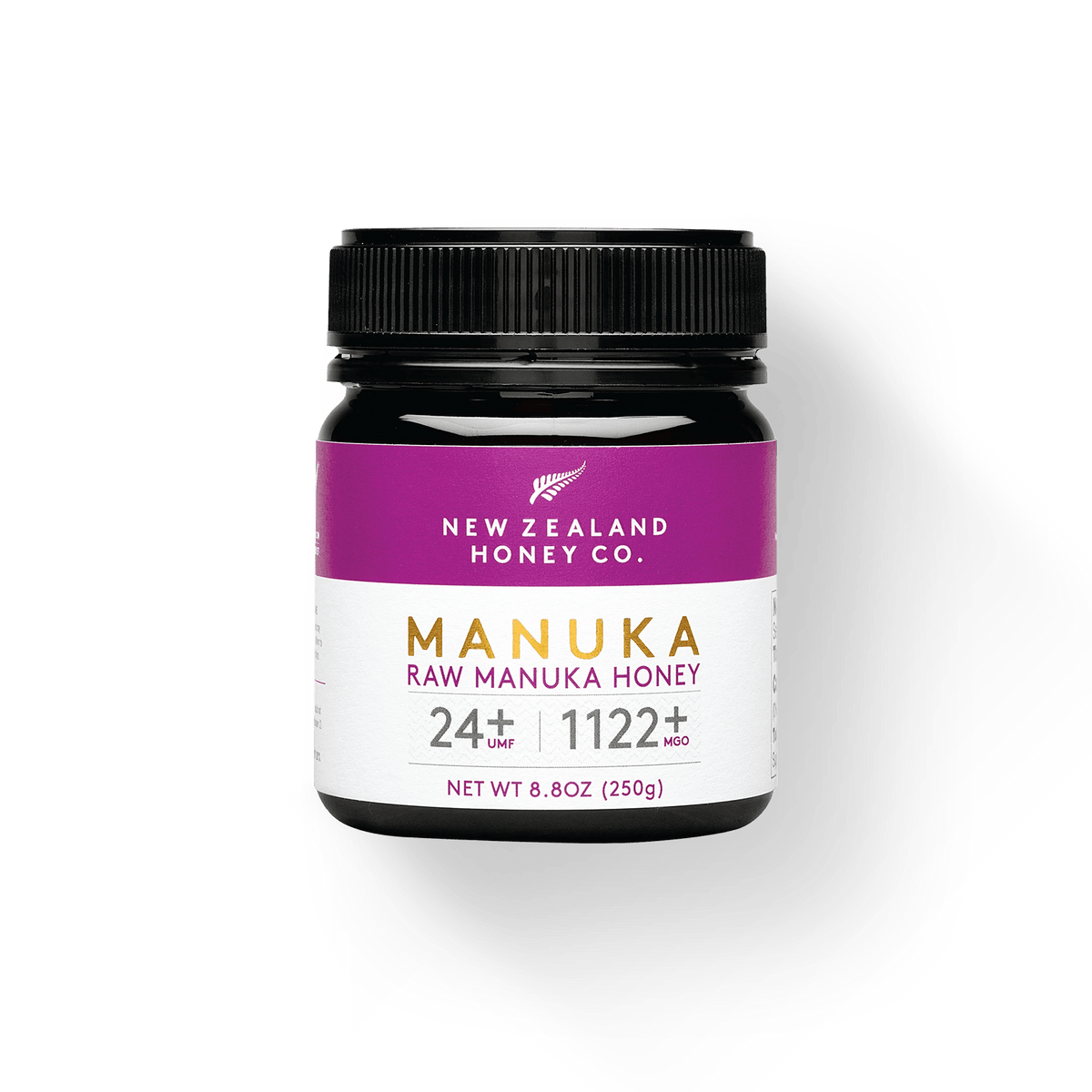
Not all products are created equal, and this matters more with natural ingredients than almost anywhere else in the wellness market. Here is what to look for.For Manuka Honey, certified authenticity is non-negotiable. The UMF™ standard independently tests and verifies MGO levels, leptosperin content (which confirms genuine Manuka origin), and other key markers. Without it, there is no reliable way to know what is actually in the jar.New Zealand Honey Co. Manuka Honey is pure, authentic Manuka Honey, independently tested and certified, with specific MGO levels guaranteed on every label. The Manuka flowering window is only two to eight weeks per year, which is part of what makes genuine New Zealand Manuka Honey one of the rarest superfoods available. Every batch is traceable to the source, giving confidence that what is on the label is what is in the jar.
Love the soothing taste of Manuka, especially when I awake, before breakfast. Also have found it to help relieve a sore throat.
— Michael O., Verified Customer
Frequently Asked Questions
Can propolis and Manuka Honey be taken together safely?
Yes, for most people propolis and Manuka Honey can be used together without issue. They work through complementary mechanisms and there are no known interactions between the two. However, individuals with bee or pollen allergies should exercise caution with propolis in particular, as it is a bee-derived product that can trigger allergic responses in sensitive individuals. If there is any uncertainty, consult a healthcare professional before starting.
How long does it take to notice a difference when using propolis and Manuka Honey?
Results vary between individuals and depend on consistency of use. Some people report noticing a difference in throat comfort relatively quickly, within a few days of regular use. For broader immune support, a consistent routine over several weeks tends to provide a more meaningful indication of benefit. Natural wellness ingredients work best as part of an ongoing daily habit rather than occasional use.
Ready to Support Your Throat and Immunity Naturally?
Explore New Zealand Honey Co.'s range of independently tested and certified UMF™ Manuka Honey, with specific MGO levels guaranteed on every label and every batch traceable to the source. Pure, authentic Manuka Honey, optimised for everyday wellness.
Shop UMF Certified Manuka Honey¹ Evidence on the Health Benefits of Supplemental Propolis, Nutrients.
² The use of propolis in dentistry, oral health, and medicine: A review, Journal of Oral Biosciences.
³Immunomodulatory responses, National Library of Medicine.
