


Manuka Honey Articles · 4 min read
Multifloral vs Monofloral Manuka Honey: What the Difference Means
 By Clare
9 Oct 2026
By Clare
9 Oct 2026

Manuka Honey Articles · 4 min read
Multifloral vs Monofloral Manuka Honey: What the Difference Means
By Clare
9 Oct 2026

Manuka Honey Articles · 4 min read
Multifloral vs Monofloral Manuka Honey: What the Difference Means
By Clare
9 Oct 2026
The short answer
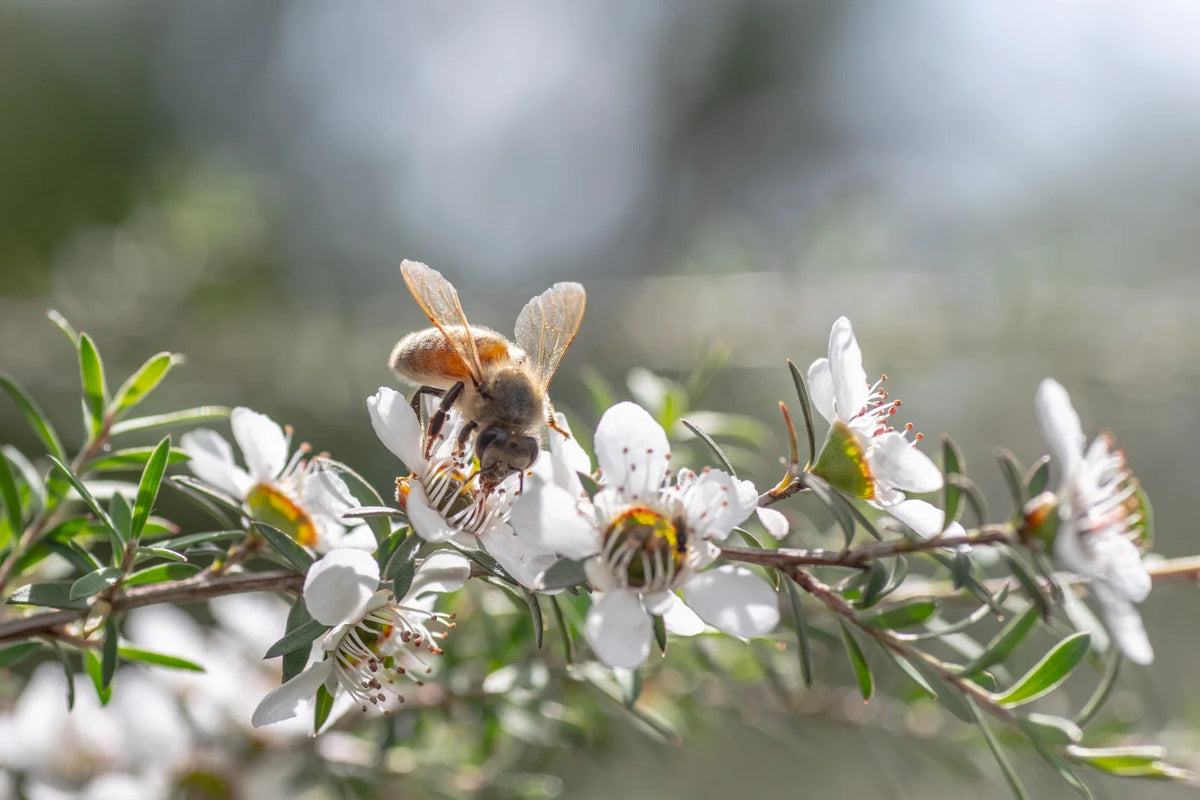
Monofloral Manuka honey comes mostly from Manuka flowers. Multifloral Manuka honey comes from Manuka plus other flowers. Both are real Manuka honey, and both must pass the same New Zealand Government test. The difference is how much Manuka the test finds.
Here's where each type comes from, how New Zealand tells them apart, and what to look for on the label.
What monofloral Manuka honey means
Mono means one, so monofloral means from one flower. Here, that's the Manuka bush (Leptospermum scoparium), which grows wild across New Zealand.
Bees fly where they like, so no wild honey comes from just one flower. In practice, monofloral means mostly from one flower. Beekeepers place hives in remote areas thick with Manuka, so most of the nectar the bees find is Manuka. Bees can fly about 3 miles (5 km) for nectar, so the Manuka needs to cover a big area.
Timing matters too. Manuka flowers bloom for only 2 to 8 weeks a year. In rugged country, hives are sometimes collected by helicopter.
The taste is often described as earthy and rich, and less sweet than regular honey.
What multifloral Manuka honey means
Multifloral means from many flowers. The honey still contains Manuka, but the bees also visited other plants. It's an official classification, not a name for fake Manuka.
It usually happens in one of two ways:
- Mixed foraging. Manuka grows alongside other flowering plants, so the bees bring back a mix.
- Blending. Monofloral Manuka honey is mixed with other honey after harvest.
Multifloral Manuka tastes milder and costs less, and it's common in supermarkets. Monofloral is harder to find. It's usually sold by specialist stores, trusted online sellers, or the producer directly.
How New Zealand tells them apart
Since 2018, any honey exported from New Zealand as Manuka must pass a test set by the Ministry for Primary Industries (MPI). An approved lab checks five things: four natural chemicals from Manuka nectar, and DNA from Manuka pollen. The honey must pass all five to be called Manuka. The levels found decide whether it's monofloral or multifloral.
| What's tested | Monofloral | Multifloral |
|---|---|---|
| 3-PLA (3-phenyllactic acid) | 400 mg/kg or more | 20 to under 400 mg/kg |
| 2'-MAP (2'-methoxyacetophenone) | 5 mg/kg or more | 1 mg/kg or more |
| 2-MBA (2-methoxybenzoic acid) | 1 mg/kg or more | 1 mg/kg or more |
| 4-HPLA (4-hydroxyphenyllactic acid) | 1 mg/kg or more | 1 mg/kg or more |
| Manuka pollen DNA | below Cq 36 | below Cq 36 |
Source: MPI Mānuka honey science definition
Two markers make the difference: 3-PLA and 2'-MAP. Honey that meets the multifloral levels but not the monofloral ones is labeled multifloral. Honey that misses any multifloral level isn't Manuka.
MPI built this test from a three-year study of more than 800 honey samples and 700 plants. A review finished in 2023 found no reason to change it.
Where UMF™ and MGO fit in
Monofloral or multifloral tells you how much of the honey is Manuka. A grade like UMF™ 15+ tells you how much of Manuka's natural compounds it contains.
UMF™ is a grading system run by the UMF Honey Association (UMFHA) since 1998. It tests for MGO, DHA, leptosperin, HMF and Manuka pollen DNA, and honey must have all of them to get a UMF™ grade. So a UMF™ number from a licensed producer means the honey is monofloral.
An MGO number on its own doesn't tell you that. MGO is just one compound, and multifloral honey can carry an MGO number too, usually a lower one. UMF™ also checks HMF, which shows whether the honey has been damaged by heat.
Want to compare the two? Try our UMF™ & MGO calculator.
How to read a Manuka label
Four quick checks:
- Classification. Look for "monofloral" or "multifloral." If it says "blend" or nothing at all, look closer.
- Grade. A UMF™ number from a licensed UMFHA member means independently graded monofloral honey.
- Packing. Choose honey packed and sealed in New Zealand, so it hasn't been repacked along the way.
- Traceability. Good producers let you look up the test results for your exact batch.
How our honey is classified
Every jar in our UMF™ Manuka honey range is certified monofloral, starting at UMF™ 10+ (MGO 263+). We're a licensed UMFHA member (licence 2060), and our honey is tested by Analytica Laboratories and Hill Laboratories in New Zealand.
Enter your label details into our PureTrace certificate search to see your batch's test results and where it came from. You can read more on our accreditations page.
Is multifloral Manuka honey real Manuka?
Yes. It passes the same MPI test, with lower levels needed for two markers.
Why does monofloral cost more?
Remote hives, a short bloom and extra testing. There just isn't much of it.
Can one jar be both?
No. Each batch is tested and labeled as one or the other.
Does a high MGO number mean it's monofloral?
Not by itself. Look for the word monofloral or a UMF™ grade.
The bottom line
Both types are real Manuka honey, checked by the same government test. The difference is how much Manuka the test finds. Check the label, look for a UMF™ grade, and trace your batch, and you'll know exactly what you're buying.
Not sure which grade suits you? Take our Manuka quiz or browse the full range.
Sources: MPI: Mānuka honey testing · MPI: science definition infographic · New Zealand Honey Co.: accreditations · New Zealand Honey Co.: monofloral guide

What Strength of Manuka Honey Should I Have? A Guide to UMF™ Ratings
The right grade of manuka honey depends on how you like to enjoy it: UMF™ 10+ or 15+ for an everyday spoonful, UMF™ 20+...
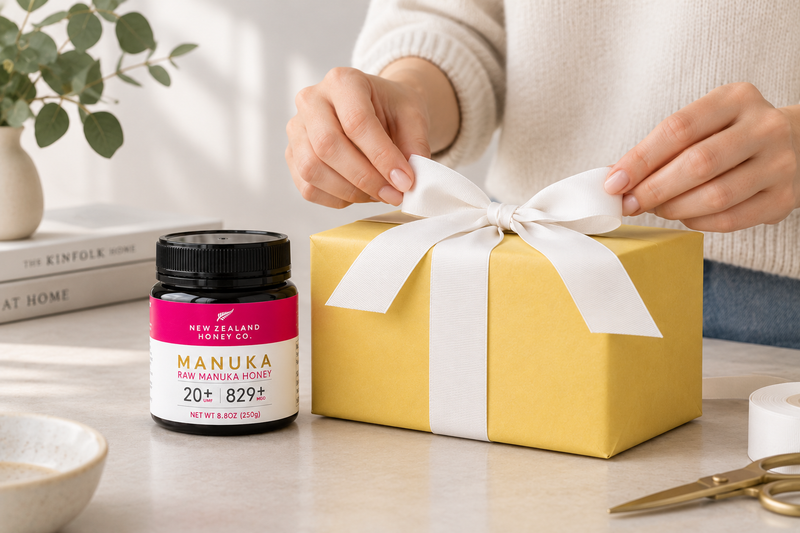
Manuka Honey as a Gift: 7 Things to Look For
Gifting Manuka Honey can be a thoughtful way to show you care, but with different grades, labels and strengths to choose from, finding the...

Manuka Honey for a Sore Throat: Best MGO Level to Use
That scratchy, raw feeling at the back of the throat is hard to ignore. Here's why Manuka Honey helps, which MGO level to choose,...
